 KIRAN GOES PLACES
Machu Picchu is one of the most impressive ancient cities on earth, built high in the Andes with perfectly cut stone and massive terraces, no mortar holding any of it together, and it's survived centuries of earthquakes and jungle since. Most people queue at 4am in Aguas Calientes to take the bus straight to the front gates. We didn't. After four days on the Salkantay Trail, we headed back into the jungle to find a hidden link to the original Inca Trail, for a final climb through the Sun Gate.
Day 5: The final push to the Sun Gate
The walk starts along the railroad to kilometre 104, where the trail turns up towards the Inca ruins. The reason for doing it this way is the Sun Gate itself, the iconic entrance to Machu Picchu that you can only reach on foot, following the Urubamba river, stopping for trains as they pass, crossing a checkpoint to get our permits checked. Inca terraces rise up behind it, carved into the mountainside to turn unusable slopes into farmland for potato, maize and quinoa.
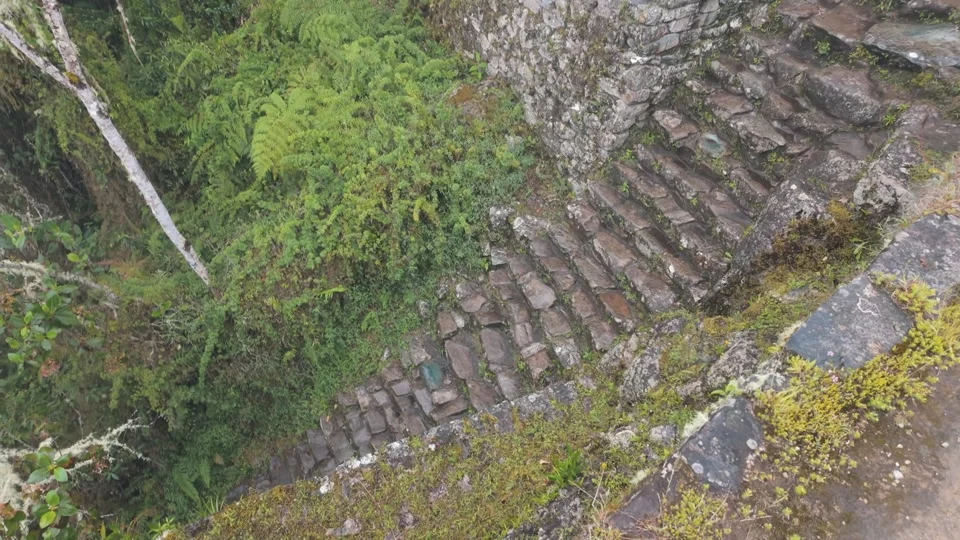
Thousands of terraces carved into slopes that shouldn't grow anything.
Then the trail turns brutal, an endless run of switchbacks climbing the mountainside, rising up above the clouds below. A few hours in, we stopped for a well earned break and some chocolate cake, since the rest of the route flattens out from there.
Next stop was Wiñay Wayna, nicknamed mini Machu Picchu, an Inca ruin covered in cloud on the day we arrived. The mist gave it a shroud of mystery rather than ruining the visit, and with almost no one else there it felt like proper exploring. Wiñay Wayna means forever young in Quechua, built on a steep slope with terraces designed to stop landslides and drain rainwater, and it worked as a final rest point for pilgrims before the big climb ahead.
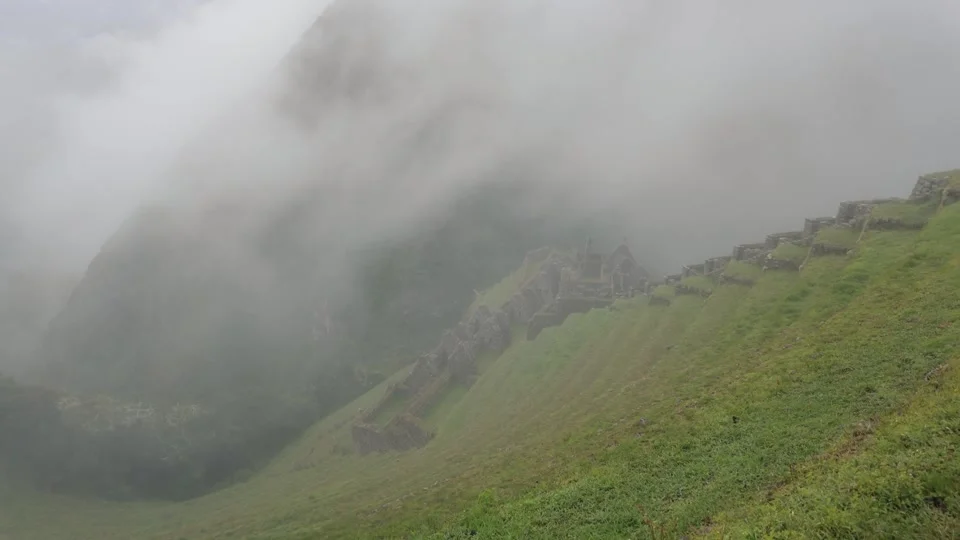
Mini Machu Picchu, and we had it entirely to ourselves.
From there it's back onto the original Inca Trail, stone steps getting steeper as you climb through cloud forest towards Intipunku, the Sun Gate. After five days of walking, we finally reached it, the back door entrance to Machu Picchu. Except the view was still completely cloud. The Inca designed the route so you arrive at this exact point before seeing anything else, Machu Picchu is meant to appear below you the moment you step through. On our day, all we could see was cloud, so we waited. We had lunch at the Sun Gate. We waited some more. Two hours passed and nothing changed.
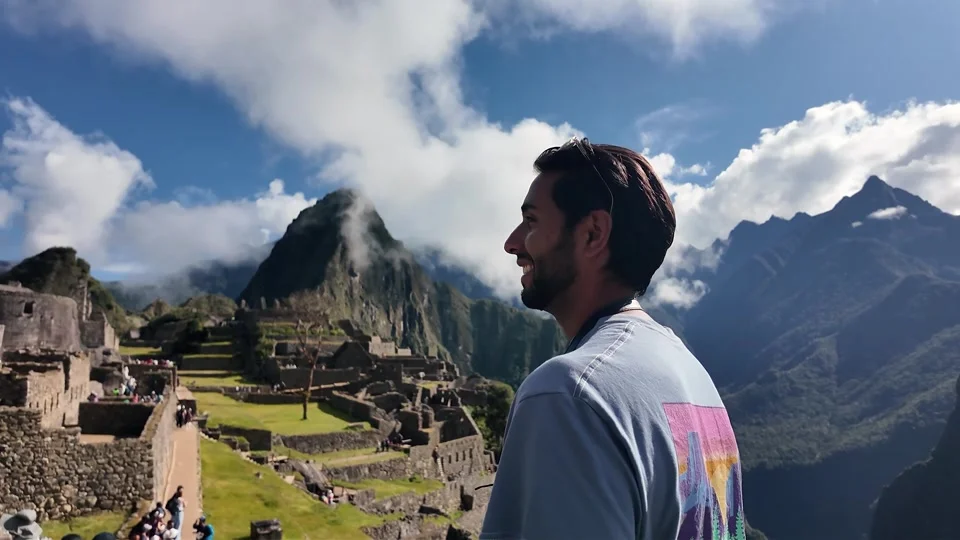
Eventually we gave up waiting and headed down towards Machu Picchu itself, the advantage of the Inca Trail route being that you get two chances, we'd be back the next day on a full tour. And then, walking down, the clouds finally started to roll through, revealing the lost city underneath.
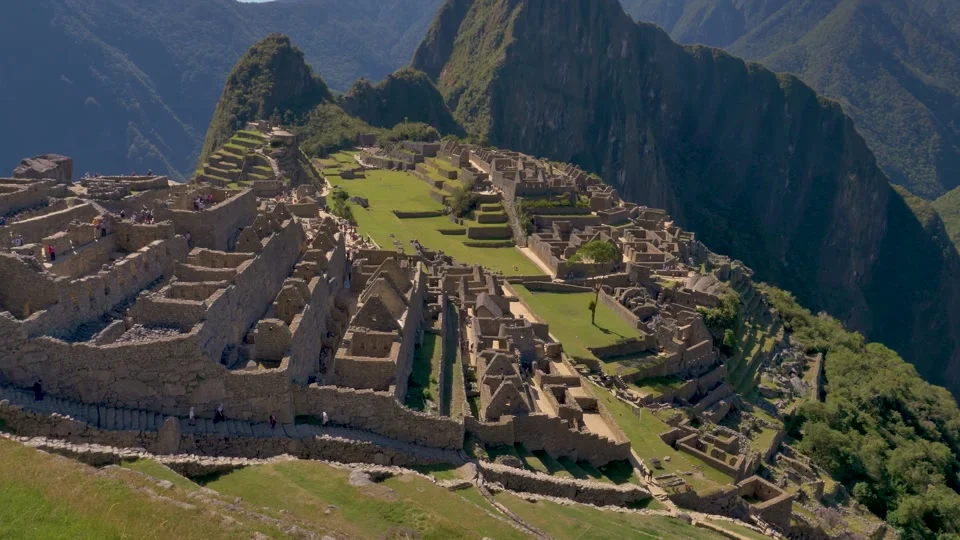
After a whole morning of nothing but cloud, and then it just appears.
Machu Picchu was built in the mid 1400s at the height of the Inca Empire, commissioned by Emperor Pachacuti as a royal estate and sacred site. Every stone was shaped by hand and fitted so precisely it still holds without mortar and has survived centuries of earthquakes. The Spanish never found it, and it wasn't reintroduced to the wider world until 1911, when Hiram Bingham was led here by local farmers who'd always known it was there. Standing above it after five days of walking, tired and out of breath, it's more than I could have imagined, and it makes total sense why the Inca chose this exact spot and built the journey to be as deliberate as the destination.
Day 6: Back for a closer look
Twenty four hours later, after a night back down in Aguas Calientes, we headed back up for round two. Day one had been circuit one, the aerial view from above, day two was circuit three, a closer look from inside the citadel. That's the real benefit of visiting twice, two completely different perspectives on the same place.
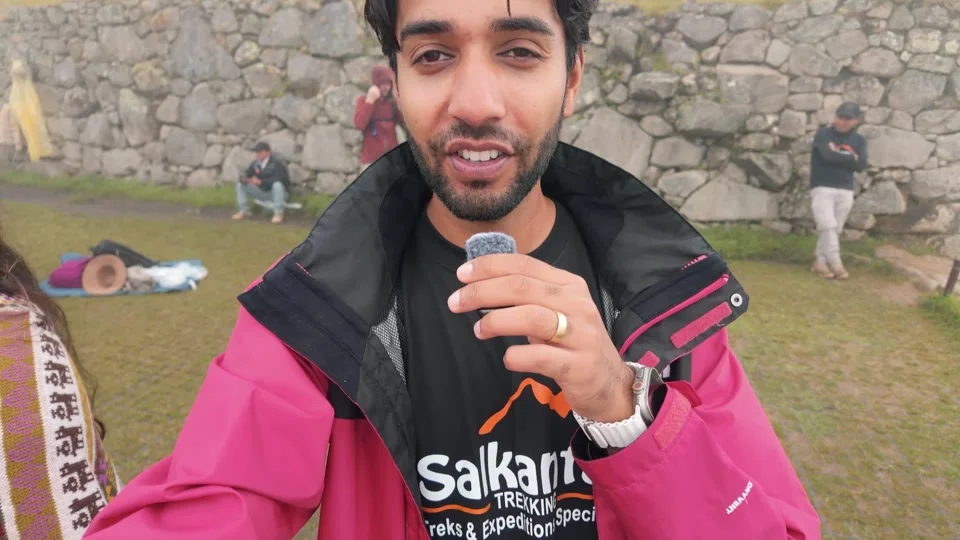
Round two, and this time the weather actually cooperated.
Up close, the scale and engineering hits differently, giant terraces, rooms and walls built brick by brick with nothing holding them together, Huayna Picchu rising in the background the whole time. Our guide walked us through the history as we went, including the more unsettling parts, the Inca did practice human sacrifice at the highest points in the mountains, seen as a way of getting closer to the gods. We stood in what would have been the Inca king's house, a surprisingly compact room with its own adjoining toilet, the Inca equivalent of an en suite.
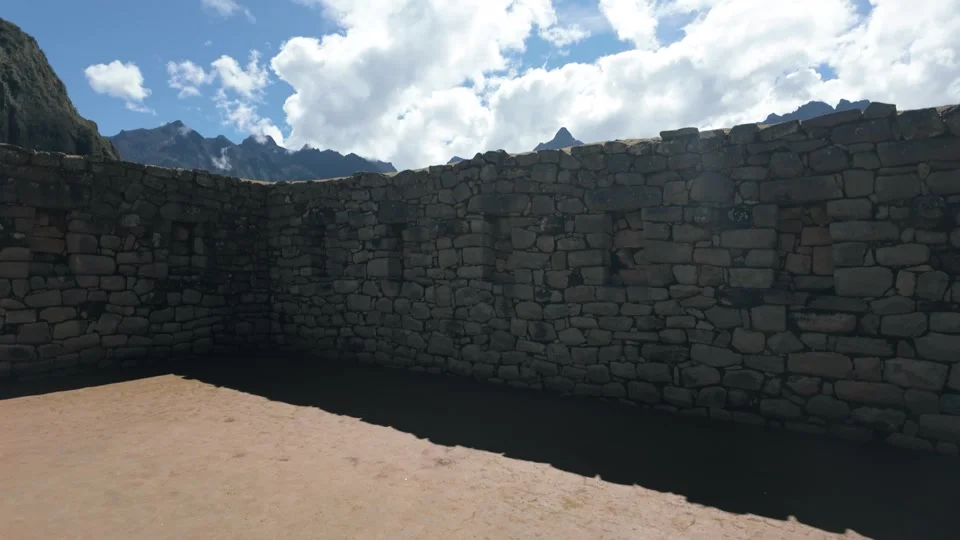
Compact, with its own adjoining toilet. The Inca equivalent of an en suite.
One of the strangest things about Machu Picchu is that no one actually knows why it was abandoned. There's no sign of battle or destruction, just a place slowly left behind and reclaimed by the jungle over time. Walking through it on that second day, it genuinely feels like a place left back in time.
If you're planning to hike in rather than take the train, I've written up everything I wish I'd known before the Salkantay Trek, and a separate guide to the Machu Picchu ticket and circuit system if that part still feels confusing.