 KIRAN GOES PLACES
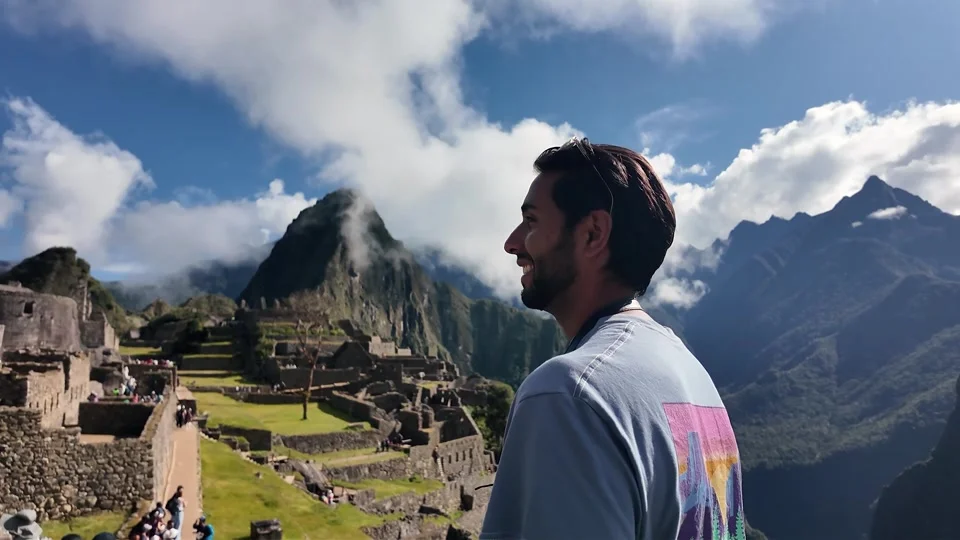
Everyone knows the Inca Trail, the route Inca royalty and high priests once used to reach their city in the clouds. It's iconic, but it's also crowded. The Salkantay Trek is the alternative, one of the most beautiful hikes on earth, and also a genuinely brutal test of endurance. Glacial passes at 4,630m, sudden hail storms, coca leaves just to keep your lungs working in the thin air. Four days through frozen peaks and humid cloud forest to reach the foot of the most famous citadel in the world.
Day 1: Humantay Lake and the Sky Camp
Picked up at 4am, breakfast on the way, and starting the hike itself at 3,800m above sea level. Our guide Roger had a map of the route printed on his t-shirt, which made getting lost fairly difficult. He handed round agua de florida, traditionally used for spiritual cleansing and supposedly helpful for the altitude too. The first stretch goes straight up in a zigzag, nothing gentle about it, with views of Humantay Mountain, the snowy peak that dominates the whole first day, before the trail finally flattens out.
Roger chewed coca leaves the entire way, what he called Andean fuel, a mild stimulant that suppresses hunger, thirst and fatigue while helping your body handle the altitude. To the local Quechua people, Humantay isn't just a mountain, it's a powerful ancient deity guarding the water source of the valley below. We reached the base of camp at the Sky Domes in the early afternoon and dumped our bags, exhausted.
After food, it was time for the side quest, Humantay Lake itself, supposedly the steepest climb of the day despite looking deceptively close. It's a brutal scramble up to 4,200m, each step heavier than the last because of the altitude, but the payoff is a sacred glacial pool sitting directly in the shadow of the mountain, water so turquoise it barely looks real.
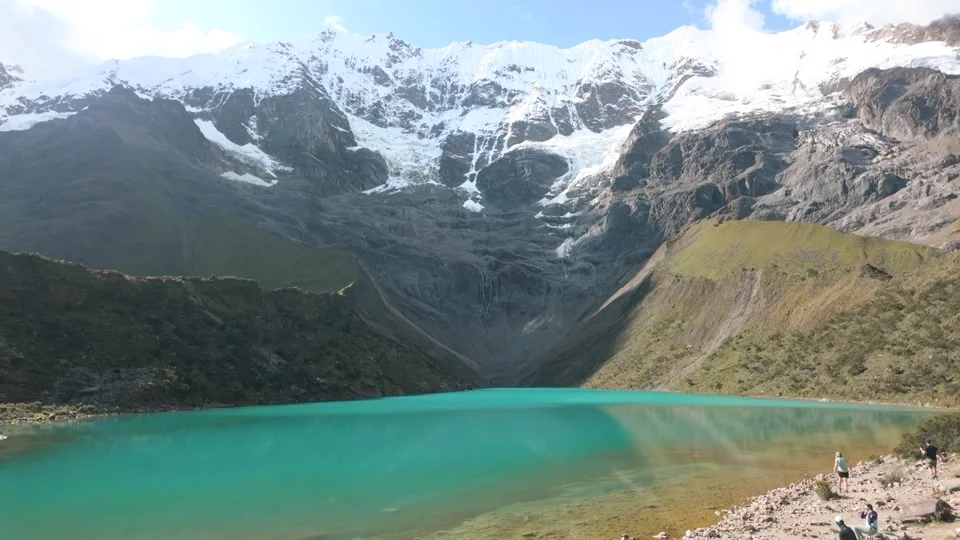
Deep turquoise, glacial, and worth every step of the climb up.
Back down at camp, our domes were fully uncovered for the evening, panoramic views of the mountains from bed. Genuinely one of the best places I've ever stayed. No proper shower, just a sink wash, but lying there watching the sun still lighting up the peaks while everything else went dark felt like a properly magical way to end the first day, hot water bottles included.
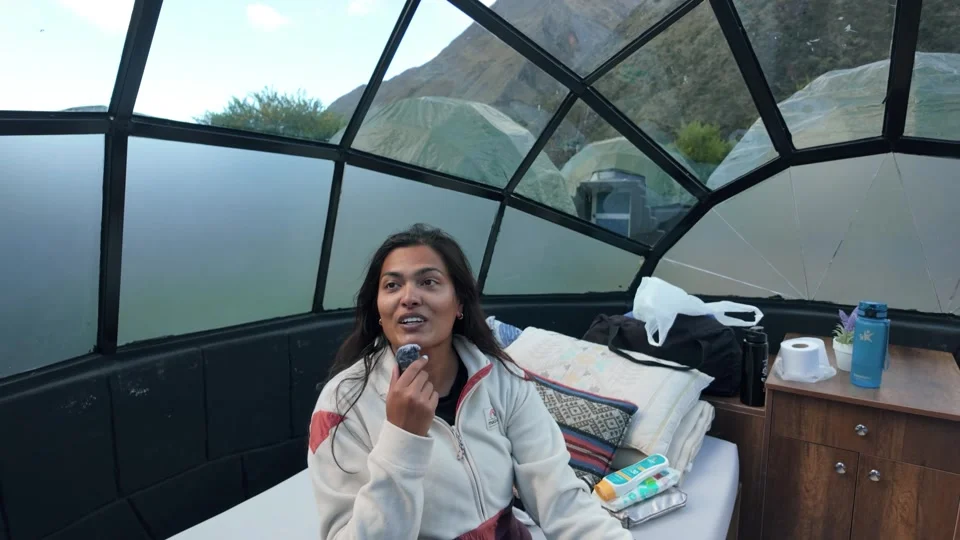
One of the best places I've ever stayed, full stop.
Day 2: The hardest climb and Salkantay Pass
A 5am wake up call with coca tea brought straight to the dome, and we were on the road for the hardest and highest day, the ascent to Salkantay Pass at 4,630m, the top of the entire trek. The mountain sat shrouded in mist at the base as we approached, a sign of just how high we were about to climb.
The trail towards Salkantay itself was the steepest yet, and busy too, plenty of horses carrying bags and gear past us, meaning you had to stay tucked into the mountainside every time one passed rather than risk the cliff edge. Then the clouds rolled in properly and within a few steps it was hailing. We finally reached the iconic pass itself and saw precisely nothing, wind whipping bitterly cold rain into our faces, our guide summing it up perfectly before turning us back down. We huddled behind a rock for soggy sandwiches and coca tea instead.
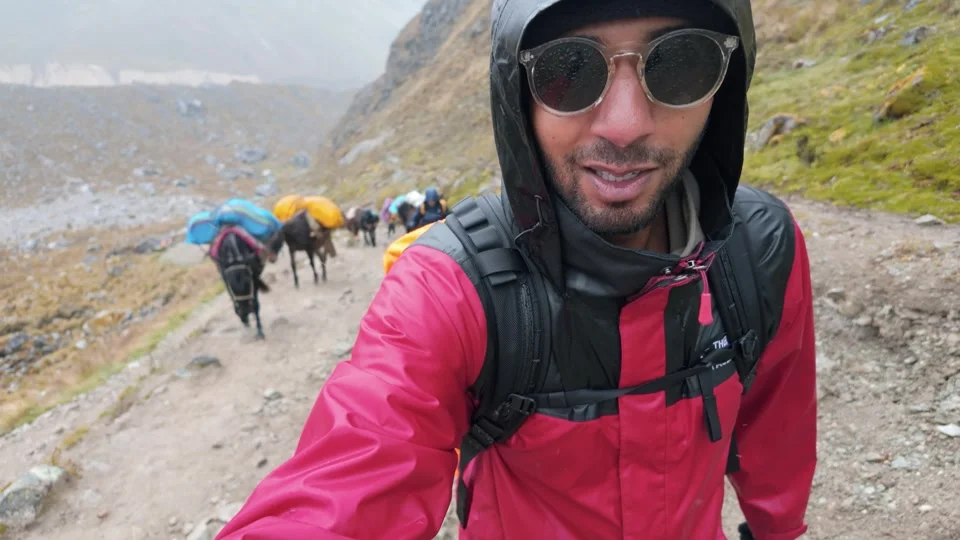
The iconic pass, and we saw precisely nothing.
The descent towards lunch took a couple of hours, and the weather flipped entirely, from snowstorm to sunshine to shorts within the same afternoon, the scenery shifting into something closer to Jurassic Park as we crossed the valley. Ten hours of walking in total, through a hailstorm, jungle and full sun, before we finally reached the second night's domes, arguably even better than the first, a proper bathroom and hot shower this time, an absolute luxury on a multi-day trek. Dinner came with a celebratory shot after a genuinely treacherous day.
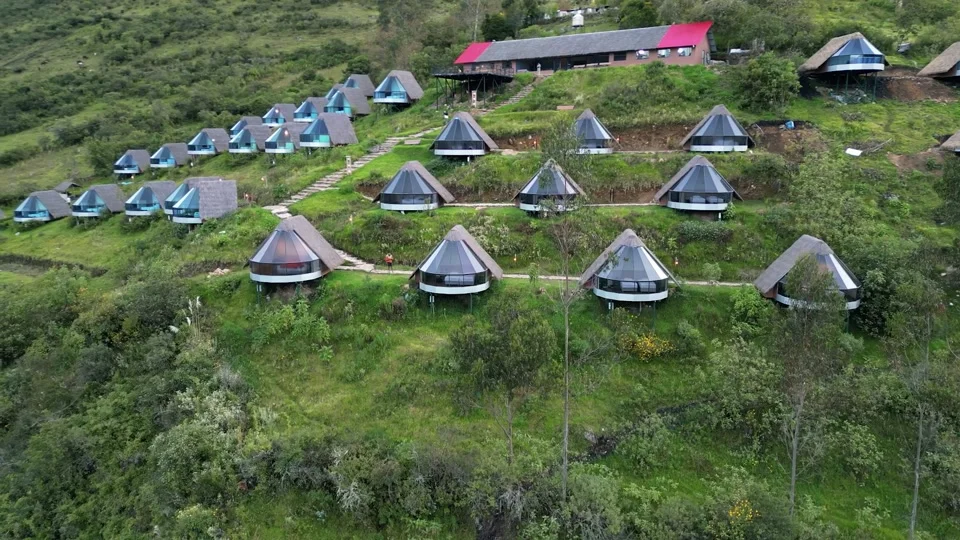
A proper shower and a bed with a view, after the toughest day.
Day 3: A coffee farm and the jungle domes
A shorter day distance wise, around 11km from Colpapampa to a coffee farm and on to the jungle domes at Lucmabamba, though the blisters had started setting in for some of the group by this point. Roger crushed local berries into a natural face paint along the way, traditionally used both for eating and for tattooing, and the whole group got involved before it washed straight off again.
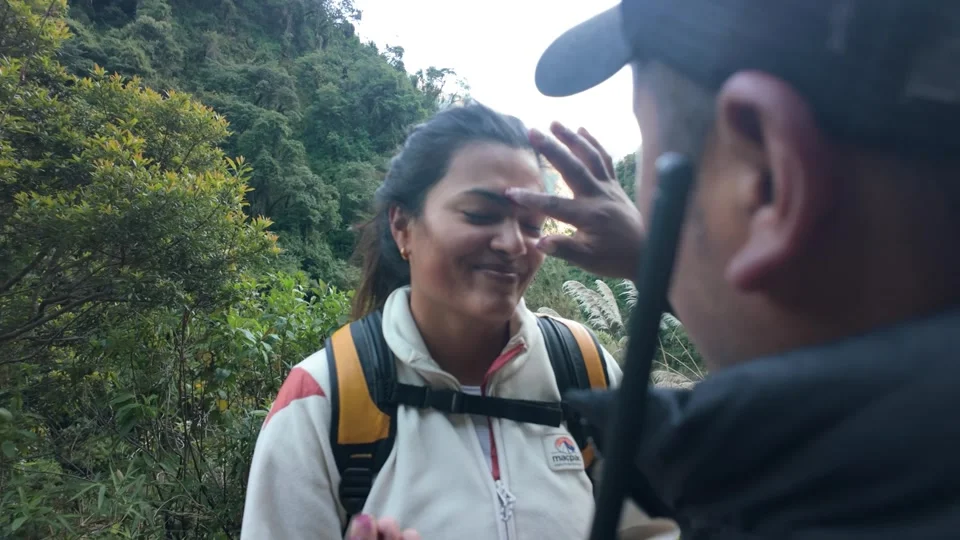
Traditionally used for tattooing too. It washes off fast.
The valley on this stretch is genuinely stunning and the walking properly leisurely for once, the trail hugging the mountainside in full sun. This region, warm and humid as you descend from the peaks, turns out to be perfect for growing Arabica coffee, and we stopped to see the cherries being peeled, washed and toasted by hand before grinding and tasting the freshest cup of Peruvian coffee imaginable, much needed after two days of hard hiking.
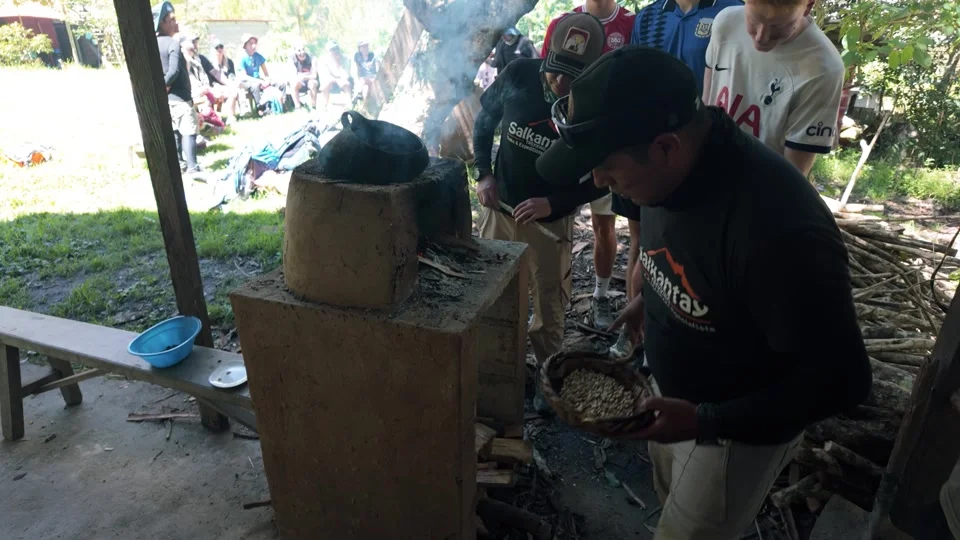
Grown, picked and roasted right there on the mountainside.
That night's dome came with a proper double bed for the first time, the first genuine warmth of the whole trek, plus its own toilet inside the tent. By this point the group had thinned out to just the three of us continuing on, since we were extending the hike to join a stretch of the Inca Trail and enter Machu Picchu through the Sun Gate.
Day 4: Llactapata, and down to Aguas Calientes
It rained hard overnight, loud enough to wake everyone up, but breakfast more than made up for it. The trail climbs up the Llactapata Pass to reach ruins that most people hiking Salkantay actually miss entirely, and it's the only spot where you get a view of Machu Picchu sitting on its mountain ridge from across the valley. It was once a sacred rest stop, effectively the Inca version of a hotel for travellers making the same journey centuries ago.
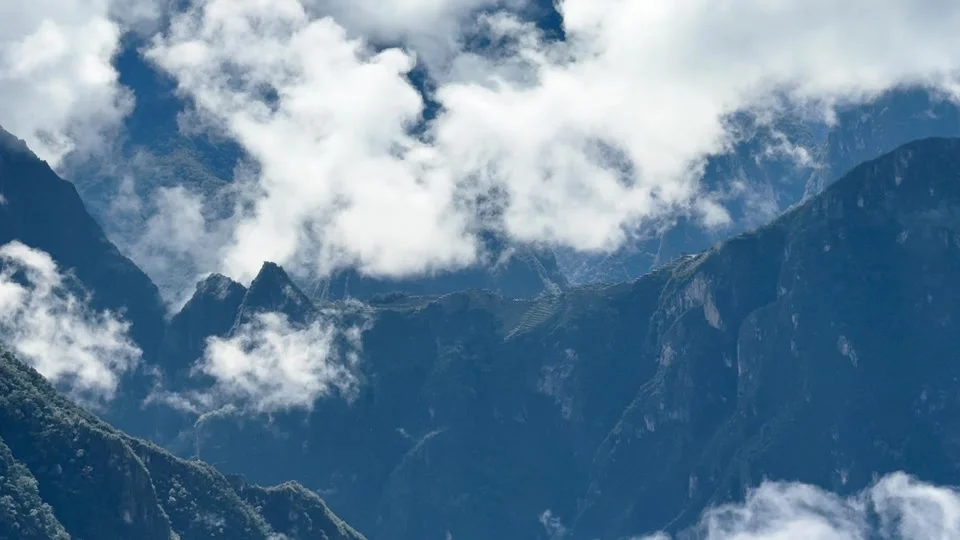
The one spot on the whole trek where you see Machu Picchu from a distance.
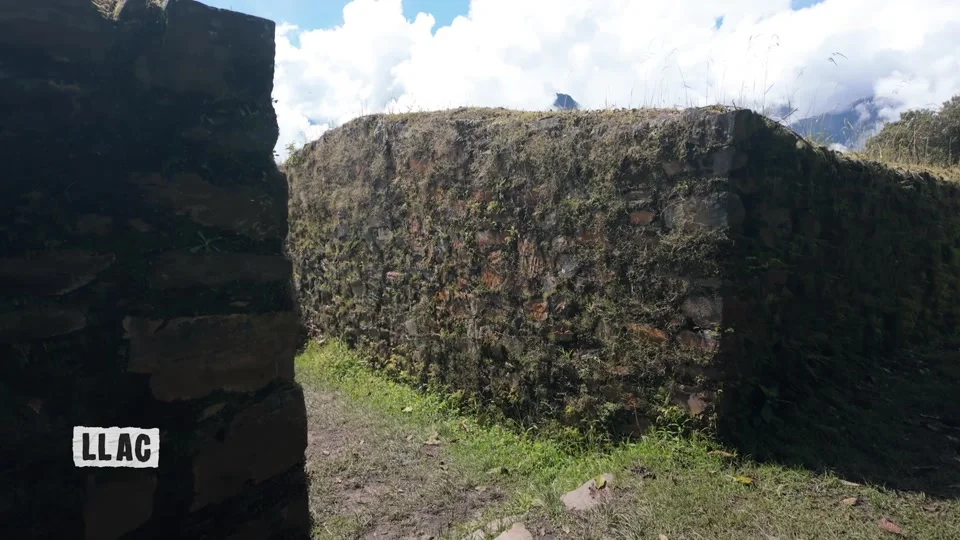
Once a sacred rest stop, the Inca equivalent of a hotel.
From there it's back into thick, muddy jungle, lunch stopped for corn soup, lentils, rice and avocado, and a local seller's granadillas for dessert, like a bigger, sweeter passion fruit. The trail crosses a bridge with sides made from thin wire, definitely not somewhere to test with too much force.
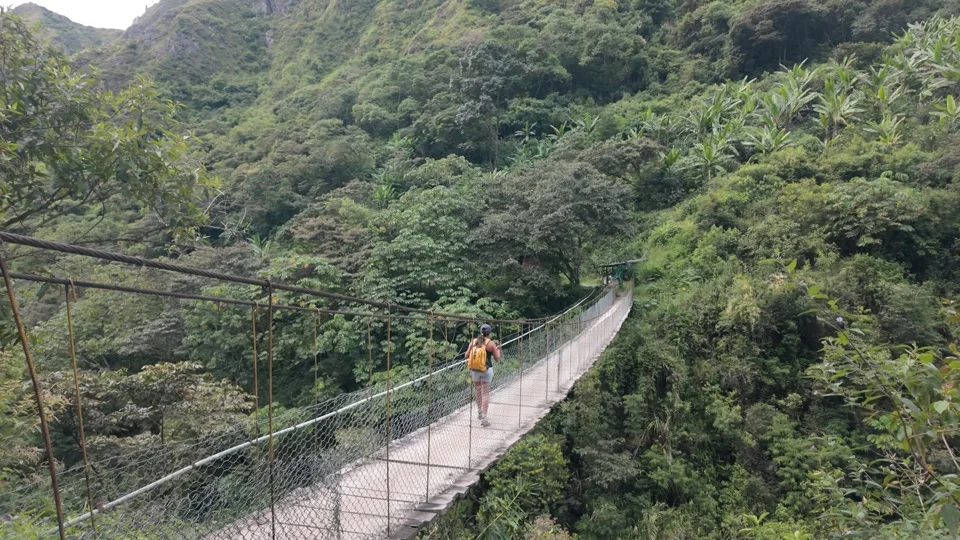
Thin wire sides, and not somewhere to test with too much force.
before finally descending to Hydroelectrica, where the railway begins and a small town has grown up entirely around the train tracks. From there it's a walk alongside the line into Aguas Calientes itself, pulling over every so often as trains pass through.
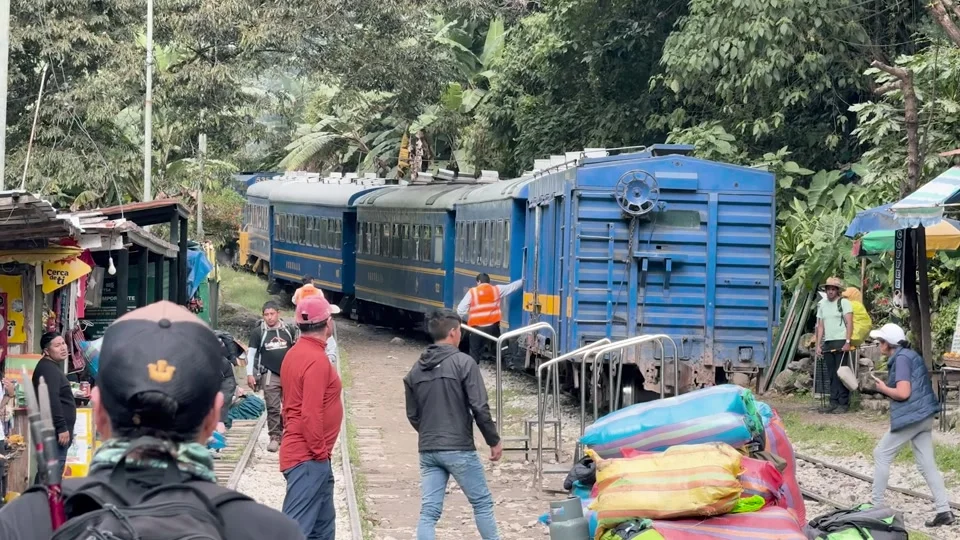
Four days, 45 miles, and a body that felt every single one of them.
Aguas Calientes itself feels like a base camp at the edge of the world, every traveller buzzing with the same nervous energy for what comes next. Most people wake up the next morning and queue for the bus straight to the front gates. We found a way to link Salkantay with the final stretch of the original Inca Trail instead, a back door route leading straight up to the Sun Gate, the way the Inca intended it to be seen.
If you're planning this trek yourself, I've written up everything I wish I'd known before setting off, and the story of that final climb through the Sun Gate.