 KIRAN GOES PLACES
We did the thing we always do and took a night bus in, which saves time and a night of accommodation, but also means landing at 5am with a hostel that won't let you check in until 2pm. First stop, always, is coffee, and Organica Bakery did us a rustic siphon brew that looked more impressive than it tasted. Cusco feels ancient the second you're in it, thinner air, Inca stone under your feet, colonial squares, and then a Starbucks in the corner like nowhere else.
Day 1: First impressions and a walking tour
With no room to check into yet, a walking tour of the centre was the obvious move. If you want anything alpaca, a shawl, socks, a jumper, this is the place, the shops are everywhere. The architecture is genuinely lovely too, overhanging wooden balconies, much more developed than Bolivia where we'd just come from. In the main square stands a statue of Pachacuti, the most important Inca ruler, who transformed Cusco into the capital of the Inca world, facing the old heart of the city he built. After the Spanish conquered the Inca Empire, they built their colonial city directly on top of the original Inca foundations, and you can still see that layering today in the stone underfoot.
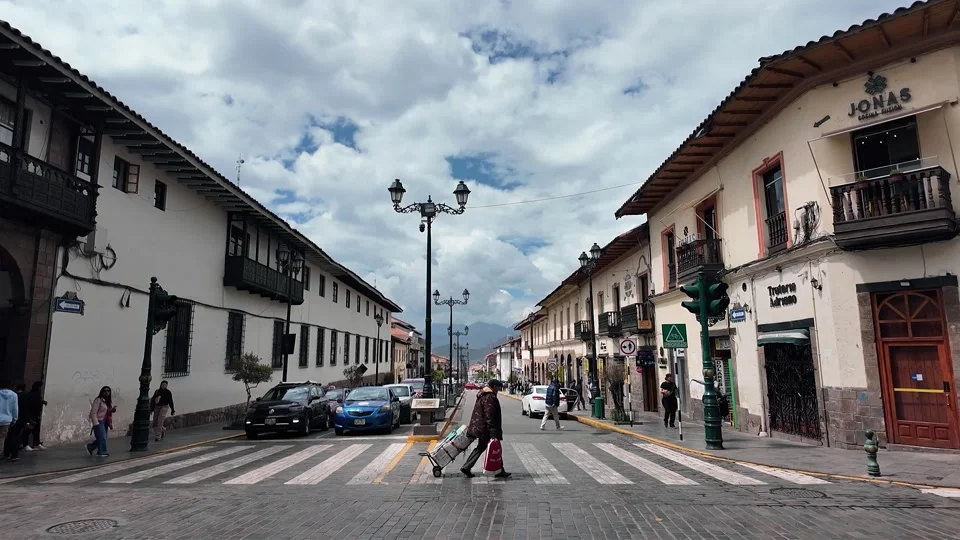
Two civilisations, layered into one city.
From there it's up a genuinely steep hill into San Blas, the artsy, hilly part of the city, and you feel the altitude on the climb. Little souvenir shops, cafes, it reminded us of Santorini a bit. We're told there are three and a half thousand types of potato grown here, and native potato fries are properly good. Guinea pig is the local specialty if you're brave enough. We also tried chicha morada, a sweet non-alcoholic drink made from purple corn, pineapple, cinnamon and cloves that dates back to Inca times, and it's everywhere in Peru for good reason.
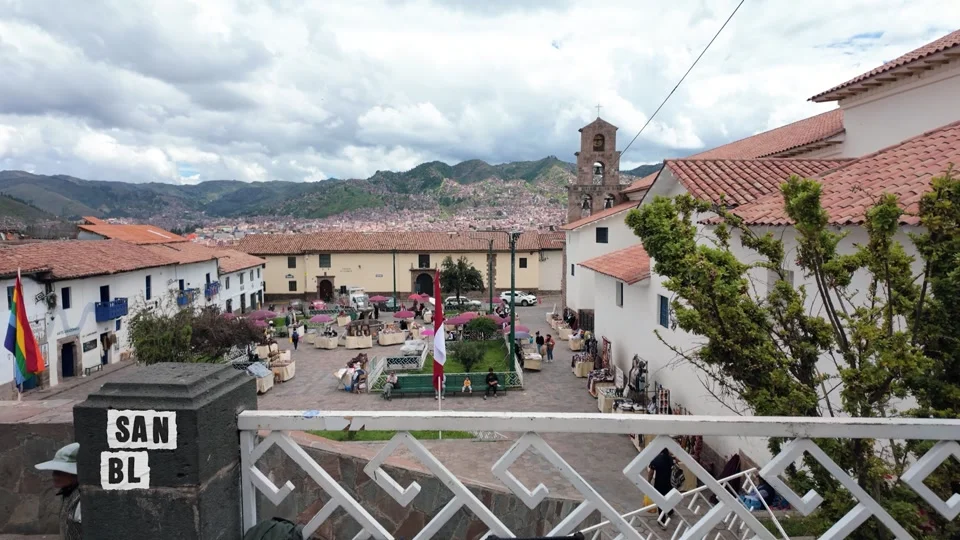
The hilly, artsy part of the city, and you feel it in your legs.
The walking tour finished with an incredible panoramic view over the city that we'd never have found without being taken there, alongside a maracuya sour made with pisco and Andean passion fruit.
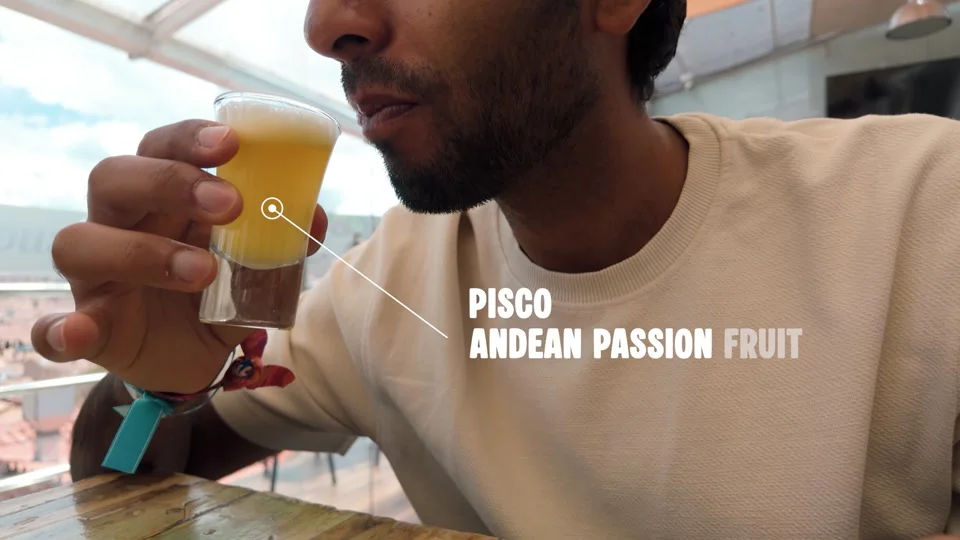
Found only because a local walking tour knew exactly where to look.
San Blas market was next, lined with juice sellers blending the freshest local fruit, passion fruit, mango and custard apple, all in one cup. Cusco is far bigger and busier than we expected, easily a week's worth of things to do if you had the time. By evening the city was genuinely buzzing, more people out at night than during the day, house lights scattered up the hillsides like stars. Dinner was Chakruna, recommended on the walking tour, famous for their alpaca burger. Being vegetarian I went for the quinoa one instead, and it barely tasted different from a normal burger, which says a lot about how much Peru loves quinoa.
Day 2: The Sacred Valley
Day two started with a stop at Three Monkeys Coffee, officially rated one of the best coffee shops in the world, before heading out to the Sacred Valley, the fertile stretch of land outside Cusco that was vital to the Inca, farming, temples and villages running alongside the Urubamba River all the way down to Machu Picchu.
First stop was Pisac, huge circular agricultural terraces and ruins of temples and homes perched above the valley, with a section of cliff face riddled with tiny burial holes, effectively an Inca graveyard. The engineering is what gets you, terraces, water irrigation systems, channels for glacial meltwater, llamas now grazing over what were once major stone structures.
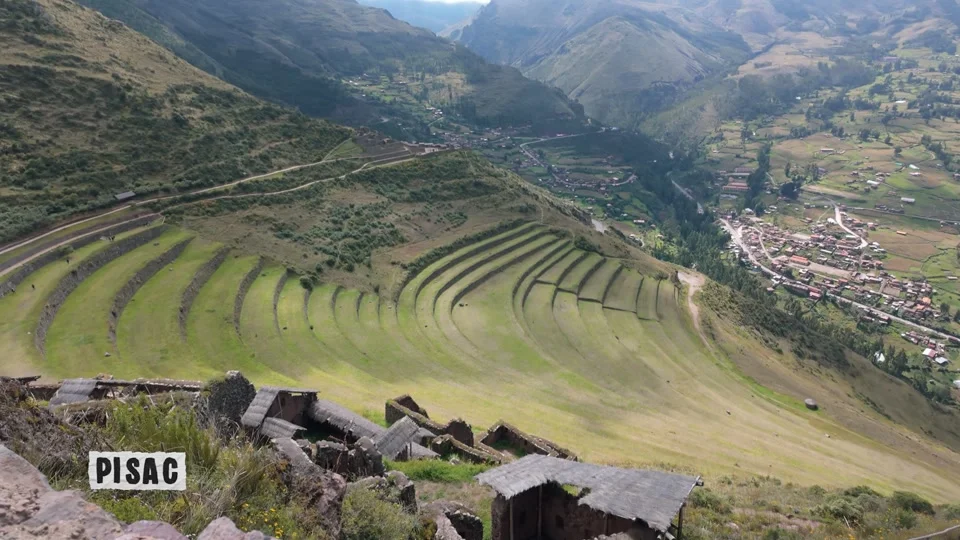
Terraces, irrigation channels, all of it centuries old.
Next was Ollantaytambo, massive stone terraces climbing straight up the mountainside, built to defend the valley and honour the sun. A long staircase up, not the original Inca one, leads to the Temple of the Sun at the top, the highlight of the site. The stones up there are easily double my size, and how they got them up without modern technology is still one of the big open questions about the Inca. On the way, we stopped at a guinea pig farm, where they're bred before being sold to restaurants, genuinely not for the faint hearted if you've just been calling them cute.
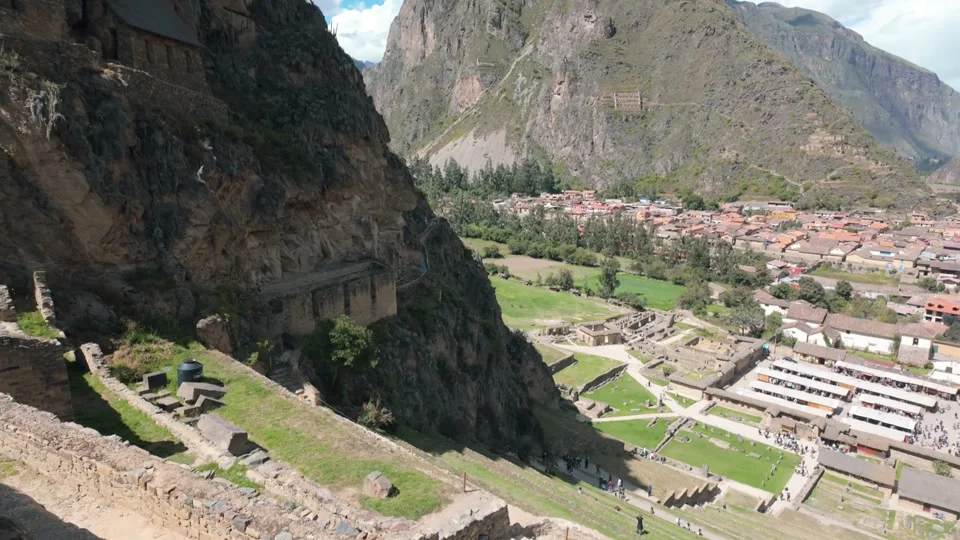
Built to defend the valley and honour the sun.
Last stop was Chinchero, a traditional Andean village known for its weaving and its Inca terraces, later built over by the Spanish. You can clearly see the rocky Inca foundation at the base with white colonial buildings sitting directly on top, and for decades locals actually took stones from the Inca foundations to build their own houses, until the government stepped in only 50 or 60 years ago to protect the site properly.
Day 3: Rainbow Mountain and the Red Valley
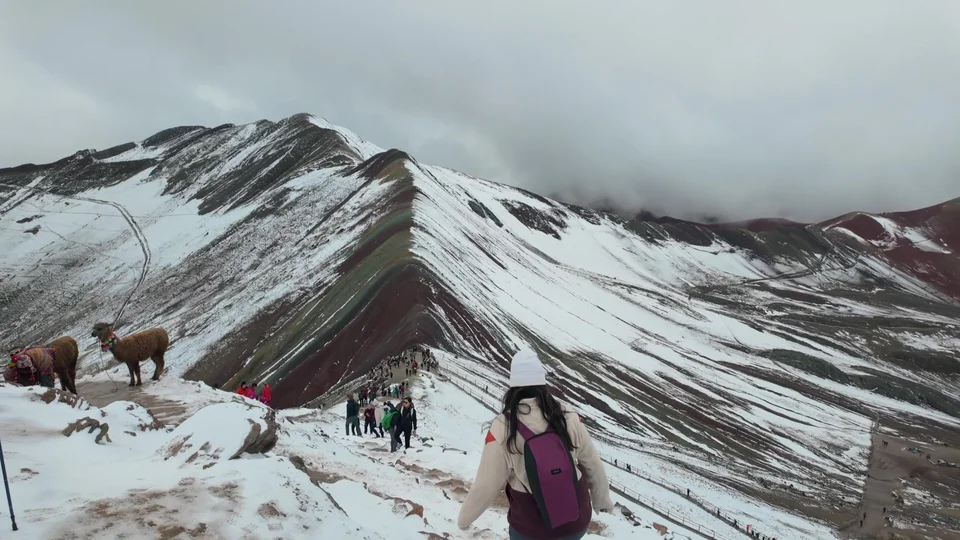
Final day, and a 2:30am wake up for a 3am pickup to hike Rainbow Mountain, one of the highest and most surreal landscapes in Peru. The colours come from mineral layers, iron, copper and sulphur, pushed up by the Andes and exposed as the ice melts. It was cloudy and snowy by the time we arrived, three hours of driving including a breakfast stop, everyone thoroughly tired.
Our guide mapped the route out with a stick in the mud, starting from Phullawasipata at 4,600m. You feel the altitude from the first few steps. Snowy, misty cliffs with flashes of colour peeking through, not especially steep or long as hikes go, but altitude makes everything harder than it should be, heart pounding, genuinely questioning whether you're okay. We deliberately saved this hike for the end of our time in Cusco so we'd have a few days to acclimatise first, and it still hit hard.
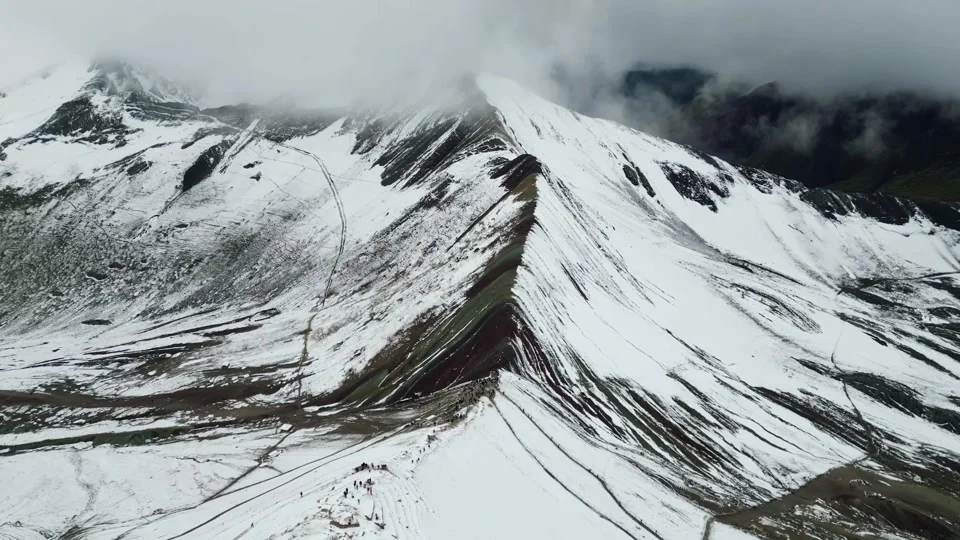
15 hours of flying, 3 hours of driving, 1 hour of hiking, and it was covered in cloud.
We reached the final ascent, an icy staircase disappearing into mist, completely covered in cloud with no view at all. We waited, expecting the worst. Then the clouds actually cleared, and the whole mountain opened up, colour everywhere, not just on this one peak but across the whole landscape, with the valley we'd climbed up laid out below. Genuinely one of the best payoffs for waiting around I've experienced. Because we'd left at 3am, we had it almost to ourselves on the way down while everyone else was still heading up.
From there we crossed over to the Red Valley, and it caught us more off guard than Rainbow Mountain itself, vast red mountains stretching out into the distance, completely unexpected and arguably more impressive.
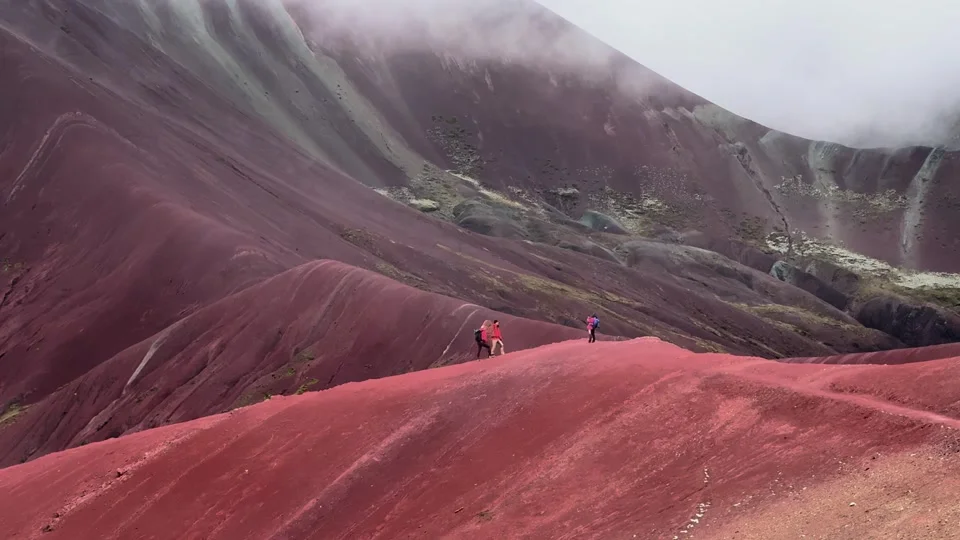
More unexpected than Rainbow Mountain, and just as good.
Three days of ancient streets, local food and one brutal early start, and Cusco turned out to be so much more than just the route to Machu Picchu. It would still be rude to come this far and not visit though, so next up was the Salkantay Trek and a stretch of the original Inca Trail to get there.