 KIRAN GOES PLACES
2 weeks
Medellín, Minca or Salento, Tayrona, Cartagena
3 weeks
+ whichever of Minca/Salento you missed, plus Bogotá
4 weeks
+ Palomino, San Basilio de Palenque, and one further extension
If you've only got two weeks, you're picking between two versions of this trip. Go Caribbean focused and it's Medellín, Minca, Tayrona and Cartagena. Go coffee focused instead and you swap Minca for Salento. Either way you're starting in the same place.
The 2-Week Itinerary
Days 1-4: Medellín
Medellín used to be one of the most dangerous cities in the world. Now it's a foodie haven and a genuine cultural hub, and it makes sense to start here. Base yourself in El Poblado, the trendy district full of cafes and rooftops, and get your first cup of Colombian coffee at Pergamino, one of the best rated coffee spots in the city. People will actually stop to take photos of your bus when you arrive, which tells you something about how tourism here still feels novel. Provenza nearby has the best nightlife in the city, and if it's a Tuesday, Gringo Tuesdays is half language exchange, half proper night out.
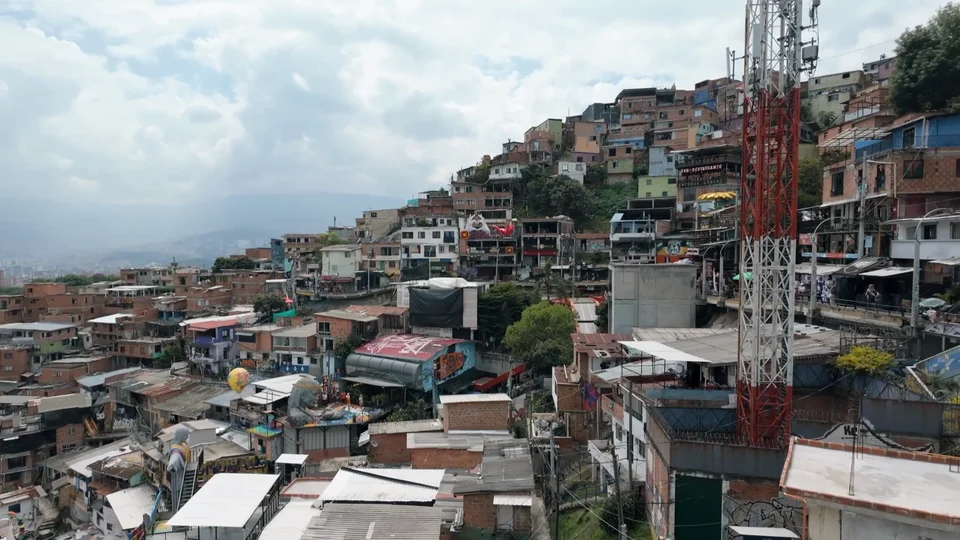
The view over Comuna 13, once one of the most dangerous parts of the city.
Comuna 13 is the one thing I'd genuinely push you to do a guided tour of rather than just wandering. It was once the most dangerous neighbourhood in Medellín, and it's now a symbol of hope built on street art and open air escalators that carry you up through the hills past houses stacked on top of each other. You realise pretty quickly that without those escalators, this would have been a seriously long climb. Grab a michelada, beer with lime, salt and chilli, and a crema from Doña Consuelo while you're up there.
Plaza Botero and the Museo de Antioquia are worth an afternoon for Fernando Botero's larger than life sculptures and paintings, he's Colombia's most famous artist and everything he paints is deliberately out of proportion in a way that's hard to explain until you're standing in front of it. From there, a Pablo Escobar history tour is uncomfortable but genuinely important context for how the city got here, and it ends at Parque Inflexión, a memorial to his victims built on the site of the building where he used to live.
Save a day for Guatapé, about an hour or two outside the city. The town itself is covered in colourful painted panels called zócalos, but the real draw is El Peñón, a giant rock with 700 steps cut into the side of it. You can't really understand the scale of it until you're standing at the bottom, and the view from the top over the turquoise lakes winding through green hills is worth every one of those steps. Back in Medellín, a sunset salsa or bachata class is a nice way to close out the city before one last night in Provenza.
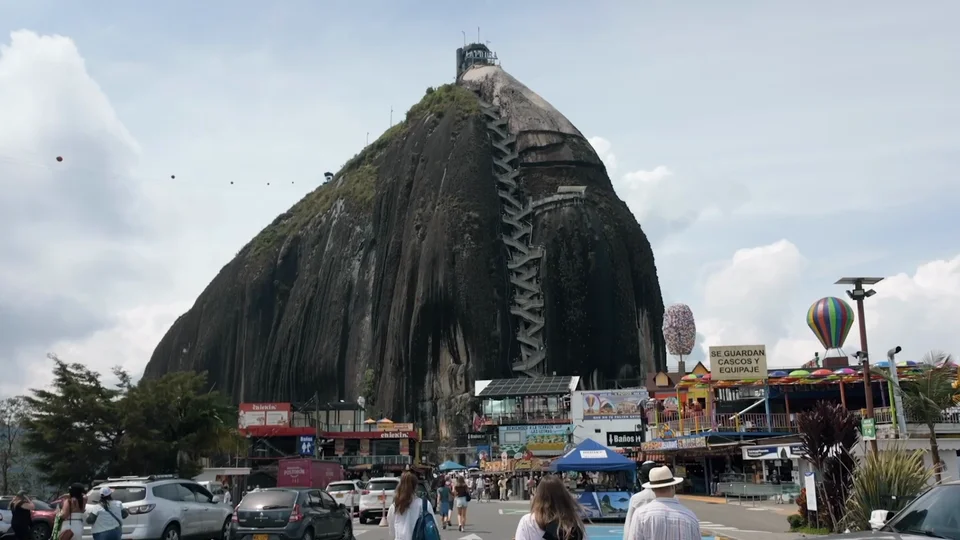
El Peñón, the giant rock outside Guatapé. You genuinely can't judge the scale until you're at the bottom.
Days 5-7: Minca (or Salento)
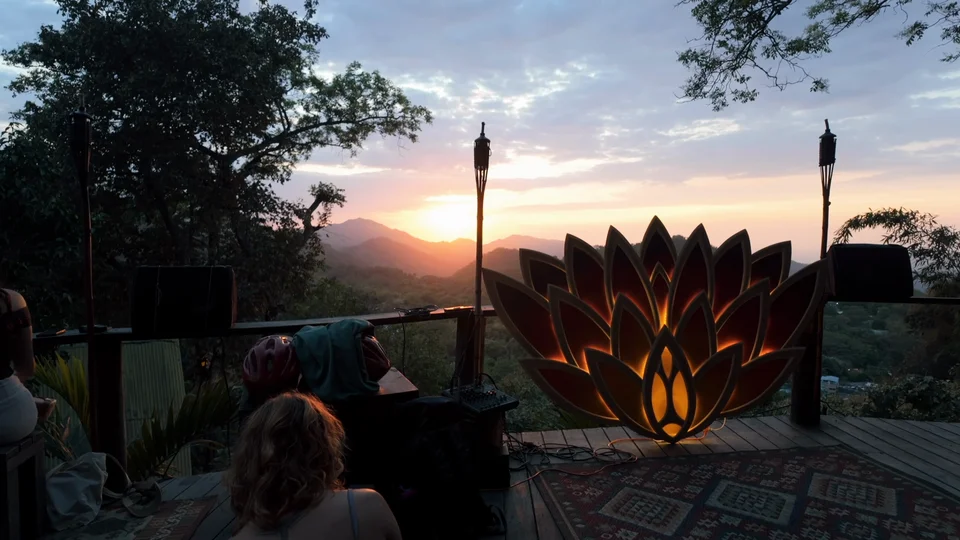
Fly or bus to Santa Marta, then transfer up into the mountains to Minca. Head straight to Casa Loma for sunset and cocktails with live music looking out over the jungle canopy, it's a proper vibe to land into. The next morning is for birdwatching, which sounds like an odd suggestion until you learn Minca is home to over 25 bird species found nowhere else on earth. A local guide will get you spotting toucans and hummingbirds while the forest wakes up around you. Try to catch a morning yoga class too, before hiking out to Cascada Marinka, one of the most beautiful waterfalls in Colombia.
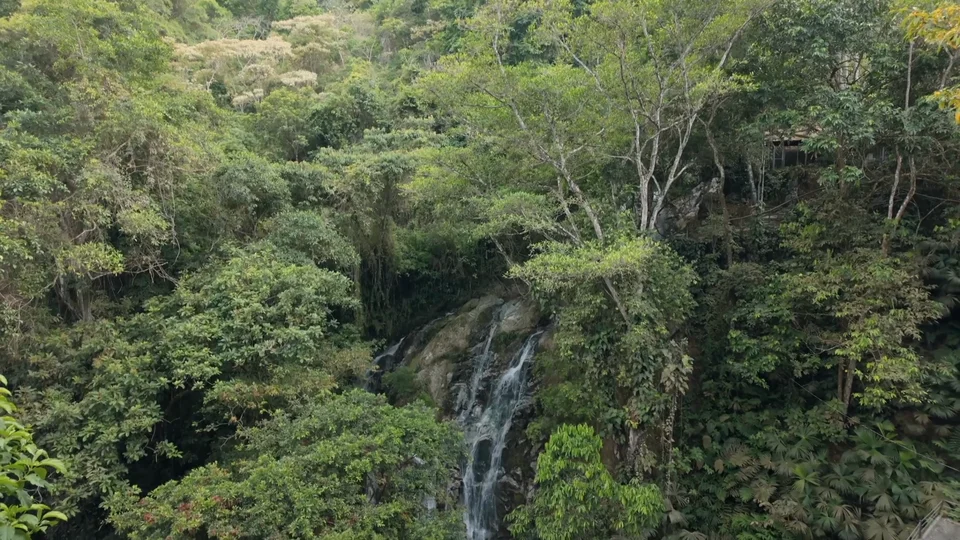
Cascada Marinka, reached after a morning of birdwatching in Minca.
If coffee culture matters more to you than jungle and birds, swap this stretch for Salento instead, more on that under the three week version below.
Days 8-11: Tayrona
Back through Santa Marta and along the coast to Tayrona. You can base yourself at a few spots along this stretch, Playa Tayrona for a hostel with a beach and infinity pool, or Rio Hostel Buritaka a bit further inland if you want the party spot. Give yourself a proper reset day here first, beach, surfing, yoga, swimming, a drink at sunset, this coast is the Caribbean at its absolute best and there's no need to rush it.
The actual national park hike is the highlight. Drop your bags at the entrance and walk through rainforest and rugged coastline until you reach Cabo San Juan, Tayrona's most iconic beach, where two stretches of turquoise water meet jungle cliffs on either side. Stay the night in a hammock hut perched right above the sea. Falling asleep to the sound of waves is one of the most memorable nights of sleep I've ever had, even if sharing a hammock hut with roughly twenty other people is a genuinely strange experience the first time. Hike back out the next day, spotting monkeys and parrots on the trail, then catch a roadside bus onward to Cartagena.
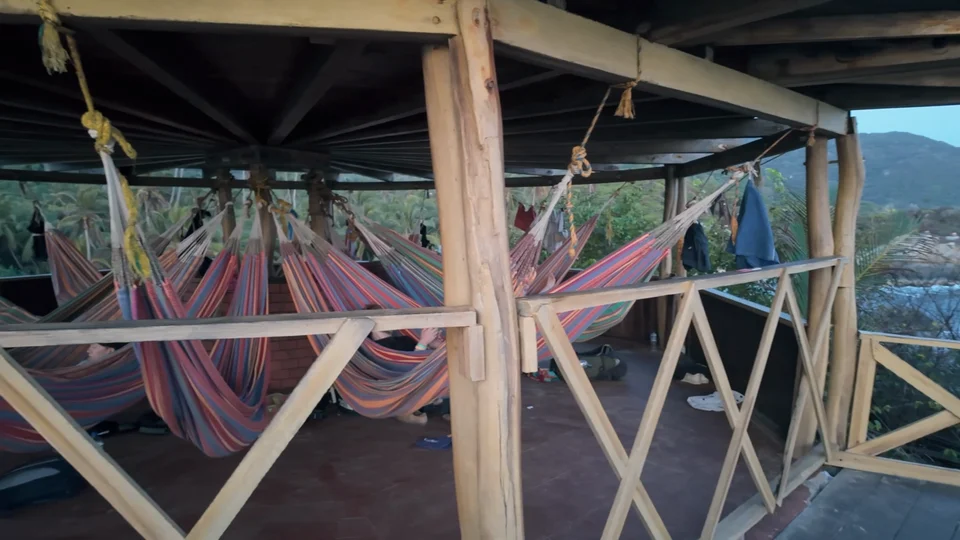
The hammock hut above Cabo San Juan. Sharing it with twenty strangers is stranger than it sounds.
Days 12-14: Cartagena
Cartagena is Colombia's most colourful city and a genuinely good place to end a two week trip. Take a walking tour of the old town to understand how it was once one of the main slave ports of the Spanish empire, and if you have the time, add a day trip out to San Basilio de Palenque, the first free African town in the Americas. Getsemaní, the city's arts district, is worth an afternoon on its own, street art everywhere in a neighbourhood that used to have a genuinely rough reputation and now celebrates it through the art instead. Alquímico, one of the best bars in the world by most rankings, is right in the middle of it.
Parque Centenario has sloths and monkeys hanging in the trees, which is a strange thing to find in the middle of a city centre. Grab a coffee at a bakery that looks like it's been pulled straight off a Pinterest board, wander the coloured streets of Getsemaní, and check out Las Bóvedas for the best priced arts and crafts in the city. For food, Pezetarian does some of the best plates I've had anywhere, and evenings belong to Café Havana, Cartagena's most famous live music venue, mojitos and brass bands and everyone up dancing. It's the right way to end two weeks in Colombia.
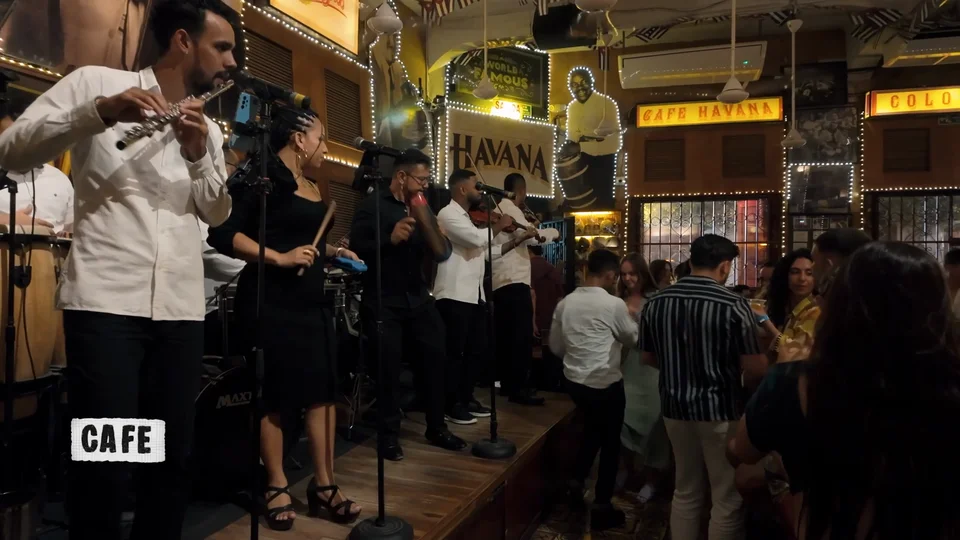
Café Havana, Cartagena's most famous live music venue.
Add a Week: The 3-Week Itinerary
With an extra week, you can slow down and add Colombia's coffee region and its high altitude capital. Use the spare days to linger longer in Medellín, Cartagena or the coast, and if you didn't already swap in Salento for Minca, this is where it comes in.
Salento and the coffee region
Bus or fly from Cartagena to Pereira or Armenia, then on to Salento, a small colourful town at the heart of Colombia's coffee triangle. The cobbled streets and Plaza de Bolívar, lined with coffee stalls and painted balconies, has a strange old western town feel to it. At night, locals play tejo, Colombia's national sport, which is a genuinely bizarre combination of metal pucks, gunpowder and beer. You throw the puck at a ring packed with gunpowder triangles and listen for the explosion that means you've scored.
The Cocora Valley hike the next day is one of the best walks in South America, home to the tallest palm trees on earth, wax palms that reach up to 60 metres. Grab a jeep from the main square up into the misty cloud forest, and make sure you stop at the second viewpoint for a passionfruit tea with a view over the valley. The day after, try horse riding through the surrounding countryside the way locals have travelled here for generations, then visit a coffee farm, we went to Finca El Ocaso, one of the most beautiful in the region, and learn how the beans are picked, washed and roasted before brewing your own cup with the traditional sock filter method. You genuinely won't look at coffee the same way again.
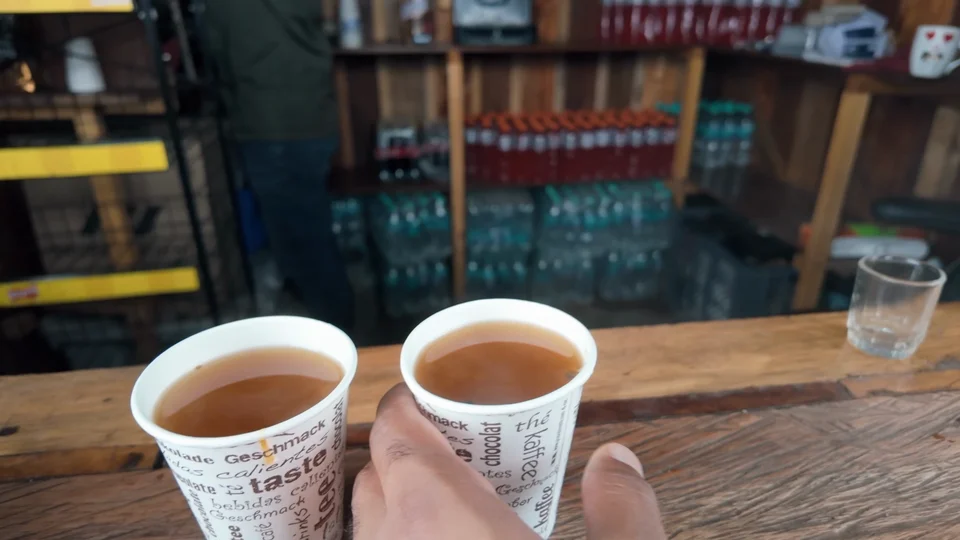
The second viewpoint above Cocora Valley, worth the climb for the passionfruit tea alone.
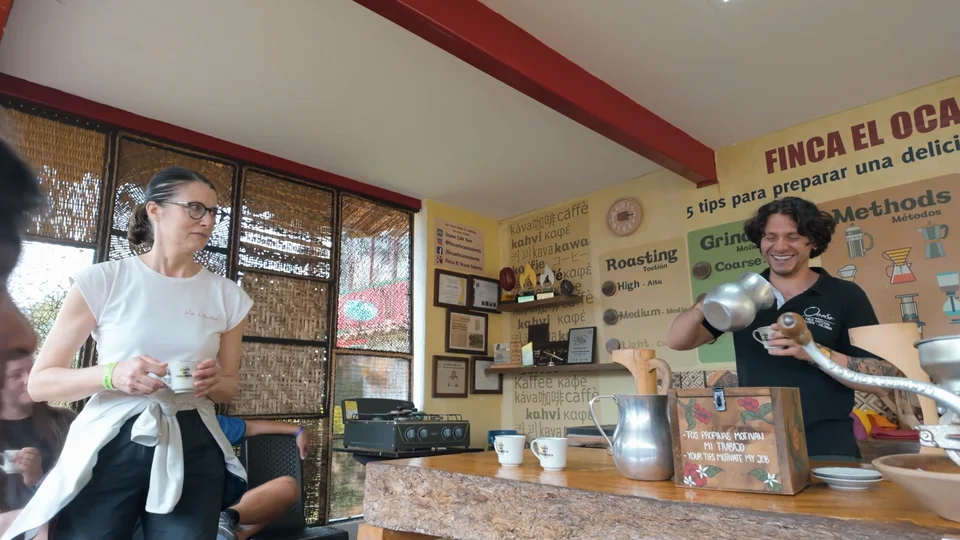
Finca El Ocaso, where you brew your own cup with a traditional sock filter.
Bogotá
A bus or short flight gets you to Bogotá, sitting over 2,600 metres up and feeling completely different to anywhere else in Colombia. It's grey, it's cooler, and it feels older and more grounded than the coast or the coffee region. La Candelaria, the old town, is full of colourful colonial buildings and murals that lean into the city's indigenous roots far more visibly than anywhere else we visited. The Botero Museum is worth the visit for the collection alone, Fernando Botero donated over 200 works here on the one condition that entry always stays free. The Gold Museum next door holds more than 50,000 pieces of pre-Hispanic gold and is one of the best museums I've been to anywhere.
Ride the funicular up Monserrate for a panoramic view over the whole city, weather depending, ours was too clouded over to make the trip worthwhile, and end with one final Colombian coffee looking down over everything. Bogotá feels more indigenous and grounded than any other part of the country, a reminder of Colombia's older, ancient soul sitting right underneath its modern skyline.
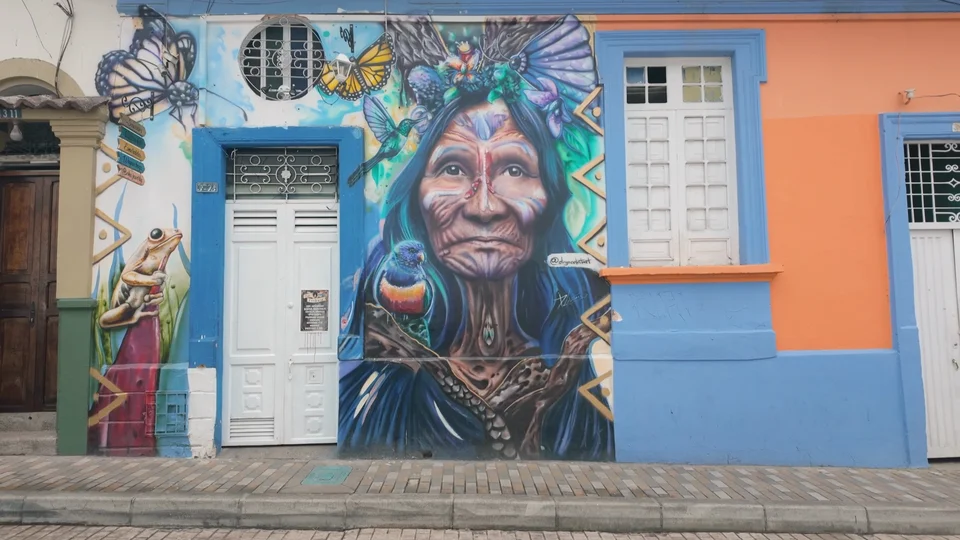
La Candelaria, Bogotá's old town, leans hard into the city's indigenous roots.
Add Another Week: The 4-Week Itinerary
With a full month you can slow the whole trip down and add a few genuinely worthwhile extras. Further along the north coast past Tayrona, Palomino is a relaxed surf town where you can float down the river from the Sierra Nevada straight into the Caribbean Sea. From Cartagena, a day trip out to San Basilio de Palenque is worth prioritising properly rather than squeezing in, given its history as the first free town in the Americas.
If you've still got time, three further extensions are worth considering depending on what you're into: the Tatacoa Desert for stargazing among surreal red canyons, San Agustín for pre-Colombian statues scattered across Andean landscapes, or Barichara, generally considered Colombia's prettiest colonial town, with cobbled streets and the option to go paragliding over the surrounding valleys.
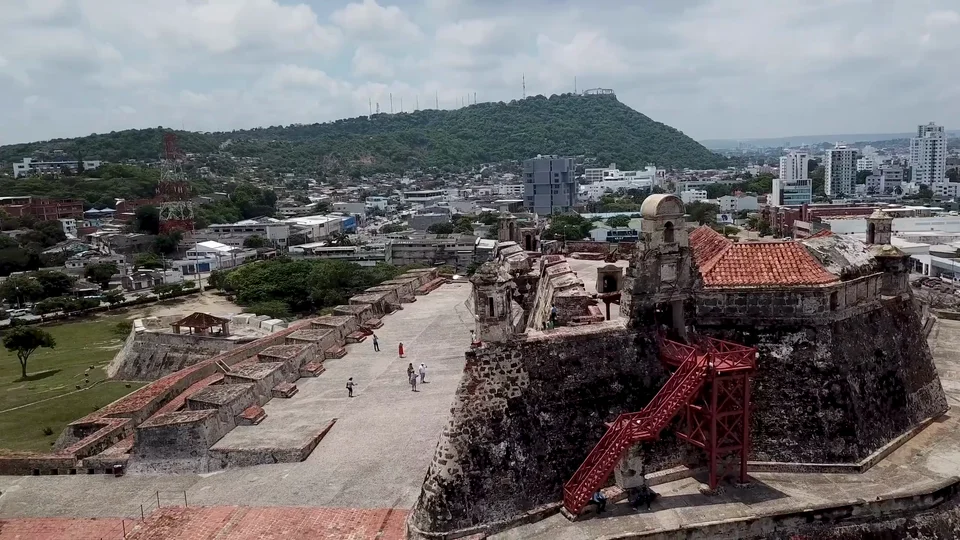
Cartagena's walled city and fort, one of the best ways to end any length of trip here.
So to recap: two weeks gets you Medellín, Minca, Tayrona and Cartagena, or swap in Salento for the coffee route instead. Three weeks lets you add whichever of those two you missed, plus Bogotá. Four weeks adds Palomino, a proper day trip to Palenque, and whichever of the further flung extensions appeals most. Colombia is full of contrasts, beaches and jungle, rhythm and history, and this is genuinely the route I'd take again.