 KIRAN GOES PLACES
Altitude
2,600m+
Gold Museum collection
50,000+ pre-Hispanic pieces
Botero donation
200+ works, free entry
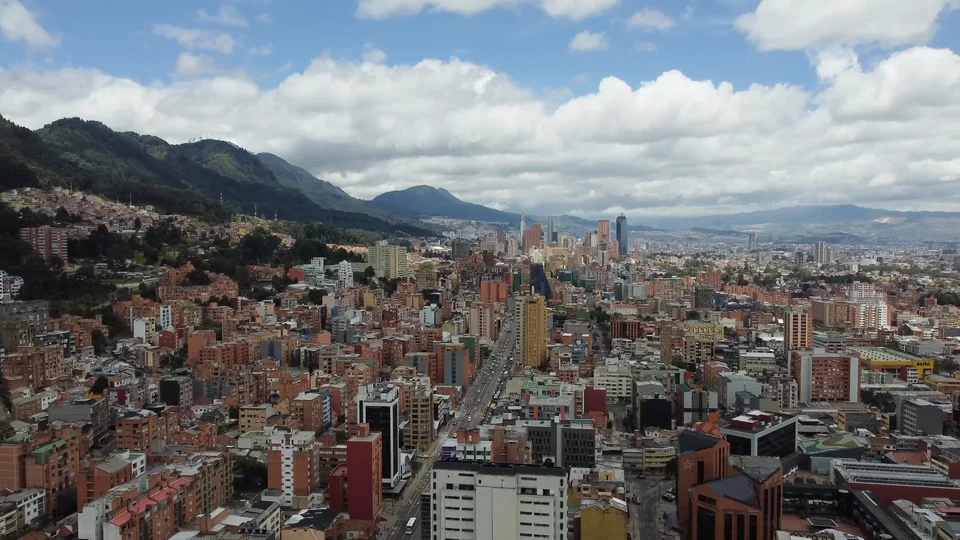
Most travellers use Bogotá as a transit hub, or skip it altogether, flying straight to Medellín or the Caribbean coast. But high in the Andes, over 2,600 metres above sea level, this city tells a completely different story to the rest of Colombia. It was home to the Muisca people long before the Spanish arrived, and you can genuinely feel that heritage here, in the thin air, the gold, the art, and the people. After a long bus ride from Salento, we arrived at our hostel in La Candelaria and had one day to see as much of it as we could.
The plan was simple: two museums, and the old town we were staying in. One was the Gold Museum, the other the Botero Museum. We were staying at Socialtel, right in the heart of La Candelaria, and the neighbourhood itself set the tone immediately, cafes with the longest cortado queues I'd seen anywhere, and street art on almost every wall. On the way there, there was just a guy walking his pet llama down the street, waiting to cross the road like it was the most normal thing in the world. Nobody else seemed to think it was strange, which somehow made it funnier.
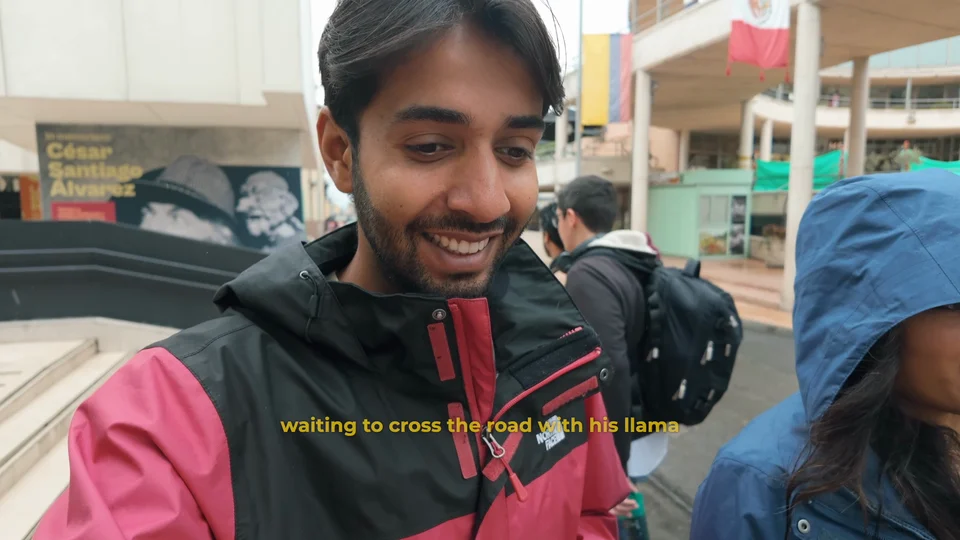
Waiting to cross the road with his pet llama, like it was nothing.
We'd planned to go up to Monserrate first, but the rain had other ideas, so we headed to the Botero Museum instead, since at least it was indoors. Fernando Botero is Colombia's most famous artist, known for painting and sculpting everything, people, animals, fruit, deliberately out of proportion, and it's such a distinctive style that once you've seen it you can't unsee it anywhere else. A personal favourite inside was his version of the Mona Lisa. In the year 2000, Botero donated over 200 works to the Colombian people on one condition: that admission would always stay free. He wanted ordinary Colombians, not just tourists, to have access to world class art, and you can feel that generosity walking through the rooms.
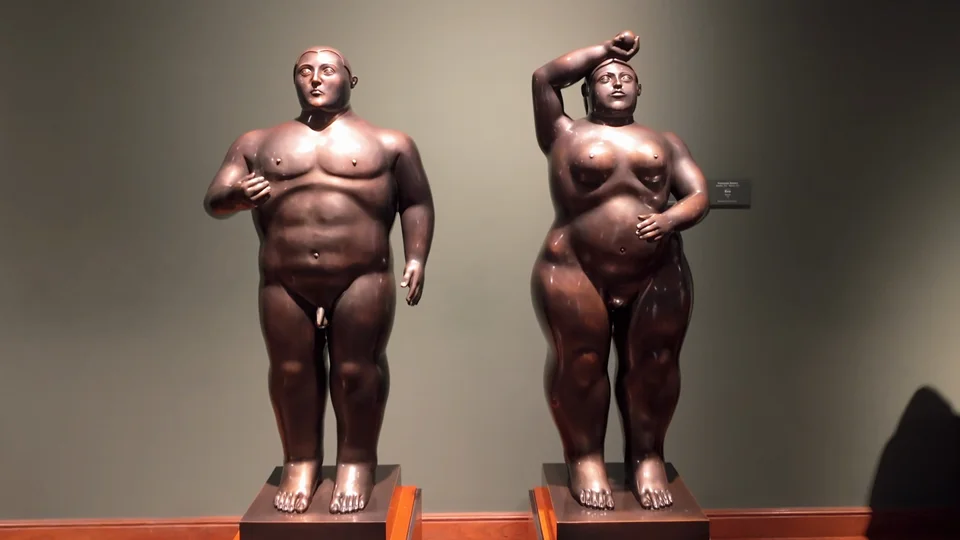
Botero's signature out-of-proportion style, impossible to mistake for anyone else's work.
Walking between the two museums, you notice Bogotá has street art and murals everywhere too, much like the rest of Colombia, but here it leans more into indigenous faces and reminders of the country before colonisation. The city itself feels grey and industrial compared to everywhere else we'd been, and there's a noticeably high police presence, heavily armed, which makes you feel safe rather than nervous, but it's a stark contrast to the coast.
The Gold Museum, the Museo del Oro, was next, walking distance from the Botero Museum, and it's genuinely one of the most impressive museums in South America. It holds more than 50,000 pieces of pre-Hispanic gold and artefacts, and inside, everything actually glows, intricate masks, ornaments and ceremonial objects crafted centuries before the Spanish ever arrived. It's a real reminder of how advanced these civilisations were, and it's a lot more than just a room of gold, which is honestly what I'd expected going in. One of the strangest facts from the visit, parrots and macaws that had been taught to speak were considered especially valuable to the Muisca and were sacrificed in temple rituals in large numbers, precisely because that ability to mimic human speech made them so prized. That's your fact for the day.
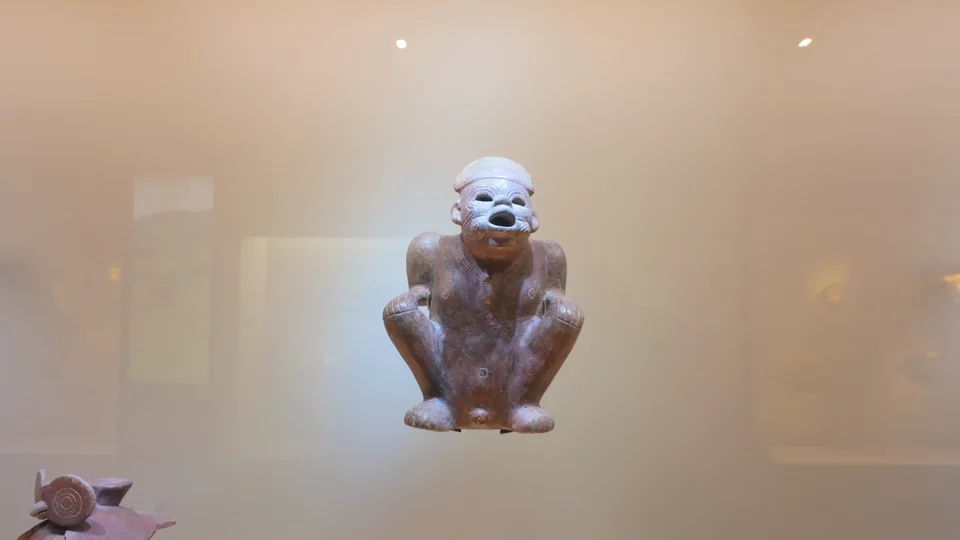
The Museo del Oro holds over 50,000 pieces of pre-Hispanic gold and ceramic artefacts.
Bogotá is one of the highest capital cities in the world, and we wanted to try the natural remedy for the altitude, coca tea, made from the leaves of the coca plant. Yes, the same plant behind cocaine, but in its natural leaf form it's completely different, mild, herbal, and used for thousands of years to help with altitude, digestion and energy. It genuinely worked, headache gone, properly alert within about twenty minutes.
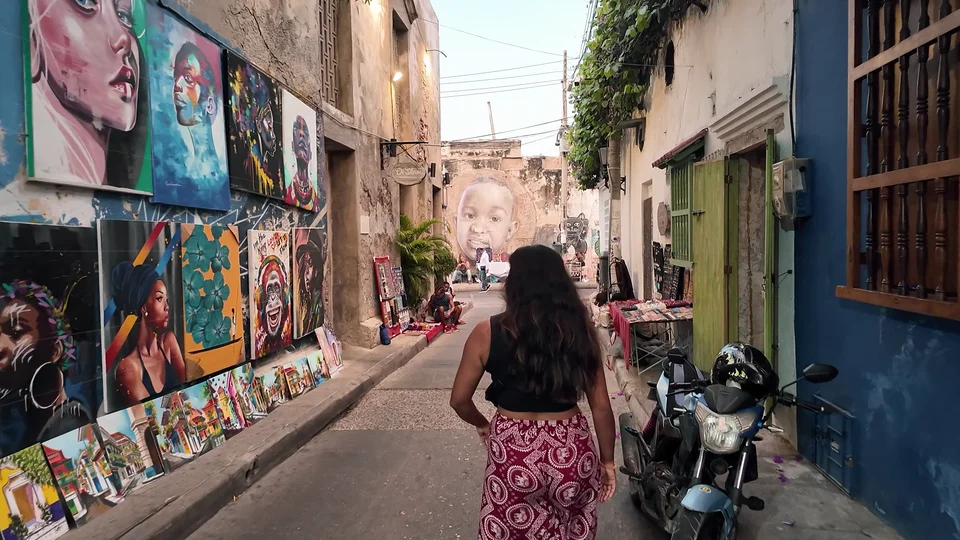
Walking the streets of La Candelaria afterwards, you can feel the indigenous energy more than almost anywhere else we went in Colombia, colourful colonial buildings, string lights over narrow cobbled alleys, and murals leaning hard into that pre-colonial identity. We stopped for lunch at a small Japanese spot nearby, sushi with plantain, which is such a specifically Colombian twist on it and worked far better than it had any right to.
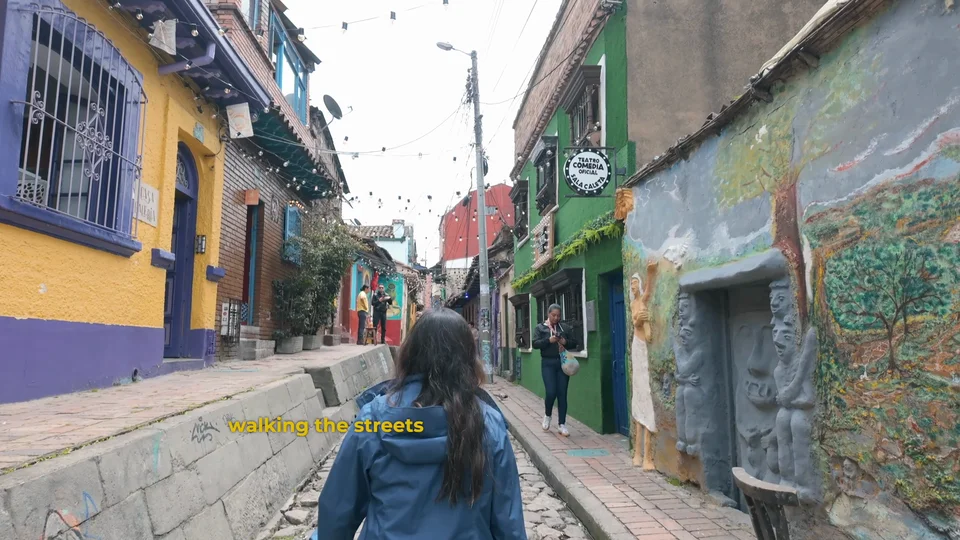
La Candelaria's cobbled alleys, strung with lights even in daylight.
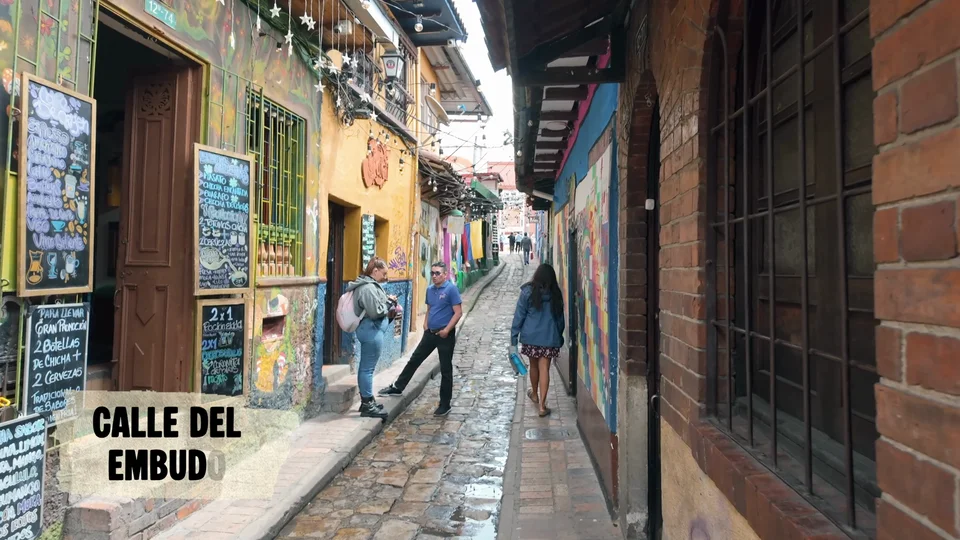
Calle del Embudo, one of the most photographed corners of the old town.
As it was our last stop in Colombia, we wanted one final taste of the coffee that had spoiled us completely over the previous few weeks. We stopped at a small spot called Gracia, right in La Candelaria, and ordered a V60, which had become our preferred method by that point in the trip. Fourteen grams of coffee, a thirty second bloom, then a slow pour. It tasted sweet without a single grain of sugar in it, almost like chocolate. Genuinely one of the best cups of the whole trip, and it set an unfairly high bar for coffee back home.
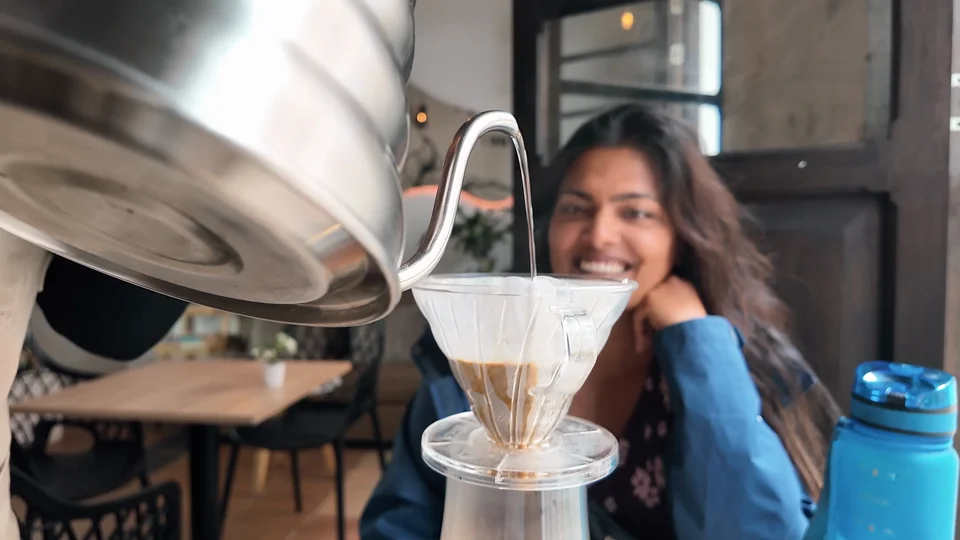
A V60 pour at Gracia, our last coffee in Colombia and one of the best of the trip.
The rain meant Monserrate stayed shrouded in cloud all day, so that one's still on the list for next time. But even without it, one day in Bogotá completely changed how I thought about this city. It's not the version of Colombia most people go looking for, it's colder, greyer, more industrial, but it's also the most indigenous and grounded place we visited, a reminder of the country's older, ancient soul sitting right underneath its modern skyline. If you're only passing through on your way somewhere else, it's worth stopping for a day.