 KIRAN GOES PLACES
Botero sculptures at Plaza Botero
23
El Peñón climb
700 steps (200m monolith)
1. Walk through Comuna 13
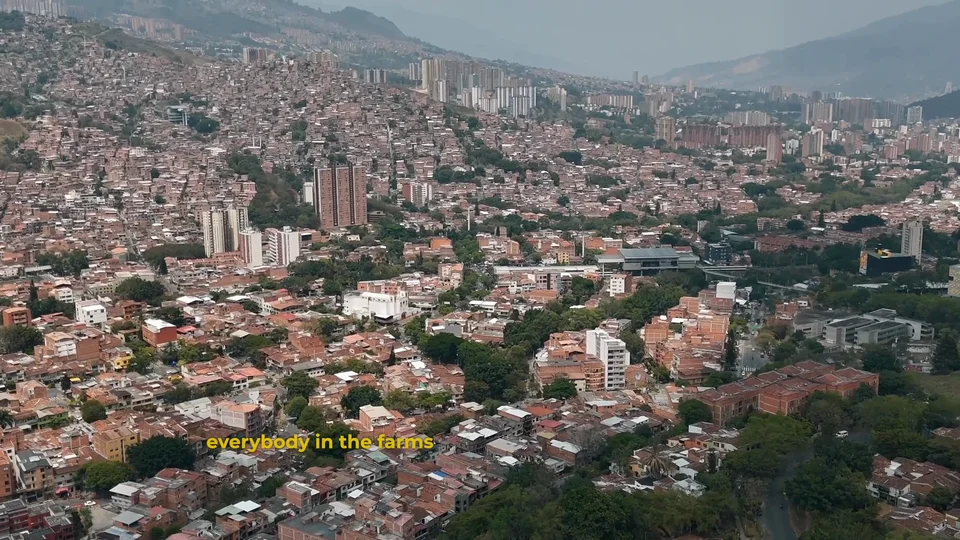
In the 1980s and 90s, Comuna 13 was one of the most dangerous areas in the world, cartel territory and a battlefield between gangs, guerrilla fighters and the state. People used to joke about a two hour life expectancy if you crossed the wrong street, before Operation Orion sent in the army with tanks and helicopters to try to take back control. It's a genuinely dark chapter of the city's history.
Today it's a symbol of resilience instead. Every wall is covered in detailed, colourful murals telling stories of resistance and hope, some of them turning the very weapons used against the community, like the helicopters from Operation Orion, into hummingbird murals and messages of transformation instead.
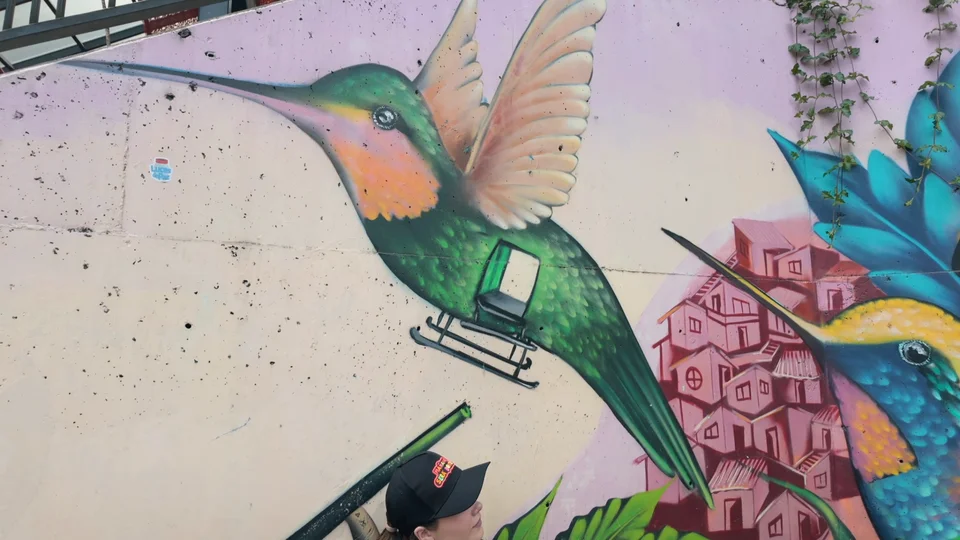
One of the countless murals in Comuna 13, turning a dark history into something colourful.
The outdoor escalators are worth the trip alone, it feels surreal to be on what looks like a normal street and then suddenly riding escalators up the hillside, passing layers of houses and art the whole way. Without them it would be a seriously long climb. Add in breakdancing troops, music blasting from every corner and locals doing the best Spanish freestyle rap I've ever heard, and Comuna 13 ends up being one of the most alive neighbourhoods in the whole city.
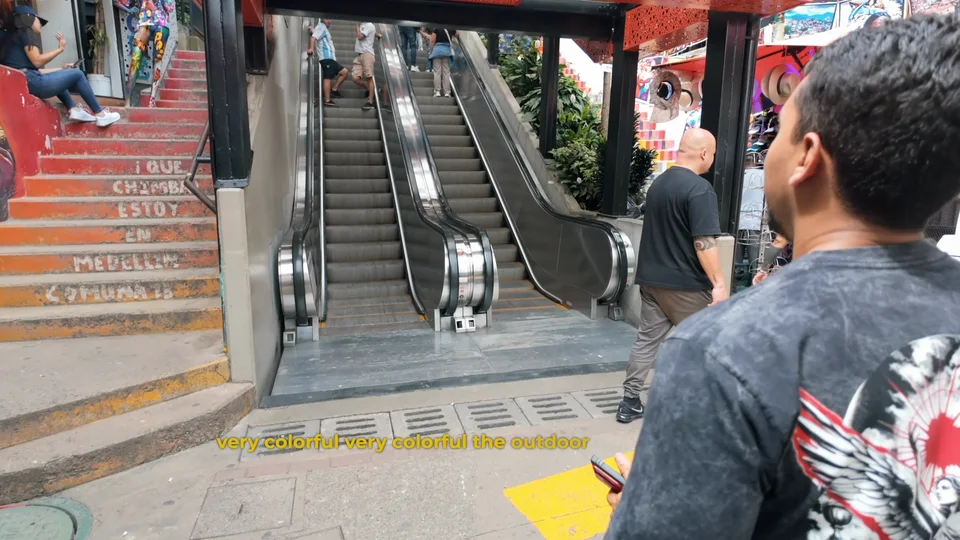
The outdoor escalators, the reason this hillside climb isn't a killer.
2. Try a michelada from a street stand
No visit to Medellín is complete without a michelada, a drink that's basically become a cultural icon here. In Comuna 13 you'll find vendors serving them with either beer or soda, mixed with lime, salt and fruit, fizzy, sweet, tangy, and sometimes topped with candy or gummy sweets. Sipping one while taking in the street art and performances around you is about as Medellín as an afternoon gets.
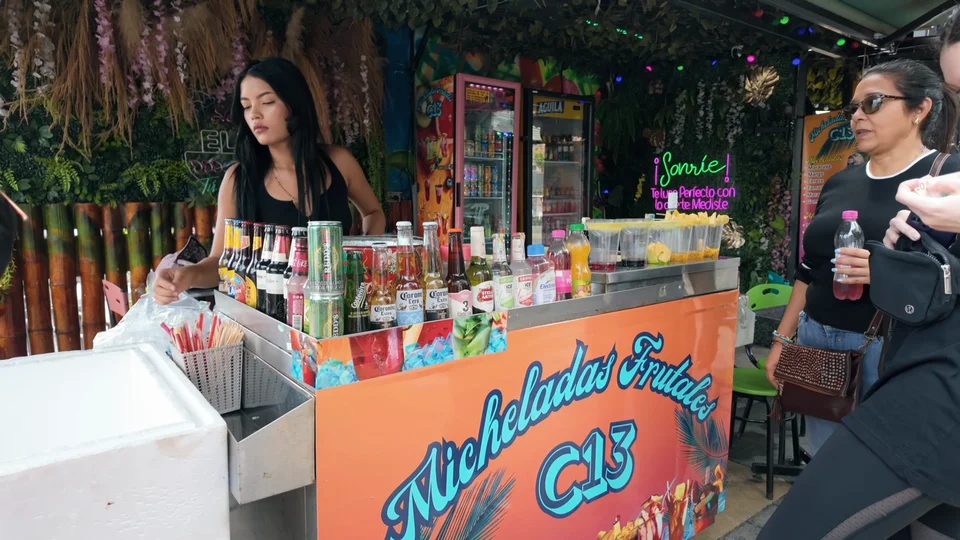
Micheladas Frutales, Comuna 13. Fizzy, sweet and completely necessary in the heat.
3. See Fernando Botero's sculptures at Plaza Botero
Fernando Botero is Colombia's most famous artist, born right here in Medellín, and you can find 23 of his iconic oversized sculptures dominating this square. People climb on them and take photos constantly, making it one of the most playful public spaces I've seen anywhere. Botero is known for painting and sculpting figures with exaggerated proportions, and it turns out that's not just for fun, it's a reflection of Colombian culture, humour and perspective.
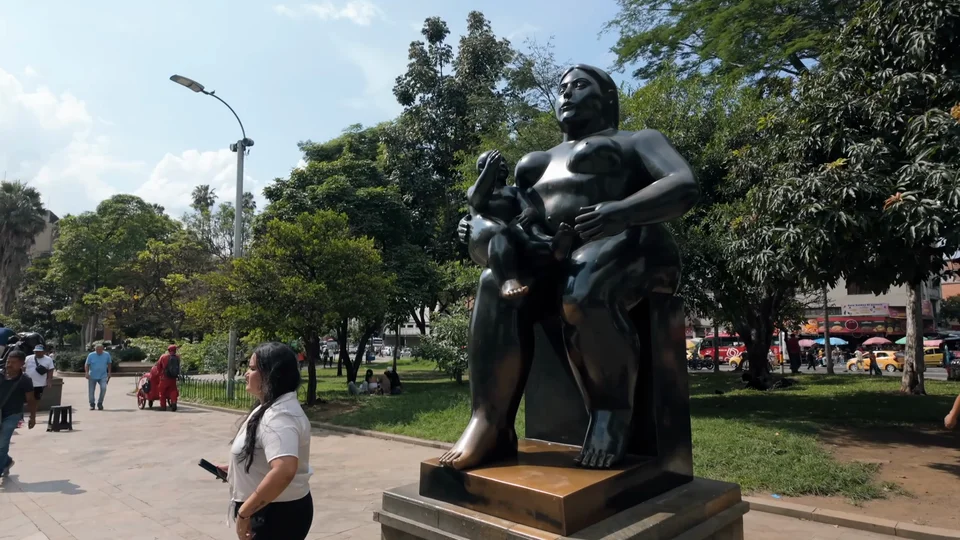
One of 23 Botero sculptures scattered around the plaza, all fair game for climbing on.
Right next to the plaza is the Museum of Antioquia, a must if you want to go deeper into Colombian art, from Botero's own paintings to contemporary work by local artists. It's a maze of colour inside a strange, industrial, almost communist-looking building, and one of the best galleries I've been to in a long time. You can't take photos in certain rooms, but keep an eye out for the famous depiction of Pablo Escobar's death, a piece that captures the city's history in a way words can't.
4. Have a coffee at Pergamino
No trip to Medellín is complete without its world famous coffee, and the best place to do that is Pergamino Coffee in El Poblado. We went for a V60, a brewing method that brings out the delicate, fruity notes, and sitting there sipping it you can almost taste the mountains the beans were grown on. If you only have time for one coffee in the whole city, make it here.
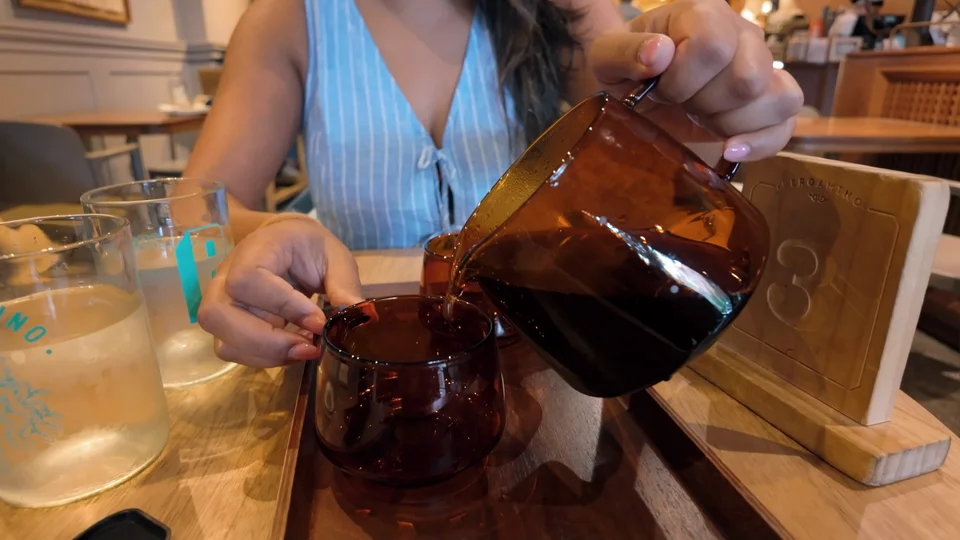
A V60 pour at Pergamino, the one coffee stop worth prioritising in Medellín.
5. Take a salsa class
Salsa is woven into Colombian culture, and there's no better way into it than taking a class. They're everywhere, studios all over the city, and plenty of hostels offer them too. We took a few, including a bachata class and a salsa class at a hostel in the city, learning basic steps, turns and spins, and by the end you're at least dangerous enough for a night out showing off the moves. Genuinely one of the better ways to meet people and stay a bit fit while travelling.
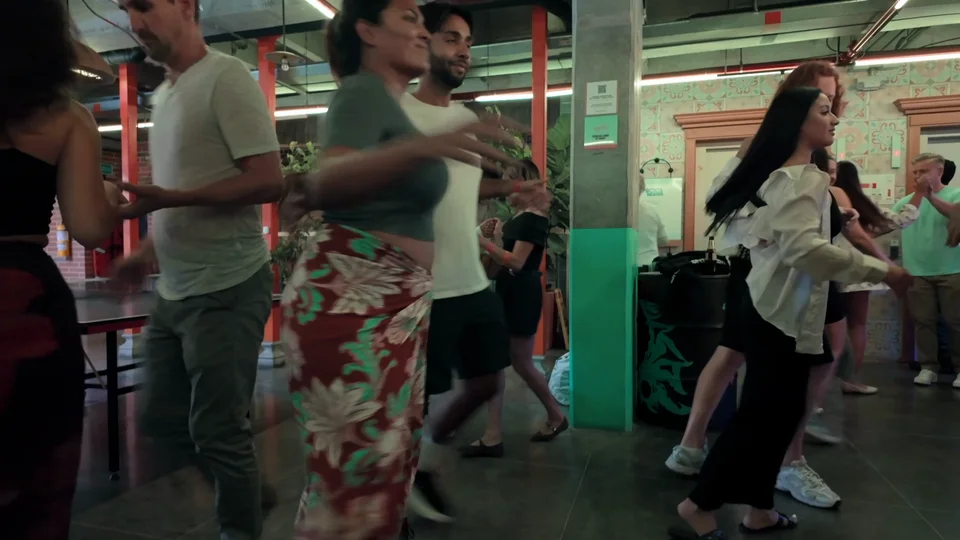
Learning the basics before attempting to use them on an actual dance floor.
6. Spend an evening in Provenza
To keep the dancing going, head to Provenza, a lively neighbourhood spot in El Poblado, the main tourist district, packed with bars, restaurants and street life. It's also properly safe, with blockades and security on both sides of the main strip. Cafes, craft cocktails and music spill out of every doorway. If you're around on a Tuesday, don't miss Gringo Tuesdays, an informal language exchange in one of the bars where locals and travellers meet to practise Spanish or English over a shot or two of aguardiente, a word that took me embarrassingly long to say properly.
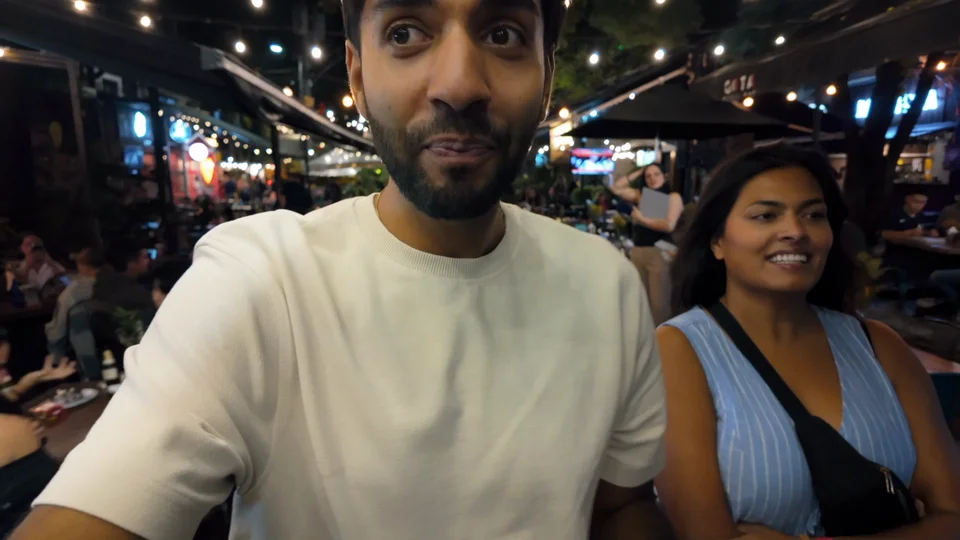
Provenza at night, the main strip for bars, cocktails and Gringo Tuesdays.
7. Learn the darker history at Barrio Pablo Escobar and Parque Inflexión
This is a more controversial stop, and one that isn't widely publicised. Barrio Pablo Escobar is the neighbourhood where the infamous kingpin built homes for families who'd lost everything, and some residents still remember him as the man who gave them shelter, even as the government quietly paints over murals celebrating him, a huge one just four weeks before we visited. It's a genuinely strange feeling, watching history get deleted rather than reckoned with.
From there we went to Parque Inflexión, the site of Escobar's former residence, the Monaco building, where he lived alone on the top floor for his own security while the rest of the building sat empty. It's now a memorial, and it's hauntingly striking, tens of thousands of small bullet holes etched into the walls, each one representing a victim of his reign, alongside a timeline of the bombings and violence from that era. It's not a comfortable stop, but it's an important part of understanding how the city got to where it is now.
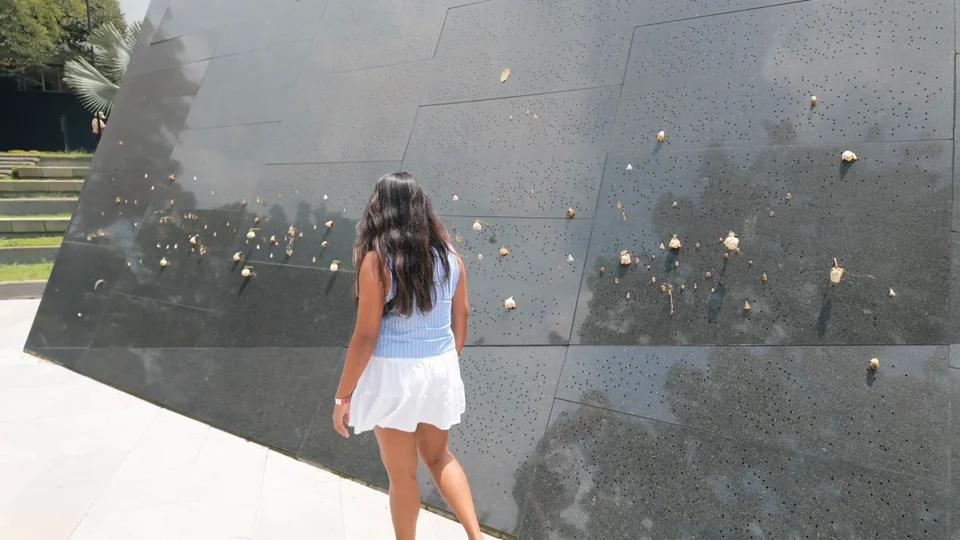
Parque Inflexión, tens of thousands of bullet holes, each one a victim.
8. Day trip to Guatapé
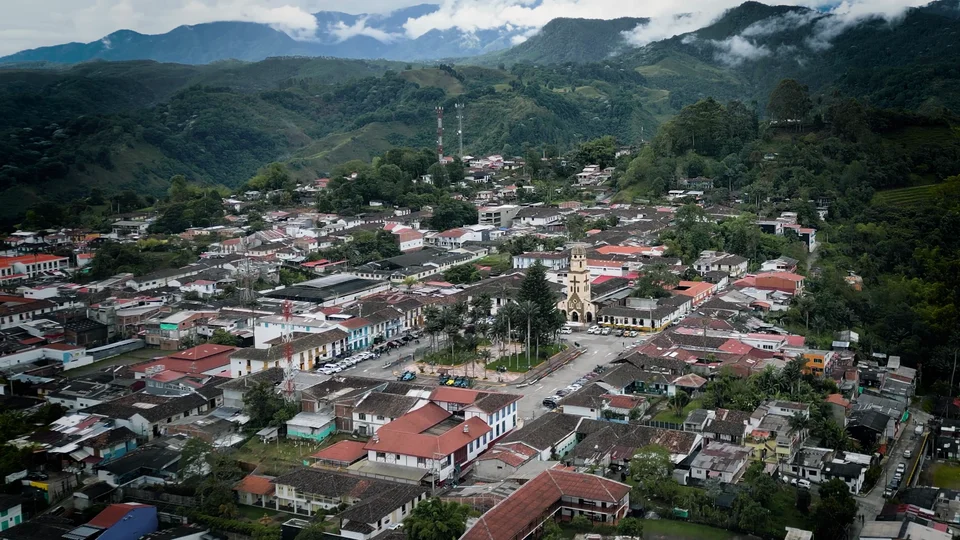
For a break from the city, take a day trip out to Guatapé, one of Colombia's most colourful towns and an absolute must if you're anywhere nearby. Every single door and house is painted in a different bright colour, with painted zócalos telling the stories of the families and businesses inside.
The highlight is El Peñón de Guatapé, a 200 metre granite monolith, basically just a giant rock, that you climb via 700 steps. It's sweaty, but worth every bit of it, the view from the top is turquoise water twisting through islands and peninsulas, all a result of a dam project back in the 1970s.
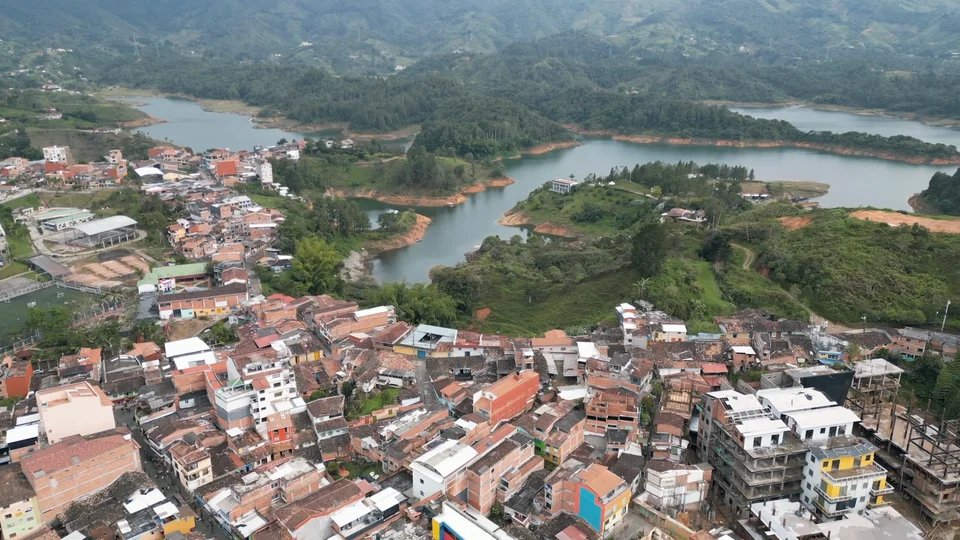
The view from the top of El Peñón, 700 steps well spent.
9. End the day at a rooftop bar
Finish it all off at one of the city's rooftop bars, sipping a cocktail and watching the light stretch across the mountains. After a day that swings between colourful murals, dance classes and some genuinely heavy history, it's the right way to sit with everything Medellín is, a city of contrast, transformation and colour in equal measure.
Medellín surprises you at every turn, and it rewards slowing down enough to see both sides of it, the street art and the salsa classes, but also the harder history that shaped the place. Do both properly and it might just be one of the most interesting cities in South America.