 KIRAN GOES PLACES
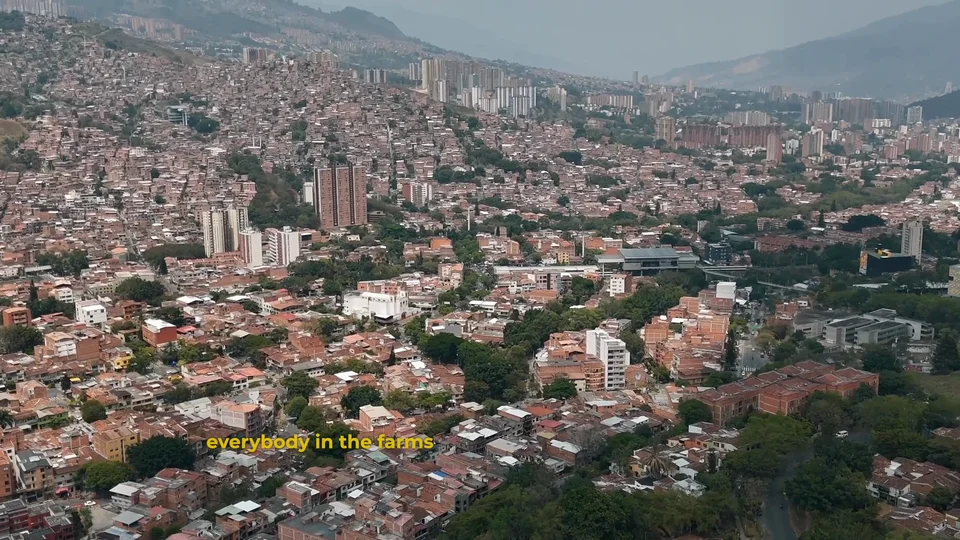
We'd already covered Comuna 13's murals, the escalators, Plaza Botero and Guatapé's giant rock in a full guide to Medellín, so this is more about the bits that didn't fit anywhere else, starting with our guide for the day, Miguel.
We rolled into Comuna 13 on a ridiculously colourful pimped-out bus, people stopping in the street just to take photos of it with us still sitting inside. Miguel walked us through the neighbourhood's history without softening any of it, how the government once bombed farmland and displaced the families who ended up settling here, how murders were once so frequent that locals joked about a two hour life expectancy if you crossed the wrong street, and how Operation Orion in 2002 brought in 2,000 soldiers, Black Hawk helicopters and tanks to flush out the armed groups controlling the hillside. There's a wall partway through the tour covered in old newspaper front pages from that era, headlines about massacres and kidnappings, that does more to explain the neighbourhood than anything else on the walk.
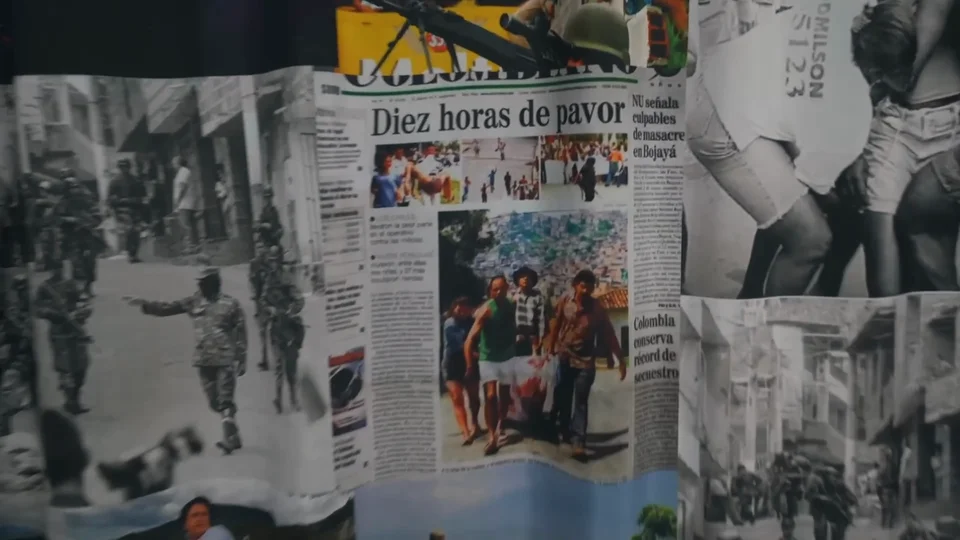
Old front pages on a wall partway through the Comuna 13 tour, a lot more effective than any plaque.
Food-wise, this trip filled in a few gaps too. Vegan sushi and ramen at a spot called Helecho, dinner at Mamasita for proper Colombian food with avocados the size of your fist, and later in Provenza we ended up at Yacky Chan a few doors down from the Gringo Tuesdays language exchange bar. Back at the hostel, Masaya Medellín, instead of another salsa class we tried bachata, a Dominican partner dance heavy on hip movement and spins, properly out of my comfort zone but a good laugh under the rooftop lights.
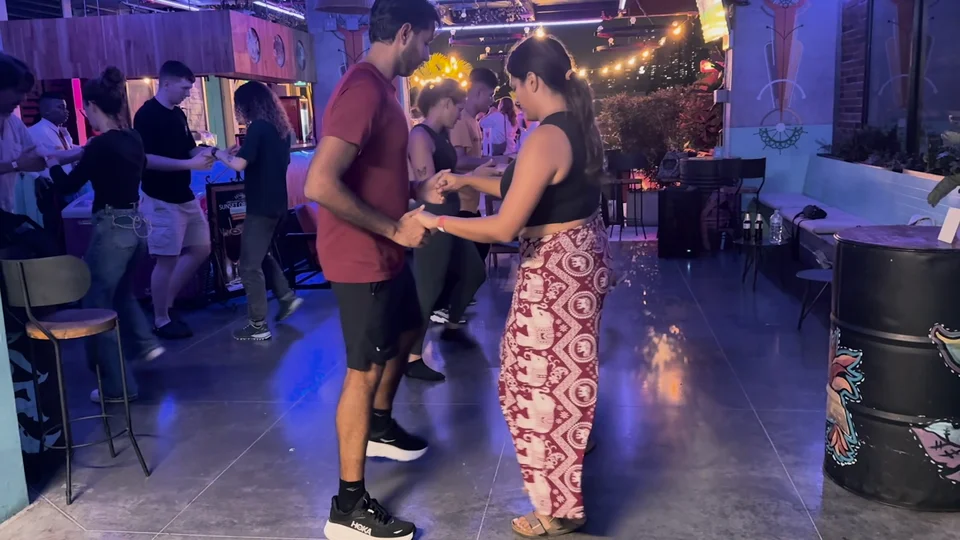
Bachata, not salsa this time, learned badly on a rooftop in Provenza.
We'd already written up Barrio Pablo Escobar and Parque Inflexión as the darker side of the city, but it's worth adding that it's a genuinely divisive thing to do here, hostels won't offer it as an official tour, and plenty of locals would rather the neighbourhood wasn't remembered this way at all. A huge mural celebrating Escobar in the barrio had been painted over by the government just four weeks before we visited, a reminder that this is still a live argument here, not settled history.
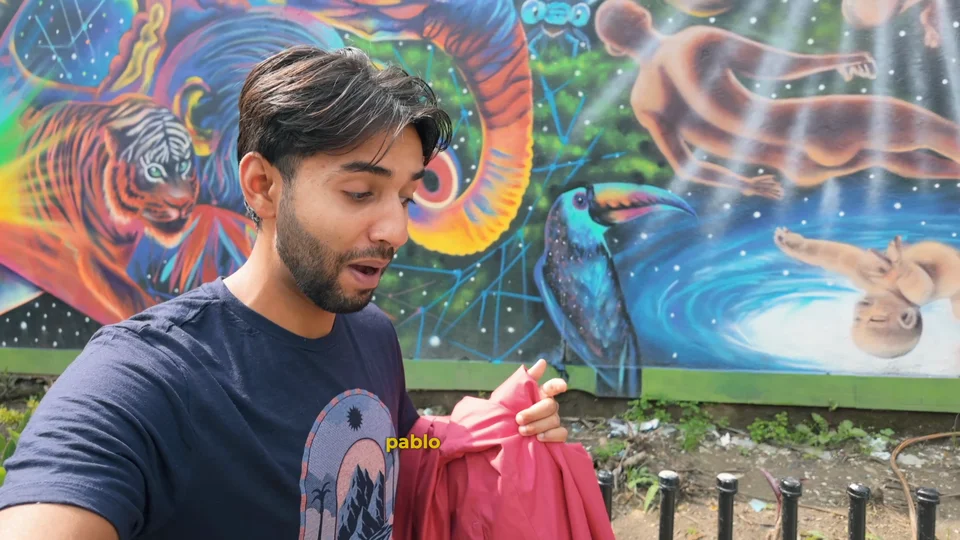
Barrio Pablo Escobar, still a genuinely contested piece of the city's history.
The best part of this trip though was entirely unplanned. On the Comuna 13 tour we got chatting to a fellow traveller called Melissa, and by the end of it she'd invited us to join her the next day on a trip out to Guatapé, somewhere we hadn't even fixed plans for yet. We climbed El Peñón together, took a genuinely raucous boat ride around the reservoir with music and beers passed around the whole way, and wandered the technicolour streets of Guatapé afterwards picking up a caramelised coconut and a ridiculous cinnamon roll from a shopfront that was more colourful than the buildings either side of it.
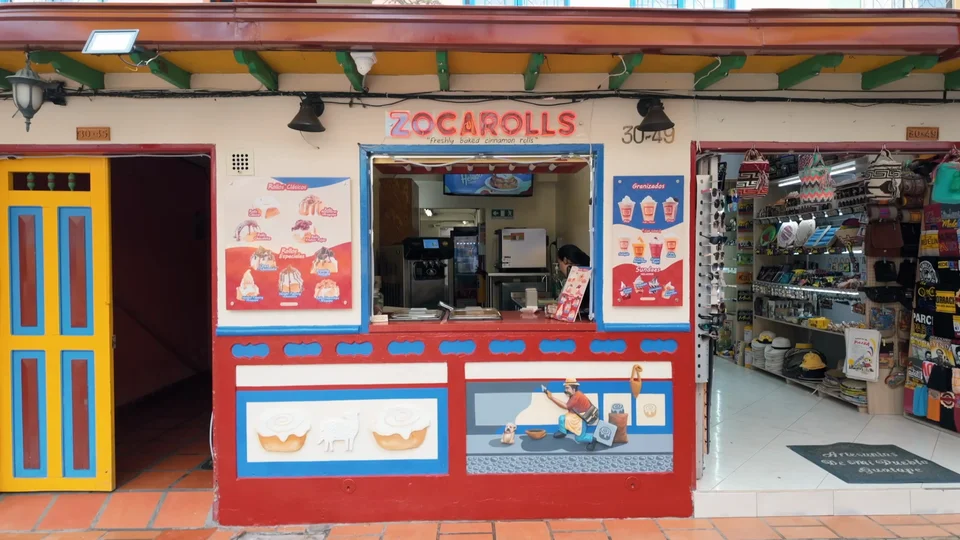
One of the technicolour shopfronts lining the streets of Guatapé.
Medellín keeps doing this, the plan you show up with rarely survives contact with the place. A guide with a dark sense of humour, a language exchange bar, a dance you didn't mean to learn, and a day trip with someone you met a few hours earlier. That's the city working as intended.