 KIRAN GOES PLACES
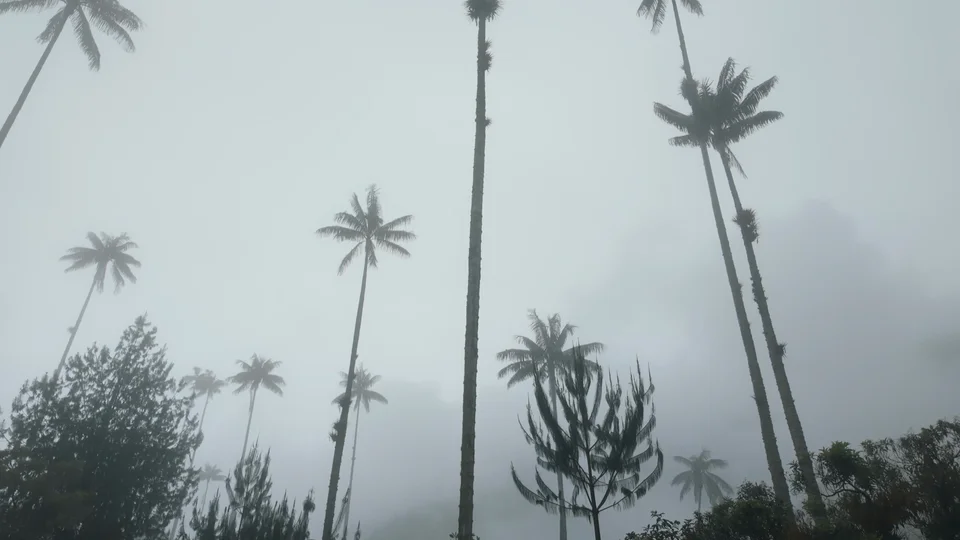
Salento is a tiny mountain town in Colombia's coffee region, part of the famous coffee triangle, surrounded by rolling green hills and colourful streets, and the gateway to the Cocora Valley, home to the tallest palm trees in the world. By day it's peaceful, full of coffee aroma and mountain air. By night, at least on the night we were there, it comes alive with the crack of actual gunpowder.
Day one: arrival and a coffee that cost less than the coffee itself
On first impression, Salento felt like stepping back in time, low colonial houses, gridlike streets, every balcony painted a different colour. First stop in coffee country was, obviously, a coffee, at a spot called Catalina de la Cruz, where we also ordered breakfast and Sam had a veggie burger she was weirdly excited about. Super reasonable prices too, compared to where we'd just come from on the coast.
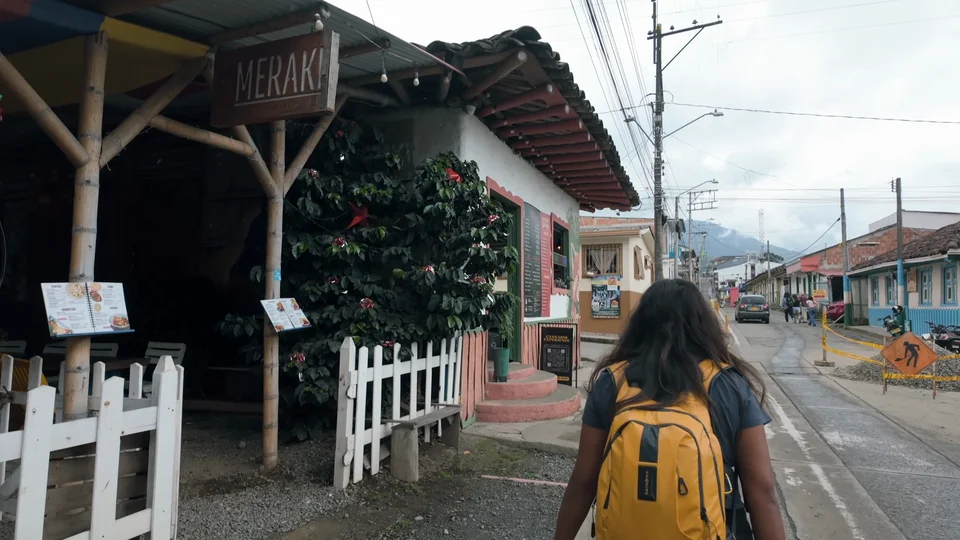
First impressions, low colonial houses and every balcony painted a different colour.
We checked into Coffee Tree Boutique Hostel at the top of town, a bright open space with mountain views and a big communal area looking out over both Salento and the forest beyond. We had two full days here, one for a coffee tour, one for the Cocora Valley hike, and we checked the weather for both. It looked absolutely awful either way, so we decided to just bite the bullet and do the hike the next day regardless. A short stroll brought us to Plaza de Bolívar, the main square, where you catch the jeeps out to the valley, and as the sun dropped behind the mountains the pace slowed right down until a single bang echoed through the street.
When you think of Colombia's national sport you'd probably guess football. You'd be wrong. It's tejo, a centuries old game from the indigenous Muisca people that somehow combines metal, clay and actual explosions. We followed the sound to a small tejo court where locals were hurling metal pucks at clay targets while sipping beers between throws. You throw the puck at a clay board with a ring in the middle, and packed around the ring are tiny paper triangles of gunpowder called mechas, land close enough and you get your bang. My puck mostly ended up in the mud. Sam didn't want to ruin her nails, so I was fishing pucks out of the clay solo most of the night. Still one of the biggest bargains going, about $4 US per person for a full game plus a beer.
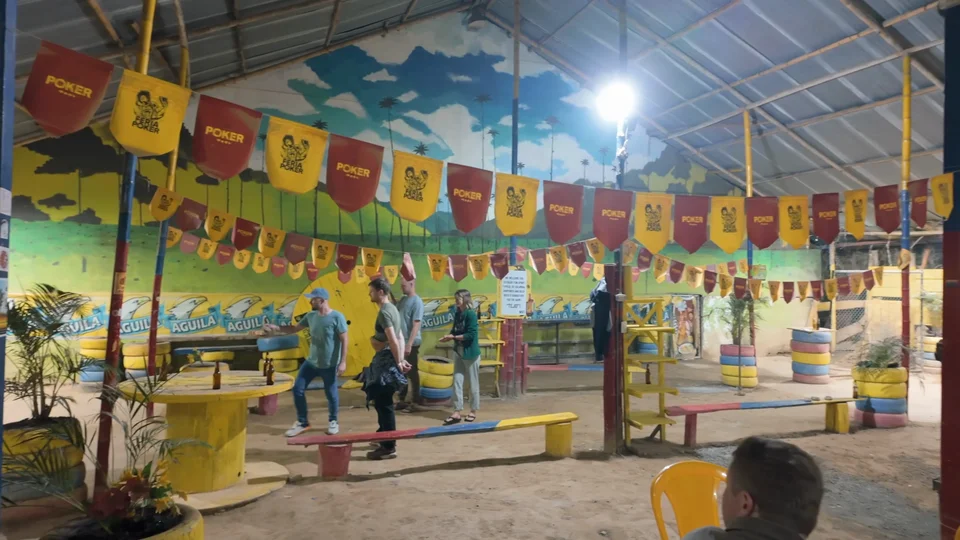
Metal, clay and actual gunpowder, Colombia's national sport is not what you'd guess.
Day two: the hike that nearly gave us nothing
The next morning was wet and misty, perfect for a hike apparently. One of the famous things to do in Salento is the Cocora Valley, home to the tallest palm trees in the world, and there's a big loop trail you can do. Locals warned us against the full loop though, it had been raining for three or four days straight, so we'd be knee deep in mud with barely any view. We went for the shorter loop instead, still keen to see it since we were already there, and found ourselves a jeep out to the trailhead.
The mist added a proper sense of mystery, though it would have been nice to actually see the valley. It was raining hard enough that we ended up eating a sandwich sheltered under a tree before pushing on. Viewpoint one, lovely views of some cloud. Viewpoint two, the guy staying in our hostel dorm had told us to try the passion fruit tea from the hut there, apparently the best he'd ever had in his life. It was delicious, though it also tasted unmistakably like mulled wine that had gone slightly wrong. Still really nice.
As we headed back down the trail, the Cocora Valley gods finally heard our prayers. The clouds started to part, revealing the valley below in full for the first time all day, the Quindío wax palms that grow up to 60 metres tall, evolved to stretch above the dense cloud forest and find the light. You could suddenly see the actual scale of the place, the sheer size of the trees against the grass, how well kept it all was. Genuinely worth coming to Salento just for that moment alone.
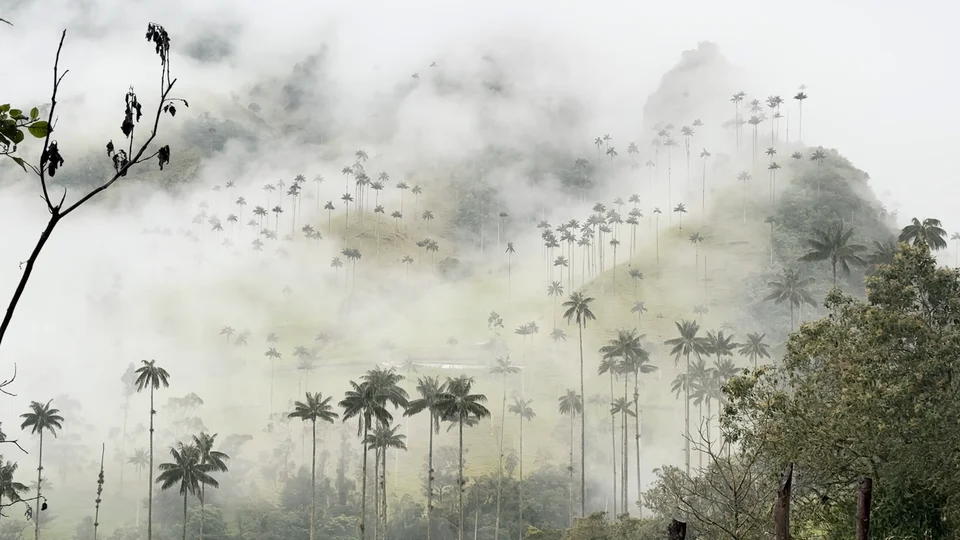
The moment the cloud finally parted over the Cocora Valley, worth the entire wet hike.
Cows and sheep dotted the fields on the way back down, completely unbothered by any of it, and we jumped in the back of a jeep for the ride to town, and I mean literally on the back, standing up, because there wasn't any room inside.
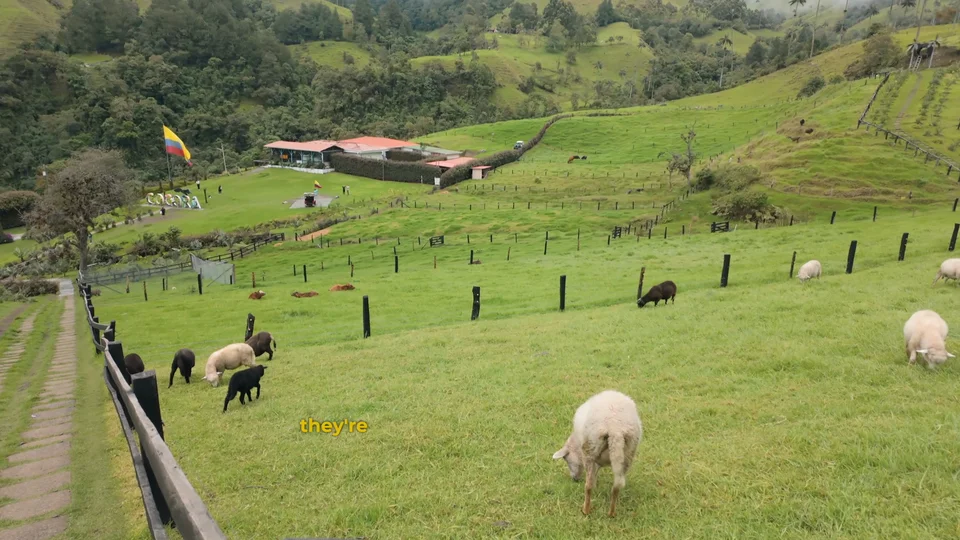
Completely unbothered by the rain, the mist, or any of it.
Back in Salento in the daytime, you can properly see how colourful the place is, it reminded me of an old western town in America, everyone in hats and ponchos. Lunch was at Coco Bowl for a cold brew, a Buddha bowl and, after weeks of trying and failing to find one anywhere else in Colombia, an actual açaí bowl. It even had the word amore written on it. Small joys.
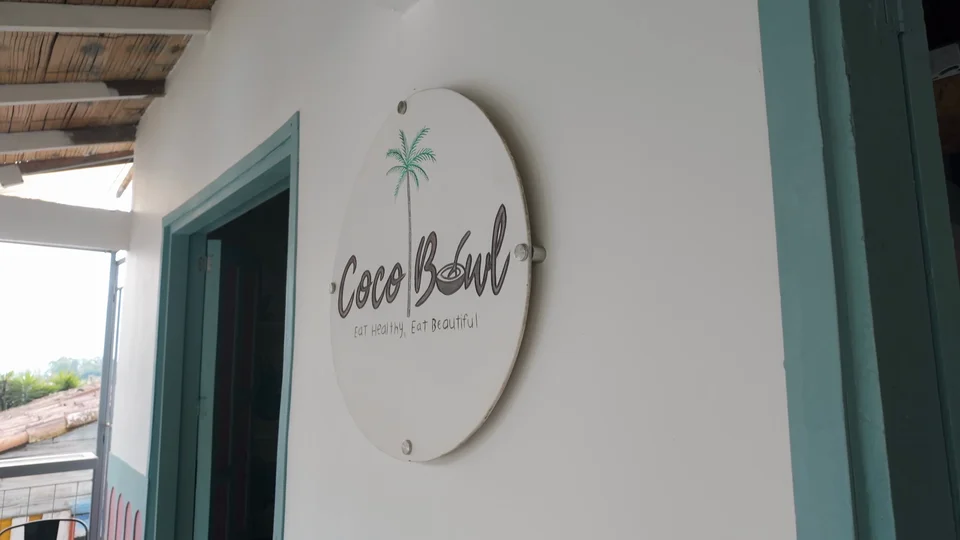
Coco Bowl, and finally, after weeks of trying, an actual açaí bowl.
From there it was straight into a horse riding trip that would end at a coffee farm. It's how locals have travelled these hills for generations, and our guide Nicolas looked like he'd wandered in from a different, much cooler film. We mounted up and rode out of town into the countryside like actual cowboys, and at one point descended straight into a river, riding upstream through the water. I've done a fair amount of horse riding, never anything like that. Then Nicolas turned round and just said "rápido", and before we knew it the horses were fully galloping through the Colombian countryside. This was Sam's first time ever on a horse, so that escalated quickly.
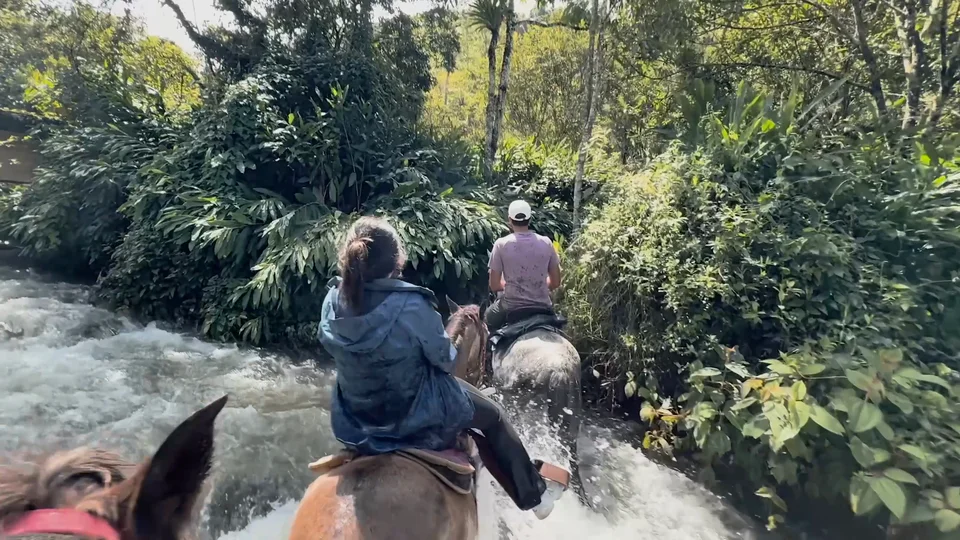
Riding upstream through the river, definitely a first for both of us.
We arrived at Finca El Ocaso, one of the most recommended coffee farms in the area, on horseback, which felt like turning up to a level in a video game. We strapped on picking baskets and learned how the red cherries get picked, pulped, washed and dried before roasting. Out of season, we mostly just hunted for stray red ones, ate a couple of the slimy beans raw, weirdly sweet, like fruit, and planted another to grow alongside everyone else's from tours past.
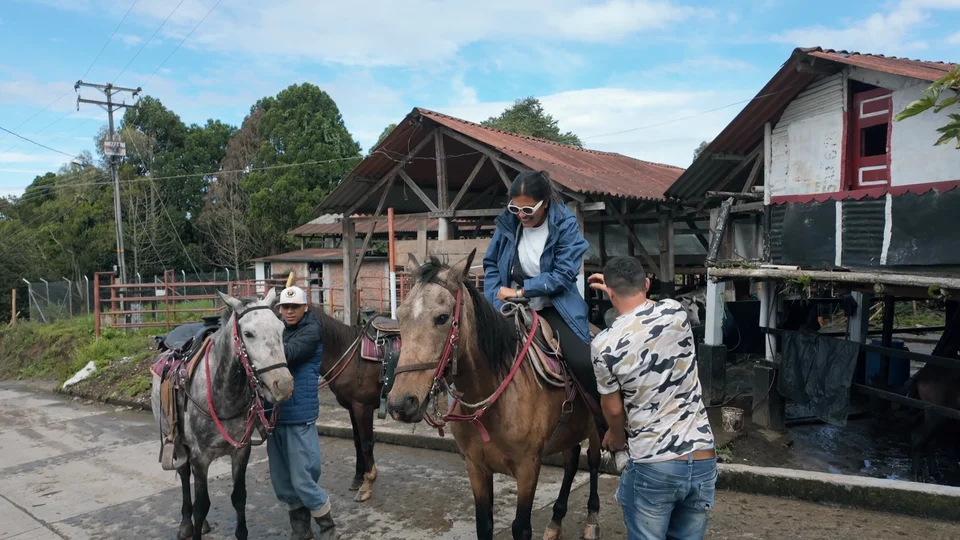
Arriving at Finca El Ocaso on horseback.
The tasting used the traditional method, a cloth filter shaped like a sock, literally called grandma's sock, hot water poured slowly over the grounds. First sip bitter, second sip softer, third sip the true flavour, smooth, balanced, notes of caramel and citrus, and yes, it genuinely did taste better knowing it came from a sock.
Salento gave us one soaking wet hike, one small cloud-parting miracle, an actual sport played with gunpowder, and a horse ride through a river. If you're planning a Colombia trip, give it two full days if you can, and check the weather forecast purely so you can ignore it.