 KIRAN GOES PLACES
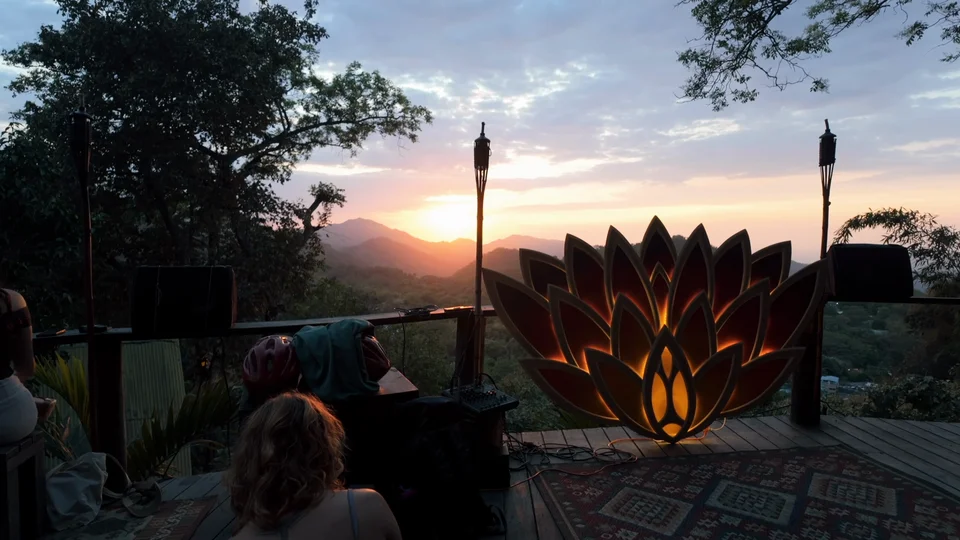
The trees around Minca are home to 25 species of bird you can't see anywhere else in the world, which tells you most of what you need to know about the place before you've even arrived. After a long day of travelling up into the Sierra Nevada, we kept things deliberately chilled, swimming, lounging, eating, and just listening to how much noise a forest full of birds actually makes. We caught the sunset over the canopy from a wooden deck with a cocktail in hand, then filled up on the cheesiest nachos for dinner, at this point in the trip I'd eaten nachos, beans and guac most days and still wasn't remotely tired of it. Early night, because the next morning started stupidly early.
5:45am, and we were up for birdwatching, something neither of us had ever done before. Minca apparently holds around 17% of the world's bird species within this one patch of forest, so the odds were in our favour. Our guide Richard picked us up, handed over binoculars, and we set off on foot. I genuinely didn't know how you'd make a video about birdwatching interesting, but it turned out to be one of the most unexpectedly fun mornings of the whole trip. Richard would spot something impossibly far away, we'd spend a full minute trying to focus the binoculars, catch the bird for about two seconds before it flew off, and then he'd show us a photo and tell us everything about it anyway. He also carried a speaker loaded with bird calls to try and coax hidden birds back out, and more than once just whooped like a bird himself to get a response. Standing on a viewing deck at 6am looking across the treetops with the sun coming up and the forest properly waking up around us was genuinely magical, hummingbirds hovering around the sugar feeders while we just stood there taking it in.
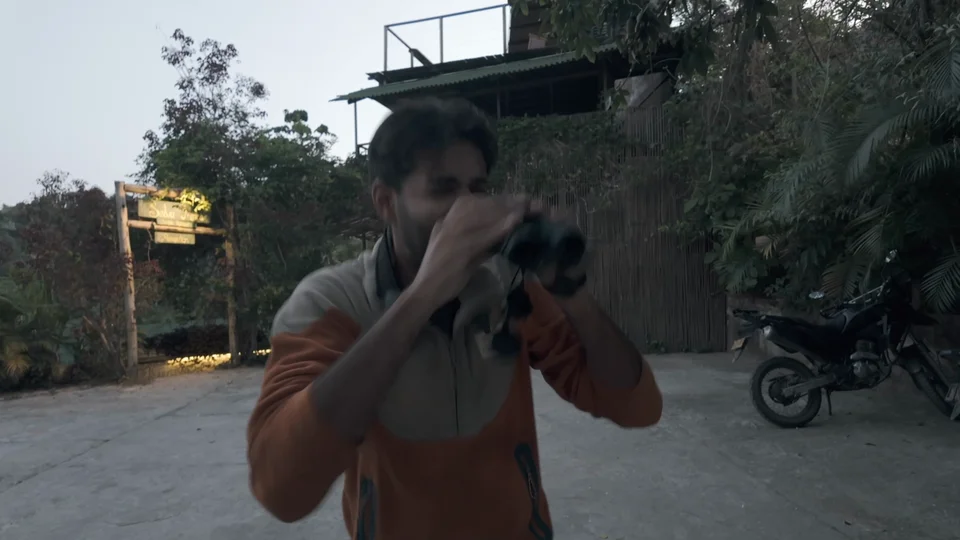
Richard, our birdwatching guide, pointing out something in the distance that took us a full minute to find.
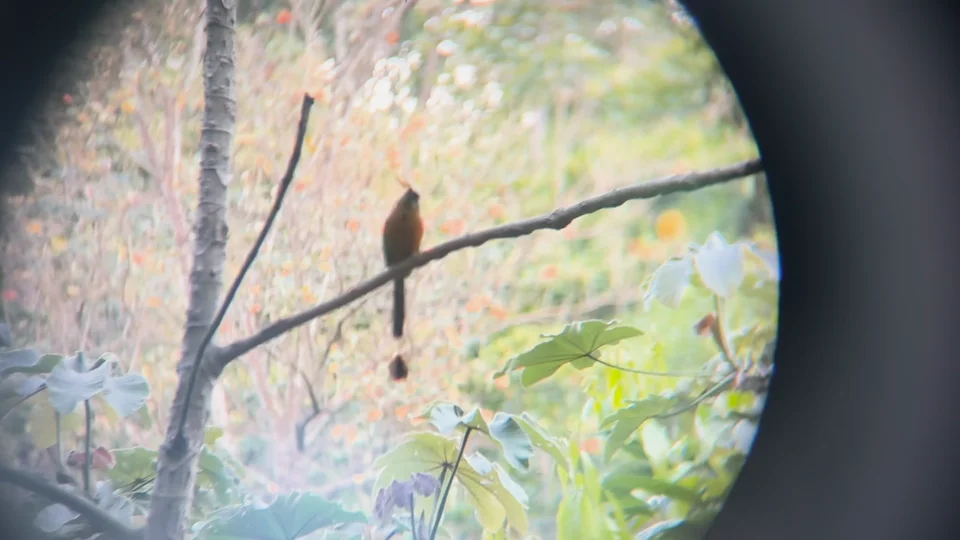
What we were actually looking at, for the two seconds before it flew off.
Back at the hostel for an early morning yoga class in a beautiful glass-walled room surrounded by forest on every side, a genuinely lovely way to end a morning that had already fit in two proper activities before 9am. Breakfast was a very dense bread that somehow worked, followed by sunbathing, reading and dozing on the deck after lunch, we'd more than earned it.
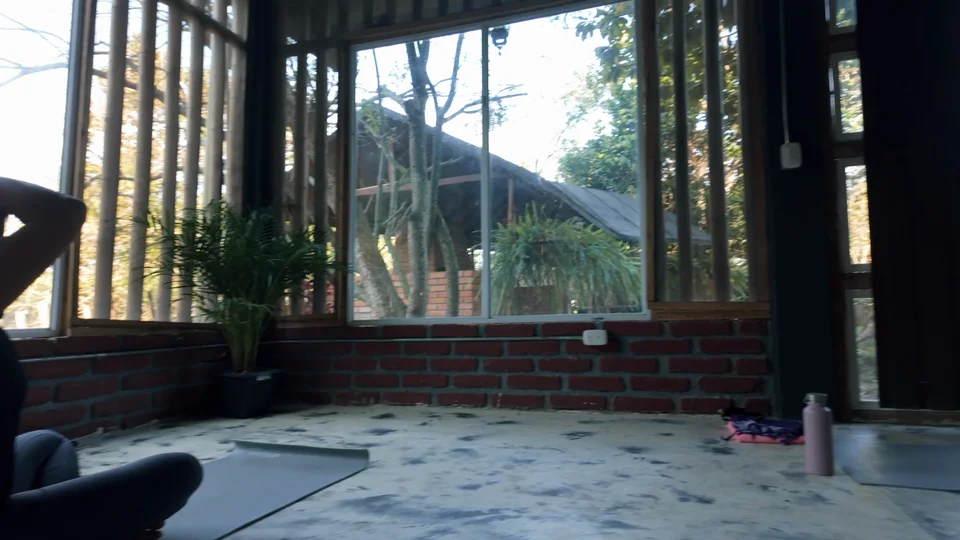
Yoga with a forest view, straight after birdwatching, before 9am.
To actually explore Minca properly you need wheels, and the easiest way to get them is hopping on the back of a motorbike. Downtown Minca turned out to be a lot more happening than I expected, shops, coffee spots, restaurants, and at one point we even passed police on horseback. From there we hit the trail for the town's most famous waterfall, Cascada Marinka, a shaded dirt track through dense forest with a stream running alongside and bamboo shooting up absurdly tall on either side. You pay at a small hut before reaching the falls hidden inside the trees, there's an obligatory overhanging net for photos, and then a lower pool you can swim in. The water was properly freezing, but standing under the spray of a waterfall in the middle of a Colombian forest more than made up for it.
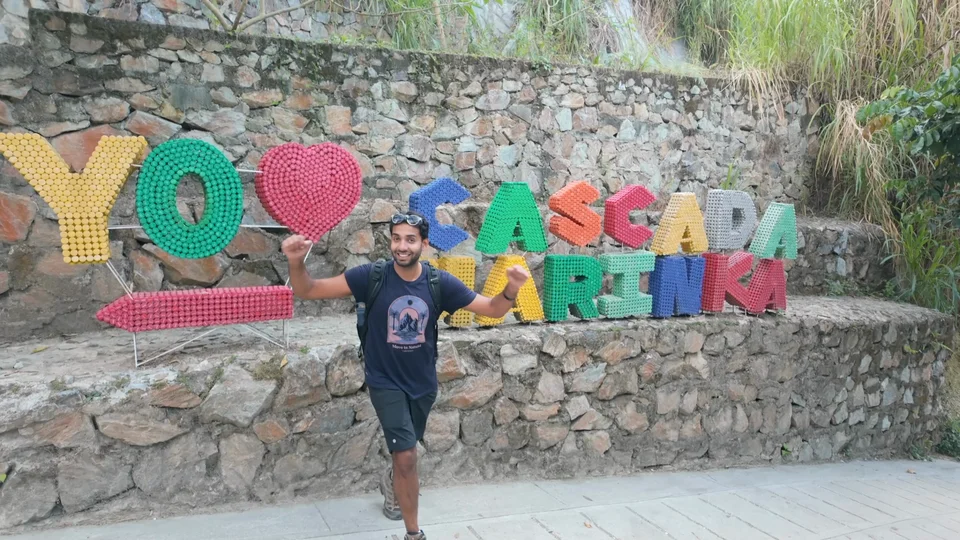
The trail sign for Cascada Marinka, Minca's most famous waterfall.
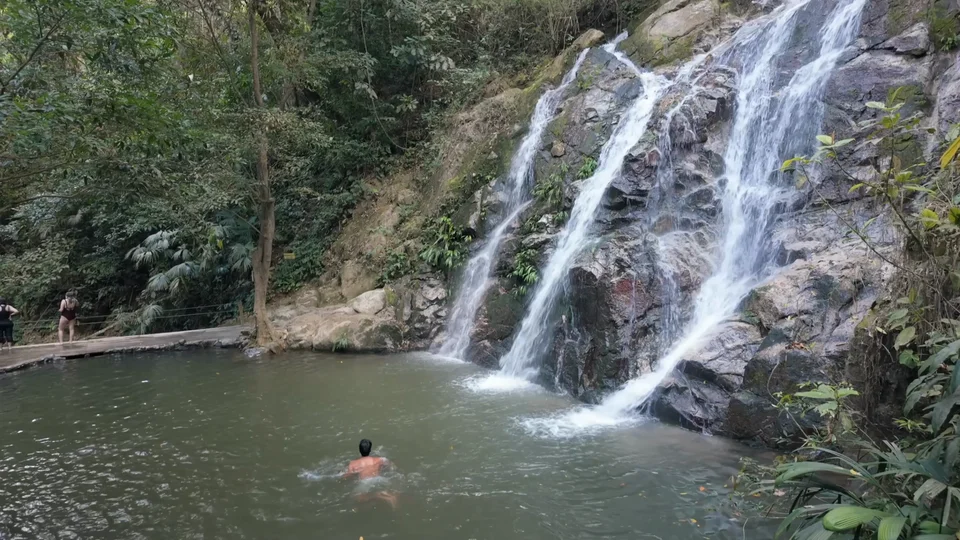
Freezing, but worth every second under the spray.
Back in town, we raced the sun up to Casa Loma, the famous sunset spot everyone told us not to miss. We assumed the motorbike would drop us right at it, it did not, there's still a proper climb once you're dropped off. It was completely worth it. The sun set directly in front of us over the greenery, drink in hand, before a live band started up as the light faded, torches burning either side of the stage. I'm fairly sure you're not allowed to leave Colombia without dancing at some point, so that's exactly how the night ended.
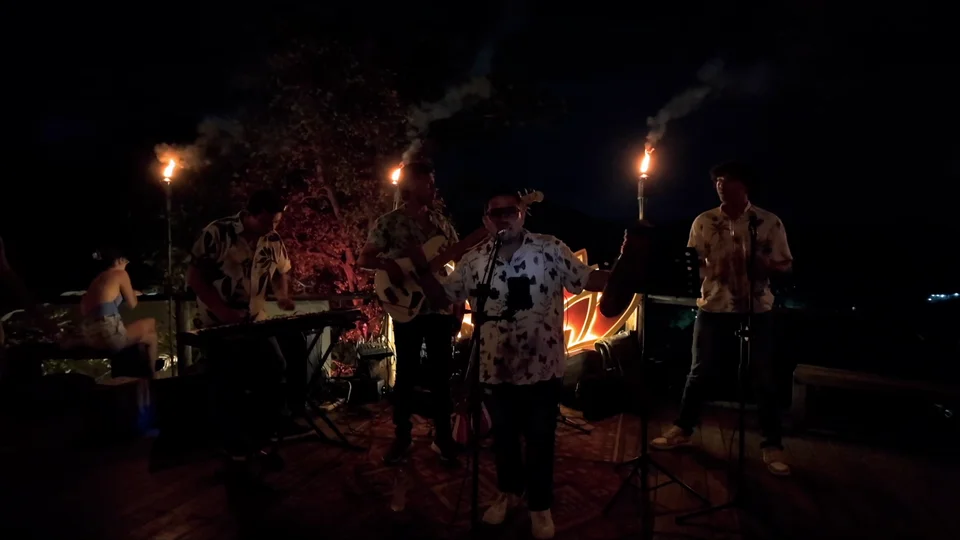
Casa Loma after dark, torches lit and a live band playing over the valley.
Two days was enough to fall properly for Minca, birdwatching we didn't expect to love, a waterfall worth the sweaty walk, and a sunset spot that's every bit as good as everyone says. Next stop for us was the Caribbean coast.