 KIRAN GOES PLACES
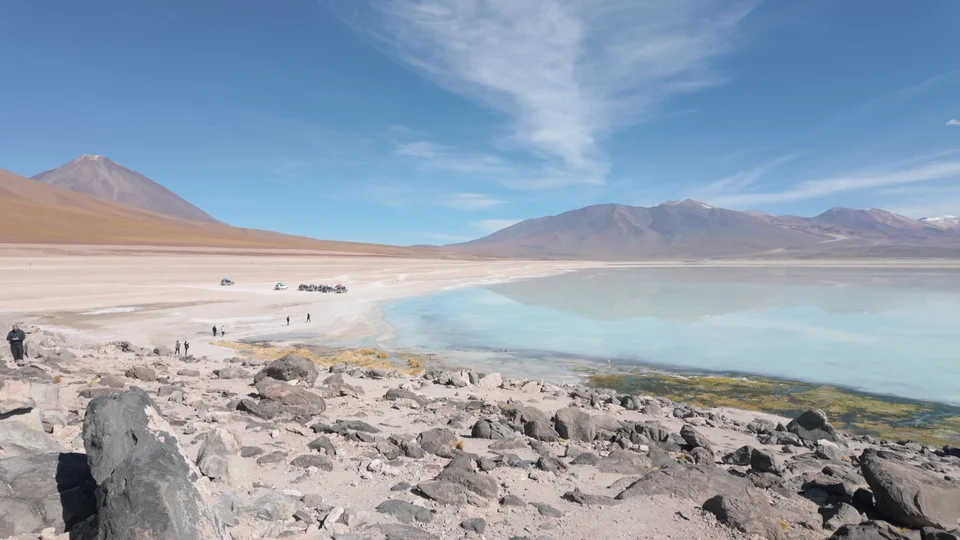
Laguna Blanca
~4,350m
Geysers
~5,000m
Border crossing
~4 hours
Trip length
3 days, Atacama to Uyuni
We left Atacama at 5:50am, which by that point in the trip felt completely normal. Every start out there is a stupidly early one. We sat in the dark in a queue of cars waiting for the border to open, had a bit of breakfast outside the van, coffee in hand, bread on the dash, and eggs sizzling somewhere behind the dust. When the border finally opened we drove into a small building, got our exit stamps, and rolled through volcanic no man's land into Bolivia. Genuinely has to be one of the most scenic border crossings I've ever done.
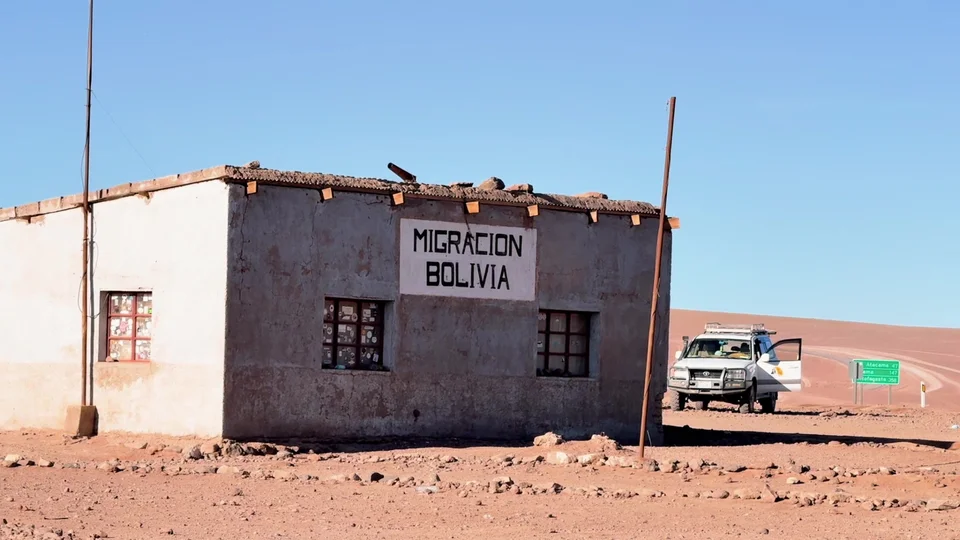
The border crossing into Bolivia, somewhere in the middle of the Atacama desert.
Day one: lagoons, hot springs and geysers at 5,000m
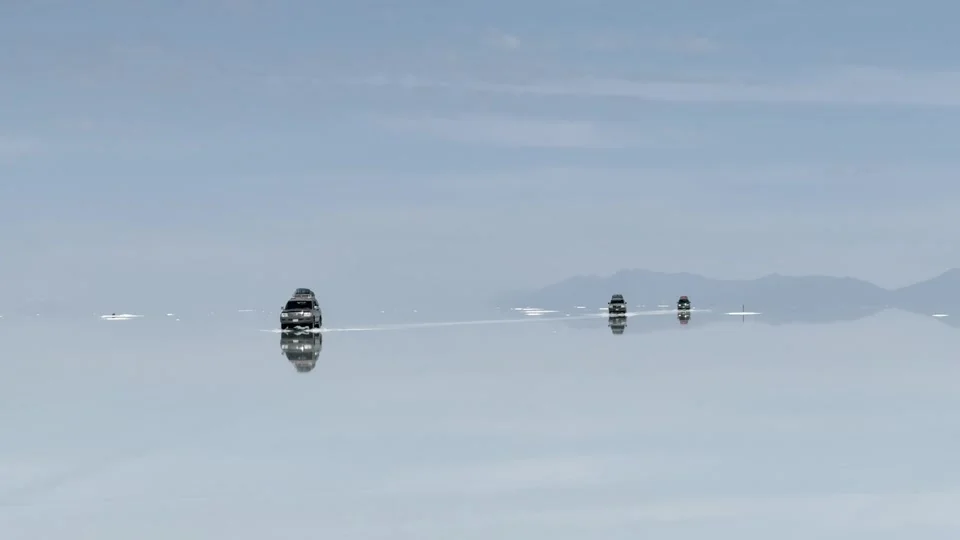
On the Bolivia side we joined a group of six and met our guide Geo, who told us straight away that today was going to be tough because of the altitude. Our jeep had the bags tied to the roof, water tanks strapped down, all covered in a tarp to keep the dust off. We left Chile at 5:50am and by the time we'd actually crossed into Bolivia it was quarter to 10, so the crossing alone took about four hours, mostly waiting around at various checkpoints.
First stop was Laguna Blanca, a salt lake sitting around 4,350m with mineral rich water that gives it this pale, milky colour. The landscape just kept changing and surprising us the whole way, dusty roads running alongside huge mountains that were genuinely blue and green and every colour in between, I still don't fully know why.
Lunch was at the Polques hot springs, and honestly, we've been to a lot of hot springs at this point but this might be the best setting of any of them. A natural thermal pool sunk into the ground, steam curling around you, desert and mountains on every side. Felt like being right at the edge of the earth.
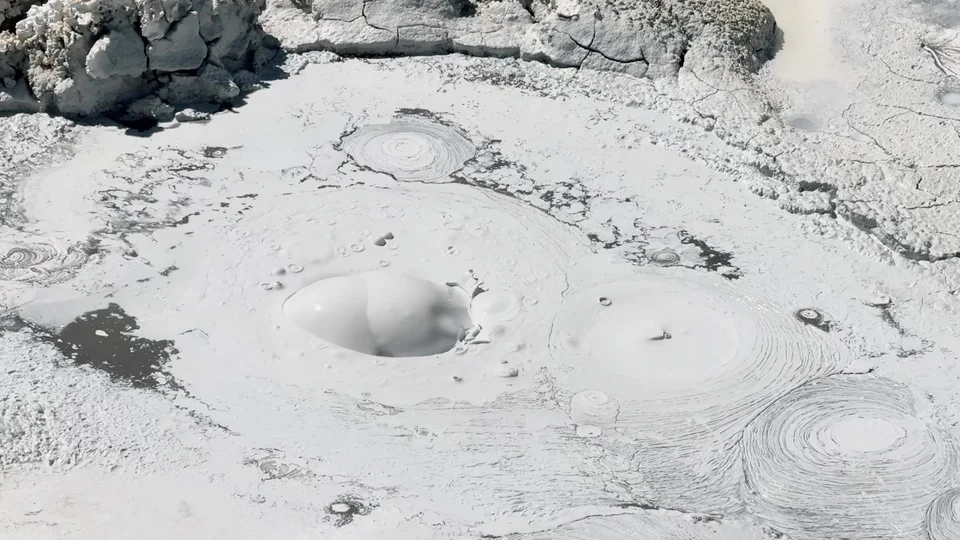
The geysers at almost 5,000m, where the ground genuinely bubbles beneath your feet.
After the hot springs we hit the bubbling geysers at almost 5,000m, and you can properly feel the altitude up there. Air's thinner, harder to breathe, I had a slight headache and the whole place reeks of sulphur. Watching the ground bubble like that feels like standing on another planet. Not a great spot to lose a hat either, one of the group's blew straight off his head into the wind and into a geyser. The local fix for altitude out here is coca leaves, in sweets, chewed leaves or tea, and while I can't promise they properly work, they definitely help a bit.
Last stop of the day was Laguna Colorada, the red lake, apparently home to something like 40,000 flamingos (I may have made that number up). The red comes from algae and minerals in the shallow salty water, and the flamingos that feed on the same algae turn pink because of it. I've genuinely never seen that many flamingos in one place.
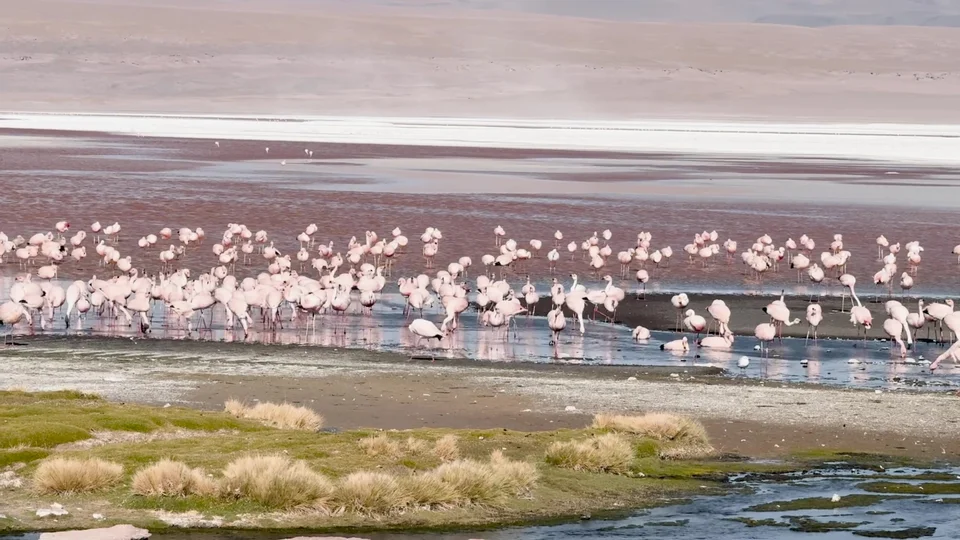
Laguna Colorada, home to tens of thousands of flamingos.
We drove on into the night and reached our accommodation in the middle of nowhere, just a few lights and buildings against total darkness. Own rooms, shared bathrooms, soup and coca tea for dinner. Also found out our blanket the night before was made from llama fur, which the guide confirmed, so that tracks. Best story of the night though, our room technically had an en suite bathroom, except it was locked, and unlocking it cost the equivalent of $30. We were not paying $30 to use our own bathroom, so it was the shared one for us.
Day two: rock formations, llamas and a train cemetery
Another coca tea in the morning (genuinely does help) and we were back in the jeep for a day that turned out to be all about rocks. We stopped at these giant magma rock formations shaped by wind and erosion over thousands of years, climbing up, over and through huge chunks of stone, including one that's meant to look like the World Cup trophy. It actually does.
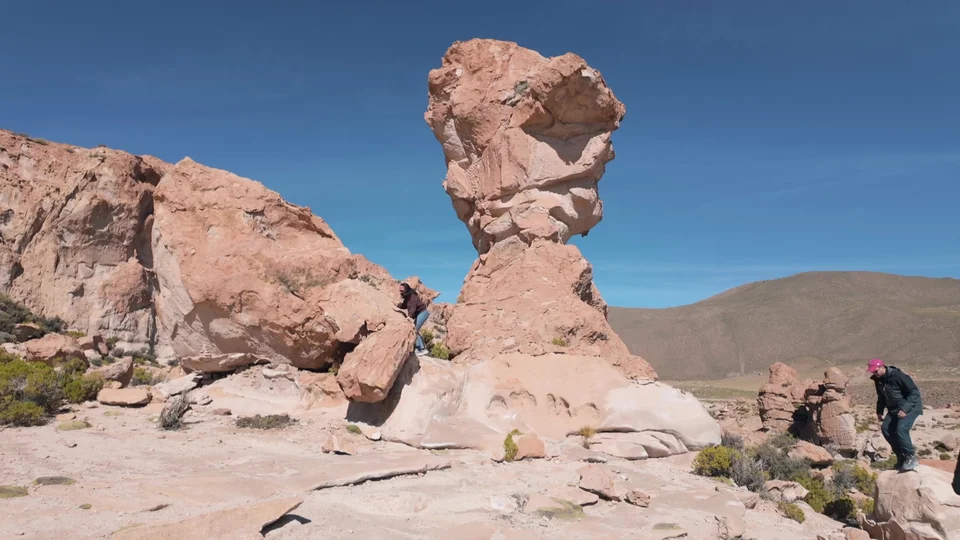
One of the wind-carved rock formations we climbed on day two.
Then came the llamas. Tall necked, majestic, cruising around fields like they own the place, which they basically do. I've never seen this many llamas up close before, giant ones, baby ones, all with these little tags and pom poms on their ears. One of them even charged the group completely out of nowhere, which was a good reminder they're not just cute props for photos.
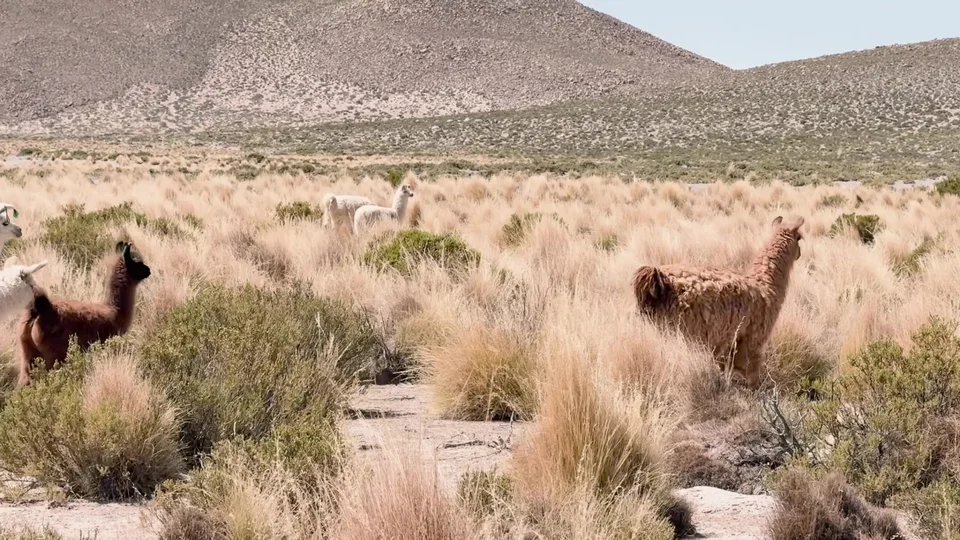
Llamas everywhere, up close, for the first time.
Before lunch we passed through a remote, dusty village that genuinely made me think, I can't imagine living here, there's nothing around for miles. Nice to visit, not somewhere I'd want to set up home. The next town, San Cristobal, was a proper mix of modern buildings, derelict single storey houses and tourists, and by total coincidence we rolled in exactly when the local market was celebrating its 25th anniversary. Live band, kids playing in the streets, everyone in a genuinely good mood. Felt like a lucky bit of timing rather than something built for us.
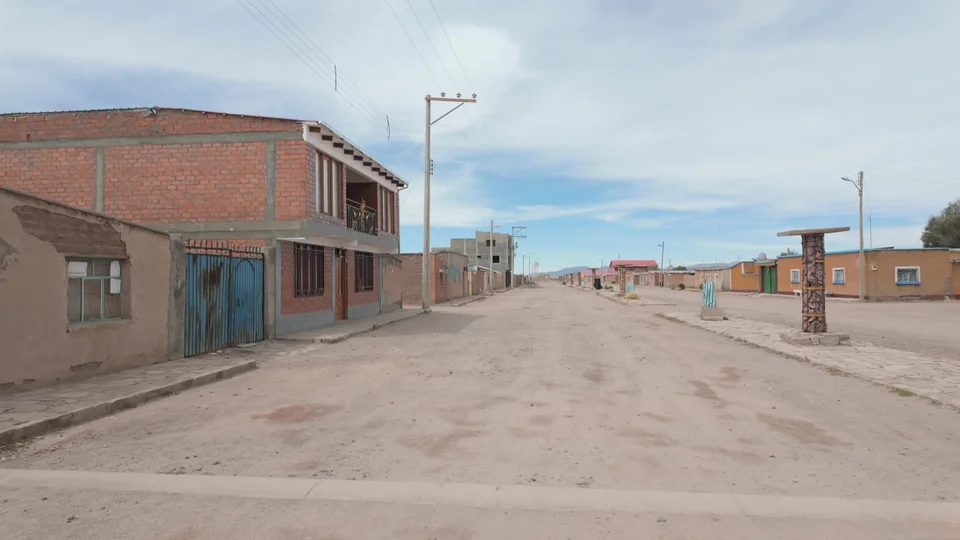
One of the remote villages we passed through on the way to Uyuni.
Our second to last stop, and one of the most random but genuinely coolest, was a full on train cemetery just outside Uyuni. There's a lot of mineral wealth in this part of Bolivia, silver, gold, and back in the 1800s countries like England shipped in steam trains to haul it all out. The trains stayed, the mining mostly didn't, and now there's just this line of rusted locomotives left out in the desert with a working track running right past them. Climbed on top of a steam train for the first time in my life, which felt like a fairly reasonable thing to do out there.
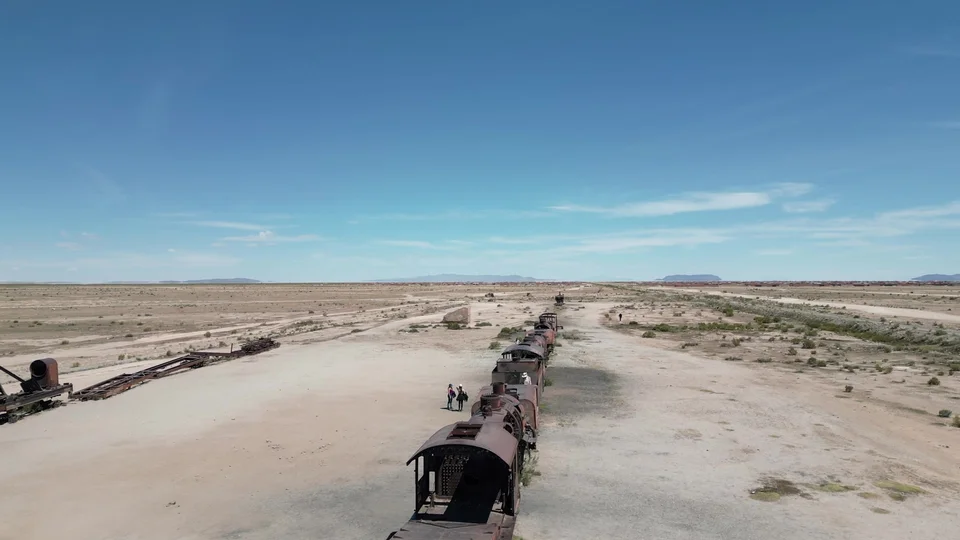
The Uyuni train cemetery, rusting steam locomotives left behind since the 1800s.
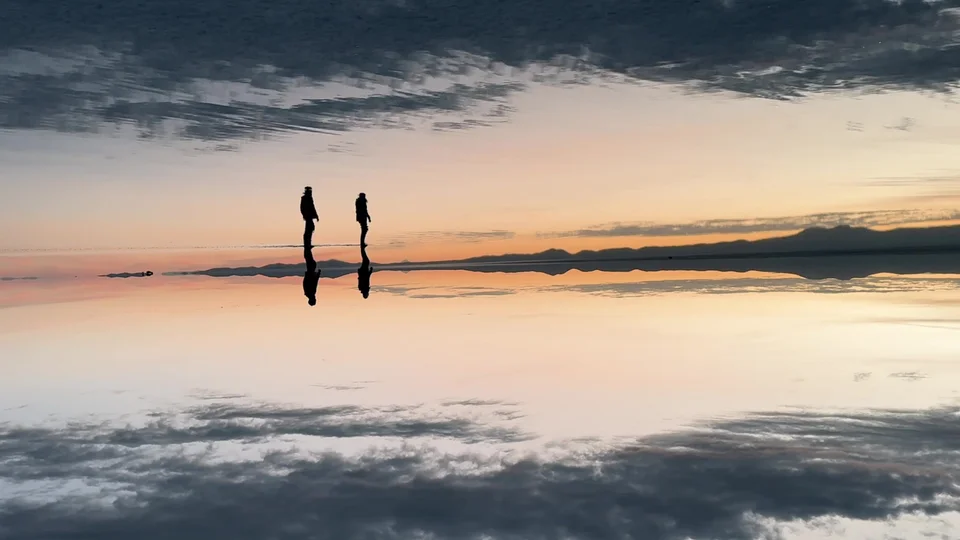
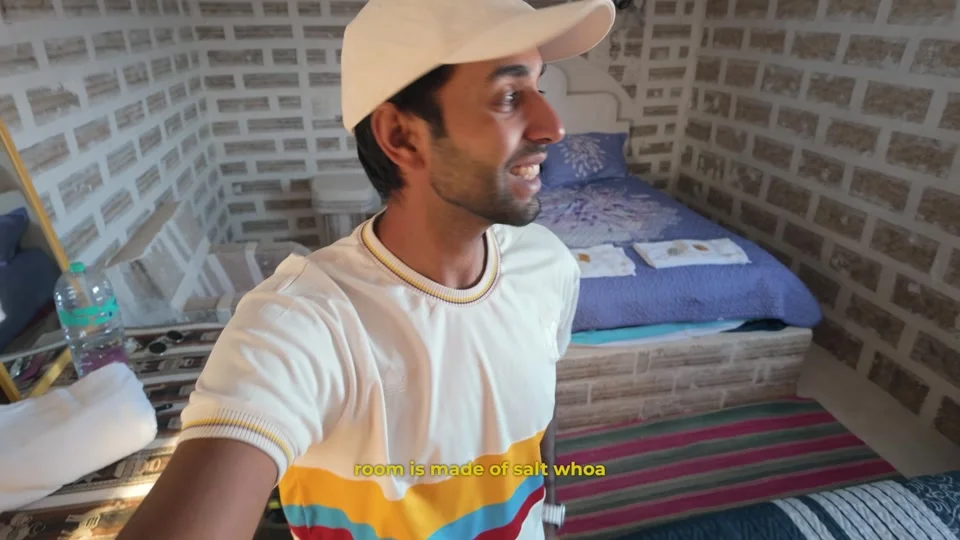
Then came the actual highlight of the whole three days, the hotel made entirely from salt, right on the edge of the flats. I've written up the full stay in a separate post because it deserves its own space, but the short version is walls, floors and beds all carved from salt blocks, and a sunset out on the flats that same evening that might be one of the best things I've ever seen. And that was still only the warm up for what came the next morning, the actual sunrise on the salt flats, which turned out to be even more ridiculous.