 KIRAN GOES PLACES
Day 1
Puerto Natales to Camp Chileno, climb to Las Torres
Day 2
Sunrise at Las Torres, 23km/~1,000m to Camping Frances
Day 3
French Valley to Paine Grande
Day 4
Grey Glacier ice hike
The gateway to Chilean Patagonia is Puerto Natales, a small town in the middle of nowhere. We caught the sleepy 7am bus to Laguna Amarga, the entrance to Torres del Paine National Park, showed our tickets and passports, then took one final shuttle to the welcome centre where the trail actually starts. We were doing the W east to west, which meant tackling the hardest part first, the climb up to Las Torres, the image on every postcard of Patagonia.
Day 1: straight up to Las Torres
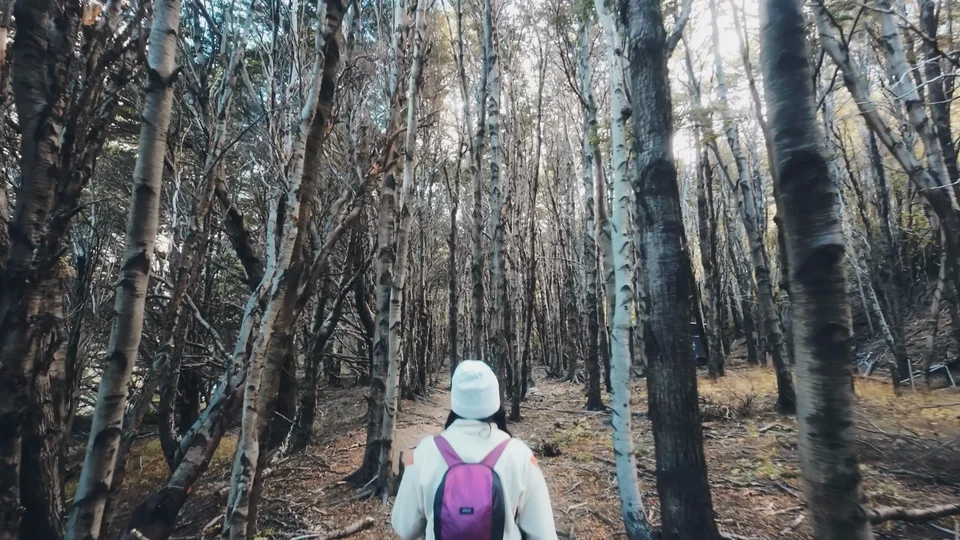
We crossed the Rio Ascencio into the Ascencio Valley, over the first of many footbridges with glacier water rushing underneath, and started climbing almost immediately. Two hours later we reached Camp Chileno, our home for the night, tucked into a forest right up against giant granite cliffs. It already felt a long way from the life we'd left behind.
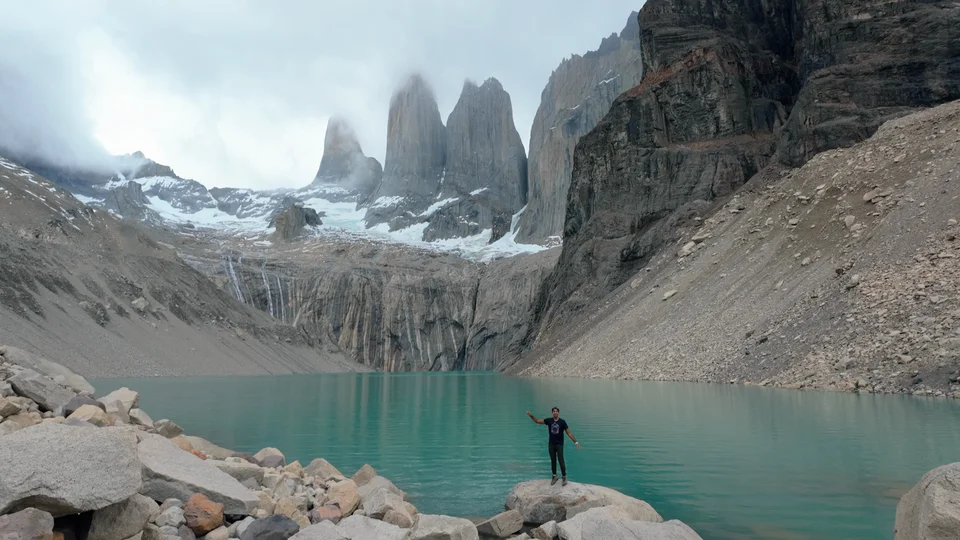
After a quick stop for oats and coffee we pushed on to Mirador Las Torres itself, the most iconic spot in Chilean Patagonia, three granite spires rising above a glacial lagoon. It's a notoriously cloudy viewpoint, so going up that afternoon meant we had the option of a second attempt the next morning if needed. The final ascent is a relentless rocky climb, but it's hard to describe the payoff after years of seeing photos of this exact spot. Even more impressive in person than any picture makes it look.
Day 2: sunrise at the towers, then the long walk to Los Cuernos
We turned in early because the plan was a 4:30am wake up to hike back up to the towers for sunrise, something most people doing the W don't bother with. We climbed in the dark through the forest, across streams, following reflective trail markers, and it was noticeably harder than the day before, sore legs, broken sleep, and altitude all adding up. Two hours later we were back at the top, and it was worth every bit of the early start. The ridge behind blocks the sun just enough that the towers glow while everything else stays in shadow. Genuinely one of the best sunrises I've seen anywhere.
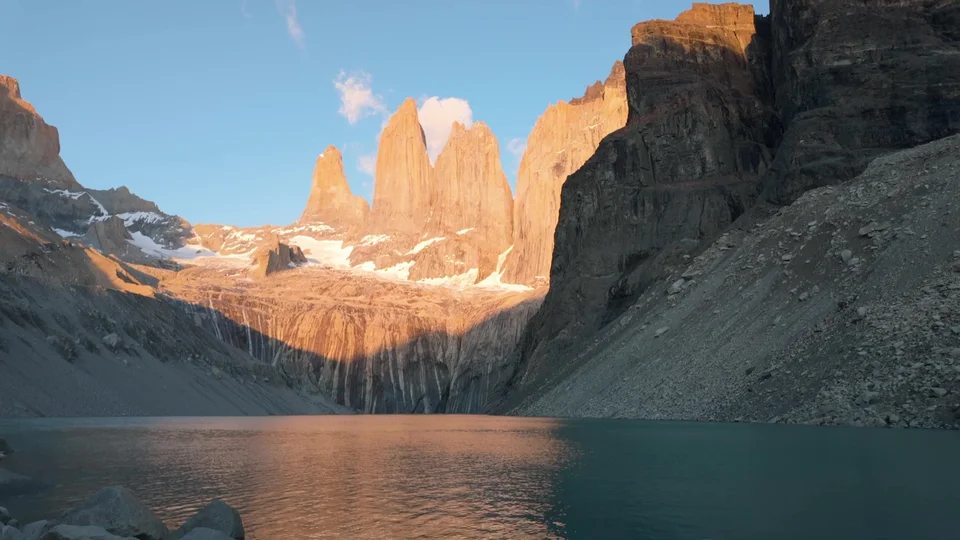
Back at the towers for sunrise, a detour most hikers skip.
Back down at Chileno for the same breakfast as the day before (oats, peanut butter, banana, coffee, on repeat to save money), we packed up and started the long walk along Lago Nordenskjöld, incredibly bright blue against brown hills and snowcapped peaks behind. It's the kind of walking that goes on long enough you're just alone with your thoughts. Eventually the Cuernos come into view, sharp double coloured peaks that look even more dramatic up close than in any photo. We pushed on past Camp Cuernos to Camping Frances, arriving after 12 hours of hiking, 23km and almost 1,000m of elevation gain that day. Noodles from a bag with a spork never tasted so good.
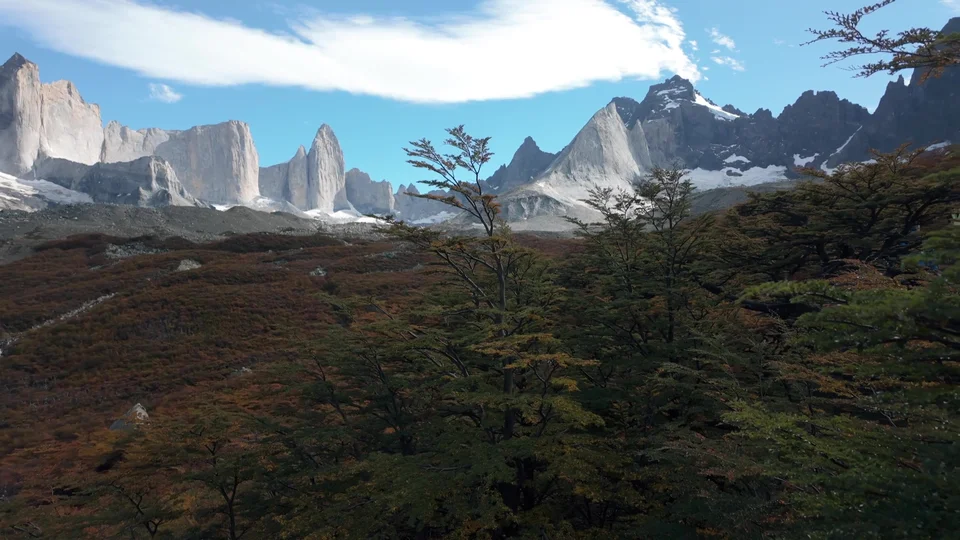
Los Cuernos, up close on day two.
Day 3: the French Valley opens up
Sore legs again, oats and coffee again, and back on the trail towards the French Valley. The path cuts through lenga forest with a glacial stream beside it and the hanging French glacier spilling down from the peaks above, cracking occasionally like distant thunder. About an hour in we reached the French lookout, more a pile of rocks than a platform, but with an incredible view of the glacier. A few hours further and the valley opens completely into a 180 degree view of the surrounding mountains, yellows and reds mixed through the rock.
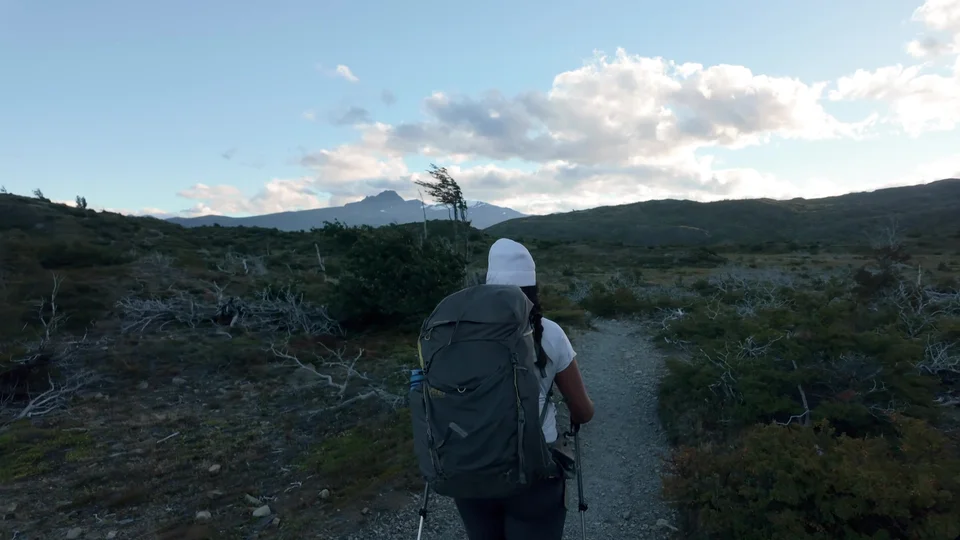
The French Valley, somewhere between the French and English lookouts.
After the English lookout and a very scenic lunch spot, we picked up our bags again and started the two and a half hour walk to Paine Grande. This is where we understood the saying that you experience all four seasons of weather in Patagonia in a single day, the wind picked up so strong it pushed us backwards and whipped water into spirals as we said goodbye to the Cuernos behind us. Paine Grande was our first and only night indoors, a shared dorm, noodles, and sunset instead of Netflix.
Day 4: onto the Grey Glacier itself
Final day, same oats and coffee, and a walk through the wind towards Camp Grey with the glacier looming larger with every step, deep crevasses and blue ice visible long before we reached it. Hours of walking alongside the lake later, we arrived at Camping Grey, which even has its own overpriced mini supermarket.
To finish the trip properly, we took a Zodiac boat out past giant icebergs to the glacier itself, met our guide, and geared up with helmets, harnesses, spikes and ice axes before stepping onto the ice.
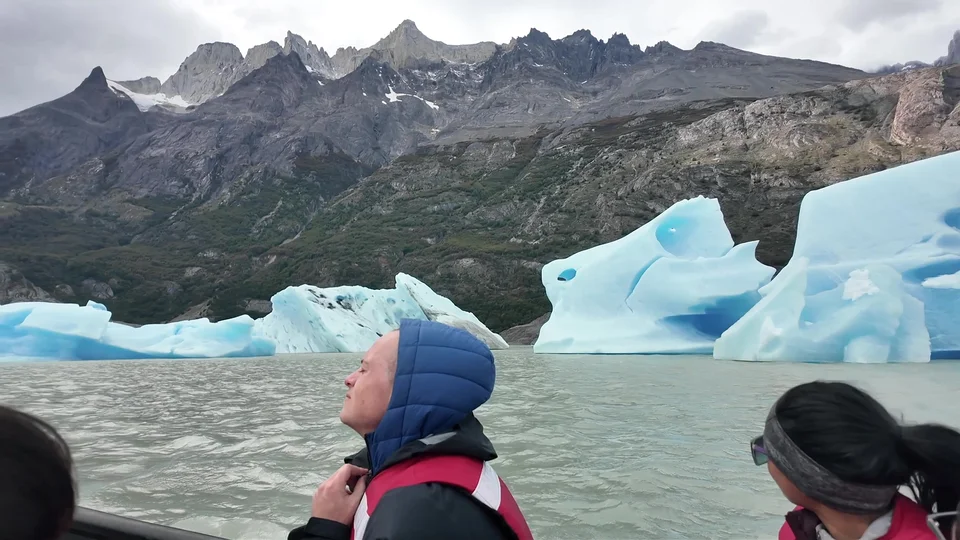
Heading out by boat towards the Grey Glacier.
The first steps onto the glacier are over sediment and far from pristine, but deeper in it shifts into these stunning shades of blue and white, with water running beneath your feet and genuine crevasses opening up around you. Definitely not somewhere you want to slip. Our guide even set up ropes to lower a few of us into an ice cave, cold wind and running water inside, and about as different a Tuesday as it's possible to have from a normal shift at the clinic.
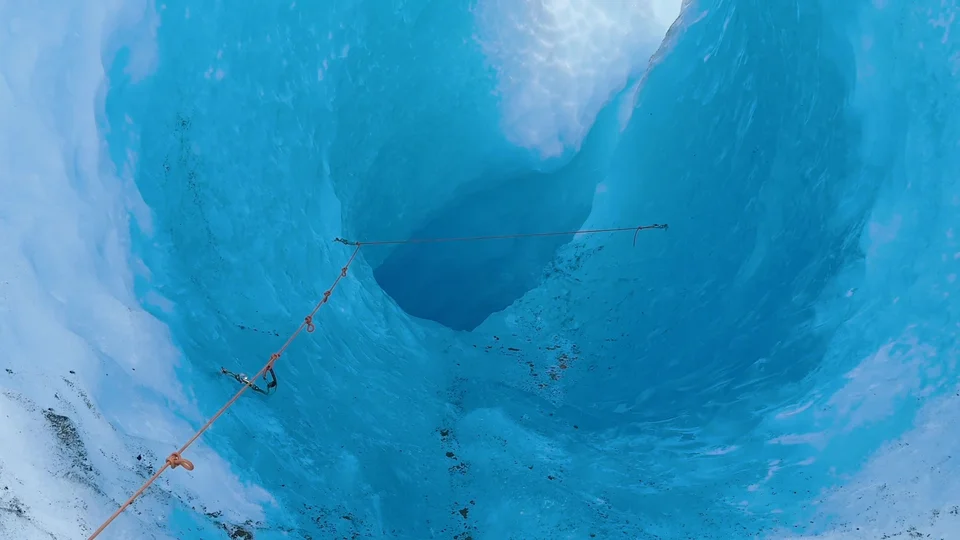
Inside a crevasse on the Grey Glacier.
Four days, glacial lakes beneath granite towers, endless valleys, autumn forests, wind that physically pushes you backwards, and standing both on and inside a living glacier. The scale of it all has a way of reminding you how small your everyday problems actually are. If you want more detail on any single day, I've got full videos and posts covering each one individually, plus a separate guide covering logistics if you're planning your own trip.