 KIRAN GOES PLACES
Built
~600 BC
Population at peak
~100,000
Excavated
~15% (85% still buried)
Tallest structures
up to ~300m (1,000ft)
Build time per structure
10-15 years
We arrived into Flores on the night bus, a grueling ten hour ride that left at 4pm and got in around half 6 the next morning, though we actually slept surprisingly well. First job after a night bus like that is always food, and the outside road to the breakfast place we wanted was completely flooded, so we picked our way through the inner streets to Maple & Tocino instead. Eggs, avocado, refried beans, and Sam went full dessert mode with a brownie milkshake topped with an actual donut. One of the best breakfasts of the trip, and well deserved.
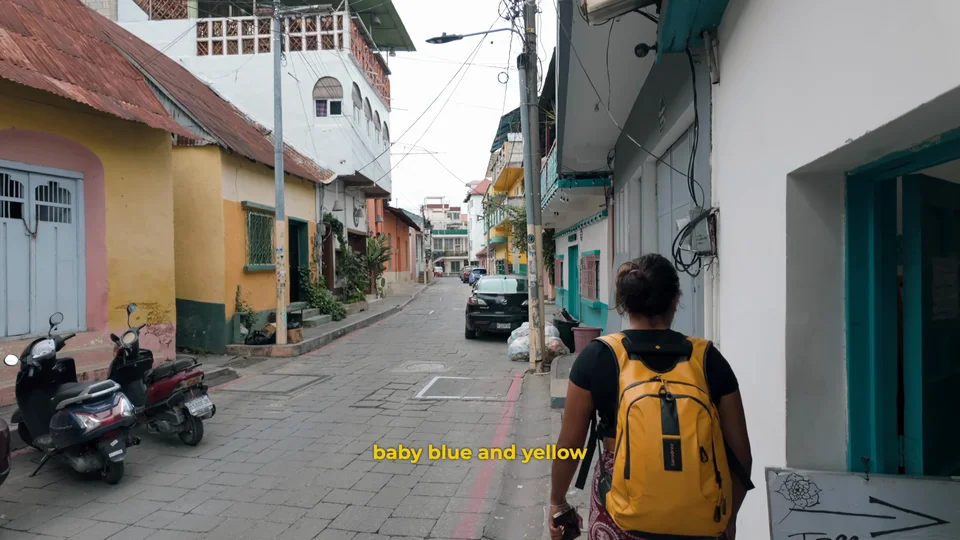
Flores, a tiny island where every building seems to be painted baby blue, green or yellow.
Flores itself is a genuinely charming little island, easy to walk around in an hour, buildings painted in every colour imaginable. We wandered, grabbed a few hours of sleep back at the hostel, then navigated the still-flooded streets again for dinner at Marakuya, fresh food, fun vibes, an old Land Rover parked inside the restaurant, and the exit is a literal fireman's pole. I don't think I've ever eaten somewhere with a fireman's pole before. The cherry on top was a watermelon stew, apparently the owner's grandmother's recipe.
Into the jungle
Next morning started at 4:20am. There are a few different Tikal tour options, a very early sunrise one leaving at 3am with a pricier park entrance, or the early bird option at half 4, which is what we went for. After a sleepy bus ride and a stop for breakfast, we arrived at one of the most extraordinary cities of the ancient Mayan world.
Tikal was built around 600 BC and once held nearly 100,000 people before being abandoned and swallowed by the jungle. It's strange to imagine it without the trees, when it was inhabited you'd have been able to see clean sightlines from one massive structure to the next, some of them 300 metres or nearly 1,000 feet at the highest point, taking 10 to 15 years each to build. It stayed hidden for centuries until explorers uncovered it in the 1800s, revealing the true scale of what had been lying under the jungle the whole time.
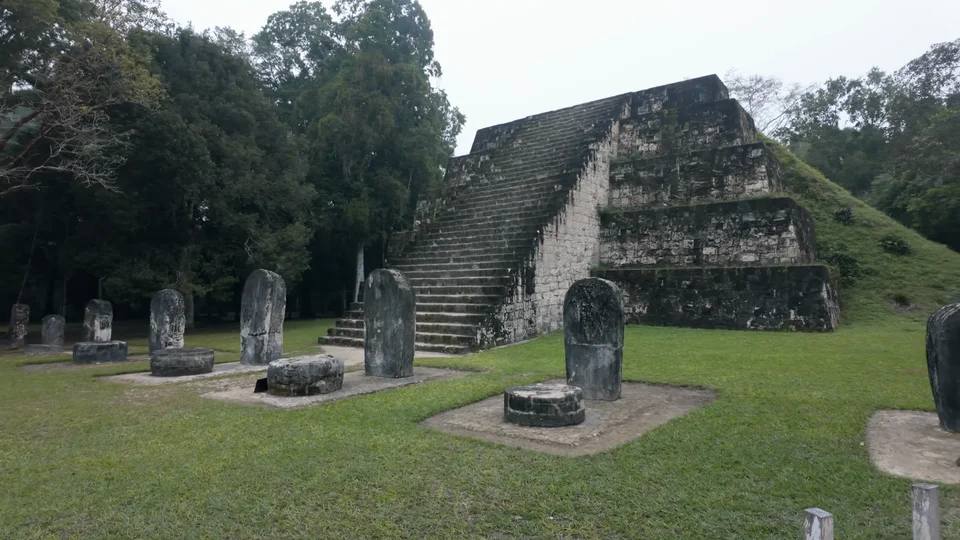
Complex Q, a pyramid rising above stelae carved to commemorate rulers and events.
Our first stop was Complex Q, stelae carved to commemorate rulers, an intimate spot once used by the elite for private ceremonies. You're allowed to actually walk on the ruins here, which isn't something you get to do in a lot of places. Only about 15% of Tikal has been excavated, the rest is just huge unexcavated mounds still hiding whatever's underneath, 85% of the city is technically still buried.
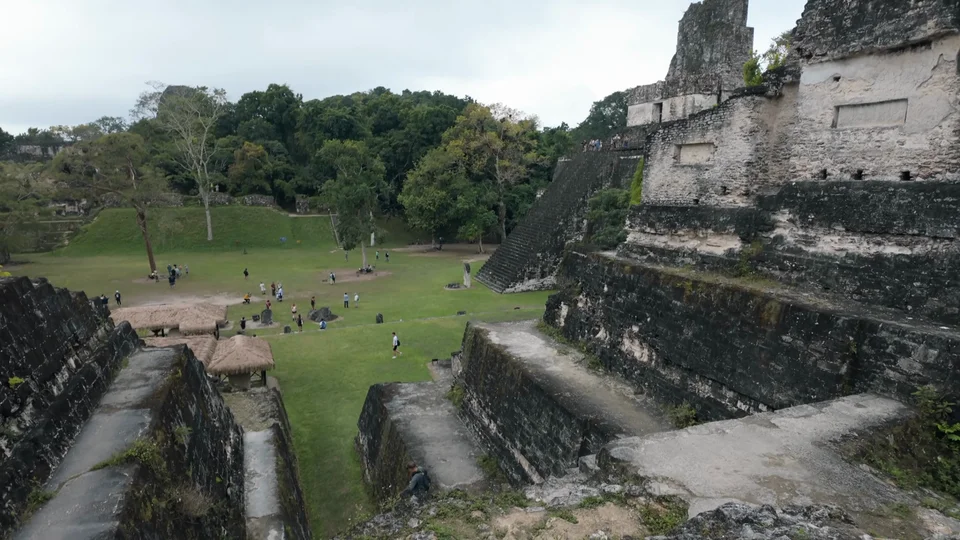
The Great Plaza, way bigger in person than either of us expected.
The Great Plaza is the bustling heart of Tikal, and it's genuinely much bigger than photos suggest, Temple One and Temple Two facing each other with smaller buildings scattered around where ceremonies, politics and royal life once played out. The acoustics are incredible, even a simple clap carries and echoes back off Temple Two loud enough to catch you off guard in one ear. We climbed Temple Two for the view, up a staircase built at the back since you can't climb the main face, steps sized for people clearly a lot smaller than us.
Deeper into the jungle, the howler monkeys make themselves known long before you see them, a roar that sounds almost prehistoric. Turns out that's not a coincidence, the sound designers for Jurassic Park actually recorded howler monkey calls and used them for some of the dinosaur noises. Hearing it echo through real jungle makes that make a lot more sense.
We also crossed paths with a coati scaling one of the temple walls, alongside parrots, hawks, toucans and more birds than I could keep track of.
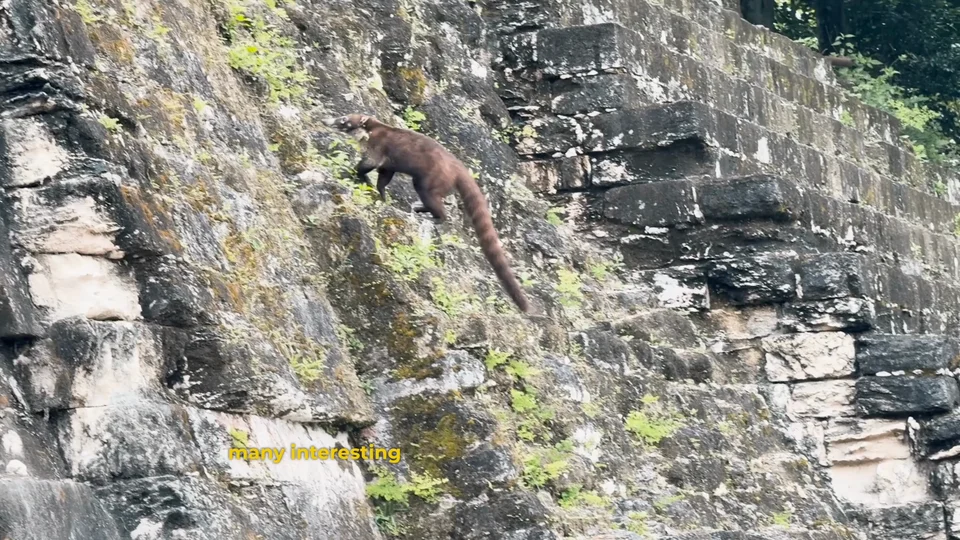
A coati making its own way up one of the temple walls.
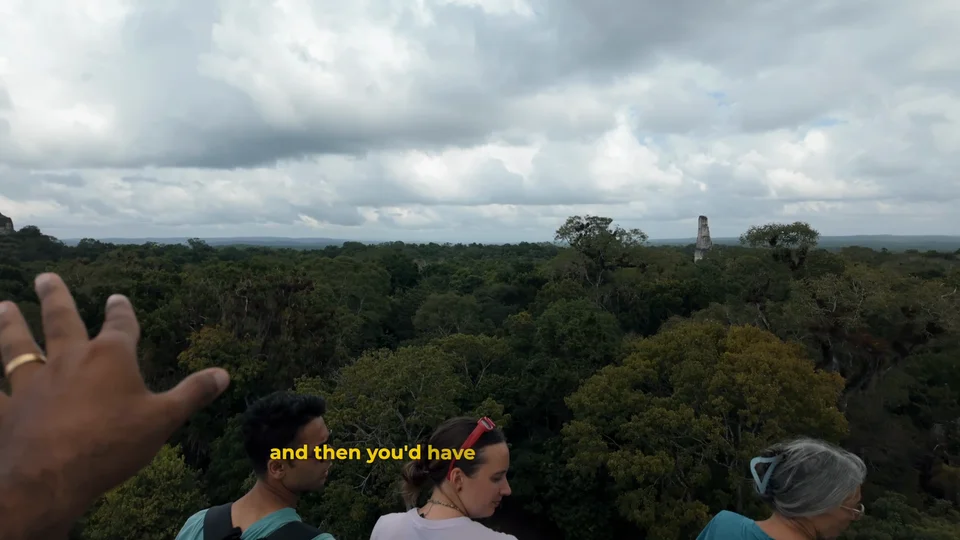
Temple IV is the tallest of them all, and the climb up to its platform rewards you with the single best view in the park, temple tops breaking through the jungle canopy for miles in every direction.
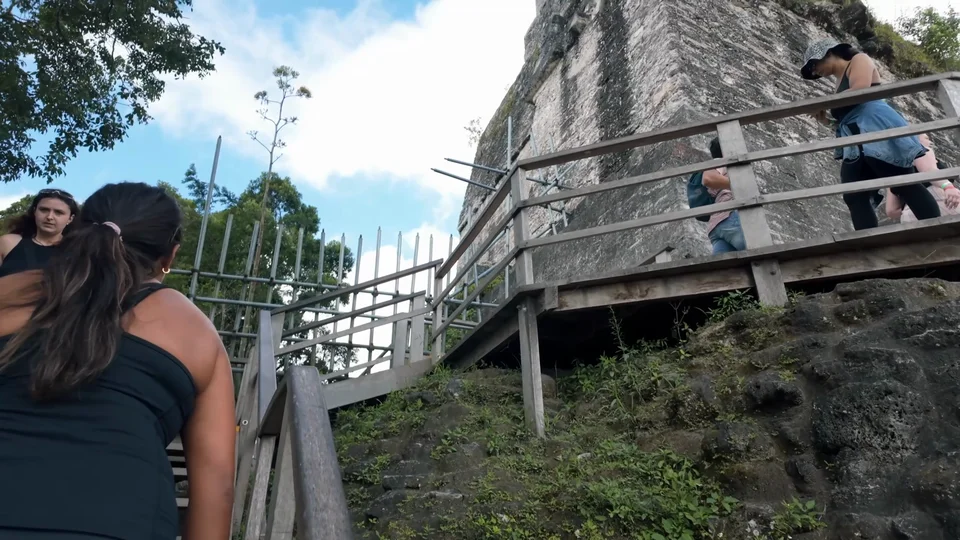
The climb up Temple IV, worth every step for what's waiting at the top.
Our final stop was El Mundo Perdido, the Lost World, a triadic pyramid rising above a network of smaller plazas and temples, one of the oldest ceremonial and astronomical sites at Tikal, connecting the Maya to the heavens, the earth and the underworld. The back view of the pyramid gives you a sense of what these all looked like before excavation, just huge mounds of dirt and grass before being carefully restored to what you see at the front today.
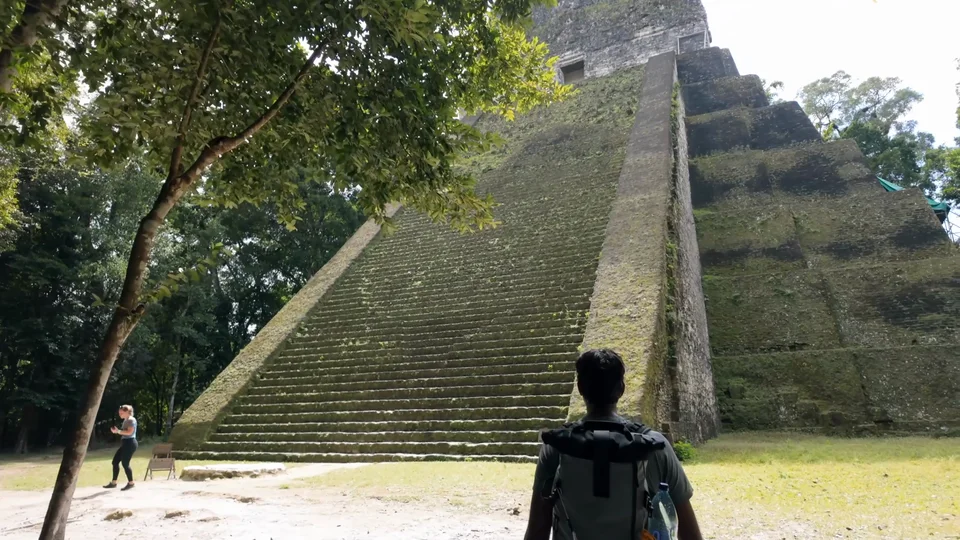
El Mundo Perdido, one of the oldest ceremonial and astronomical sites in the whole park.
As the day wound down, the jungle started to quiet, but the echoes of Tikal's ceremonies and the howler monkeys' calls stayed with us long after we left. It's a powerful reminder of a civilisation that thrived here for centuries before mysteriously abandoning the city to the jungle. Next stop from here, we were heading south to Lanquín.