 KIRAN GOES PLACES
Whatever time of day you're out in Kathmandu, there's always traffic, and you can guarantee there's a car trying to get past another car that also can't get past. Thamel is the backpacker heart of the city, every shop bursting with fake North Face jackets, duffel bags, hiking boots and trekking poles, some of which we actually bought.
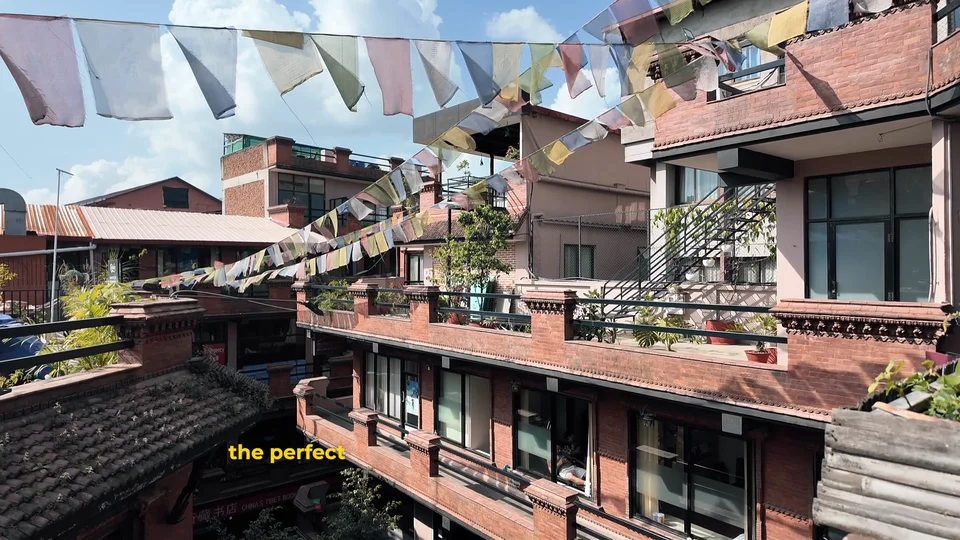
Thamel from a rooftop, chilled and leafy above the chaos of the streets below.
First stop, always food. We found a rooftop spot in Thamel called Forest and Plate, chilled, leafy and the perfect reset before diving into the chaos of the city. Nepal also does surprisingly great specialty coffee, but I went for a masala chai instead. Watch out too for the classic tourist trap here, priest-like people who'll stop you, do a little prayer, and then tell you it's time to pay up.
I badly needed a trim, and with Everest Base Camp coming up, I figured why not just go local. Found a barber on the street called Nares. The language barrier was definitely going to be a problem. I was the most nervous I've ever been sat in a barber's chair, mainly because he kept trying to cut my fringe even after I asked him not to about ten times. This is the final product, and I'm pretty happy with it actually, though did you really get a haircut in Asia if you didn't get your head slapped a few times at the end?
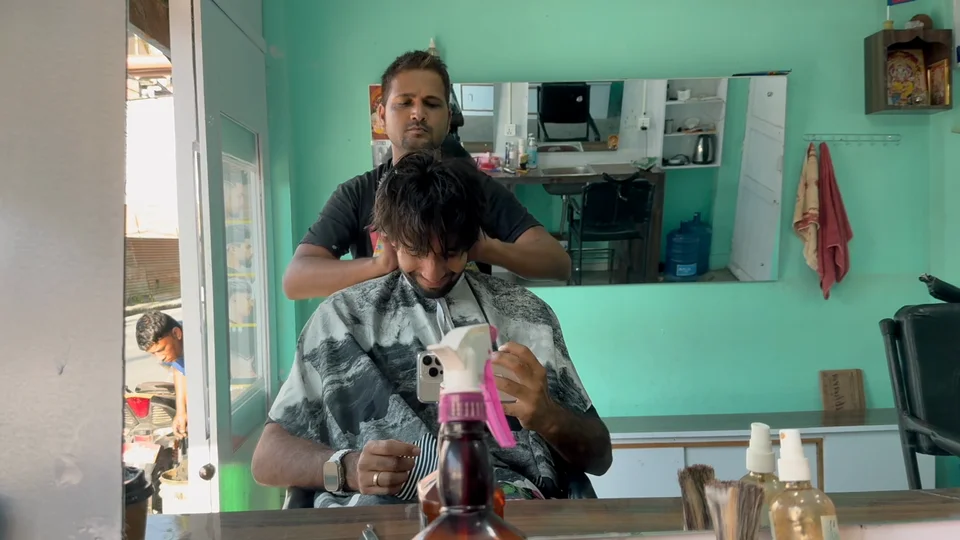
Nares the barber, mid fringe negotiation.
Met a guy called Alex on the street who joined me on the walk up to the Monkey Temple, Swayambhunath, a sacred Buddhist site and easily one of the most iconic spots in Kathmandu. There are a lot of steps up, and it was hot enough that we were both properly sweating by halfway. Monks, prayer wheels and monkeys everywhere, one of which stole a kid's watermelon right in front of us and wanted absolutely nothing to do with sharing it. Prayer flags hang all over the site, colourful rectangular cloths, each one representing an element and blessing the surrounding area and everyone touched by the wind.
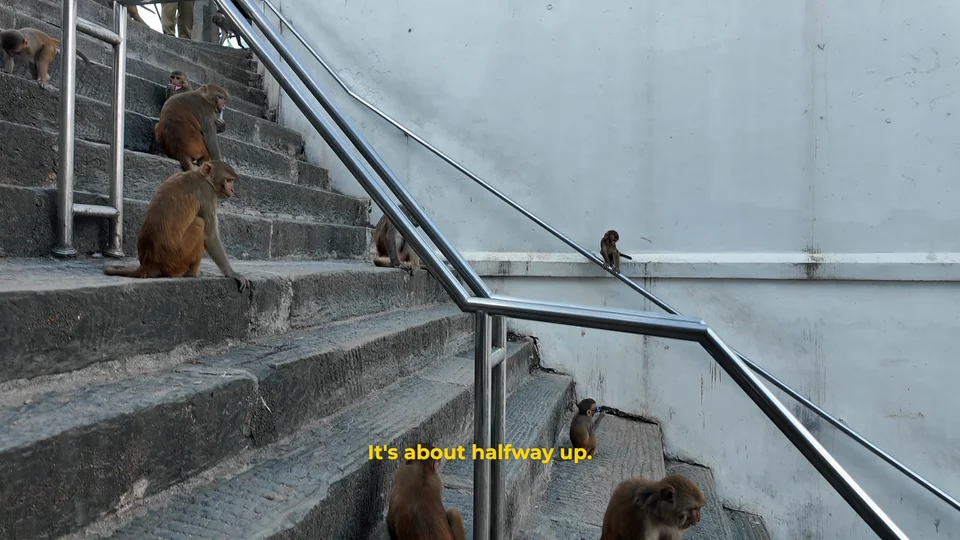
The steps up to the Monkey Temple, properly sweaty by halfway.
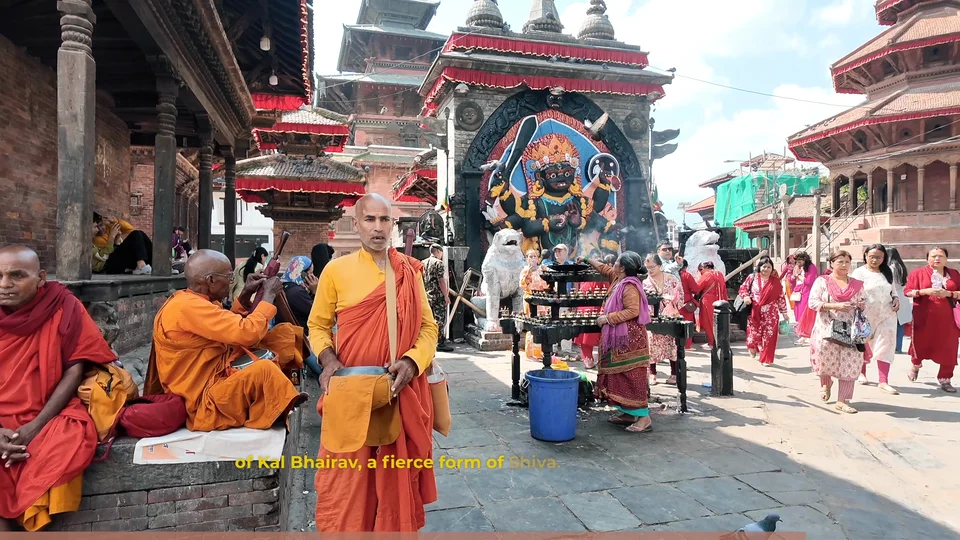
Next morning we headed to Durbar Square, about half an hour's walk from Thamel, where the old royal palaces used to stand. Now it's a mix of temples, statues and crumbling history. We picked up a guide called Mr Chet for about ten dollars, worth it both for the history and to support someone local grafting hard. You can still see the scars from the 2015 earthquake here, a 7.8 that levelled entire sections of the palace in under a minute. Reconstruction is still ongoing a decade later, and there's something surreal about walking past active scaffolding on a UNESCO World Heritage site while a soldier stands guard nearby.
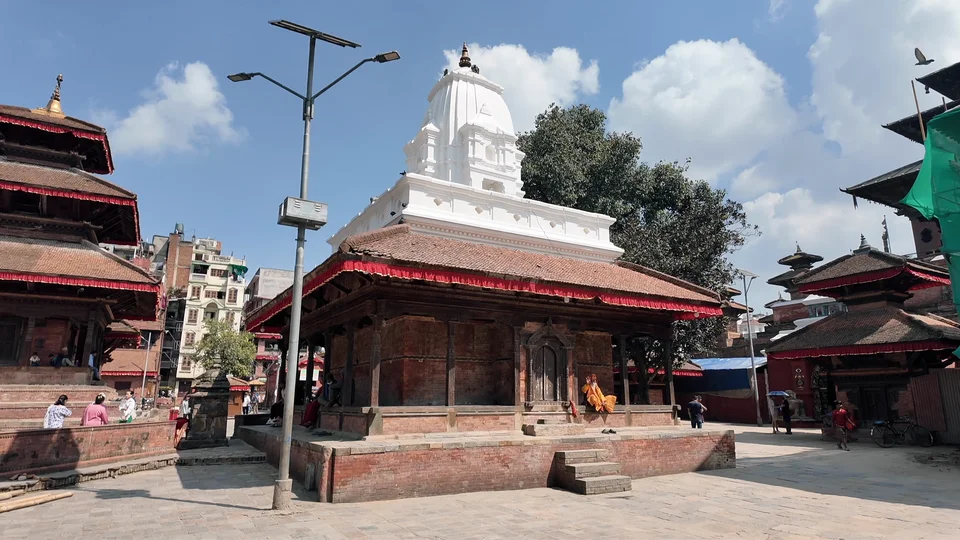
Durbar Square, the old royal palace complex, still being pieced back together.
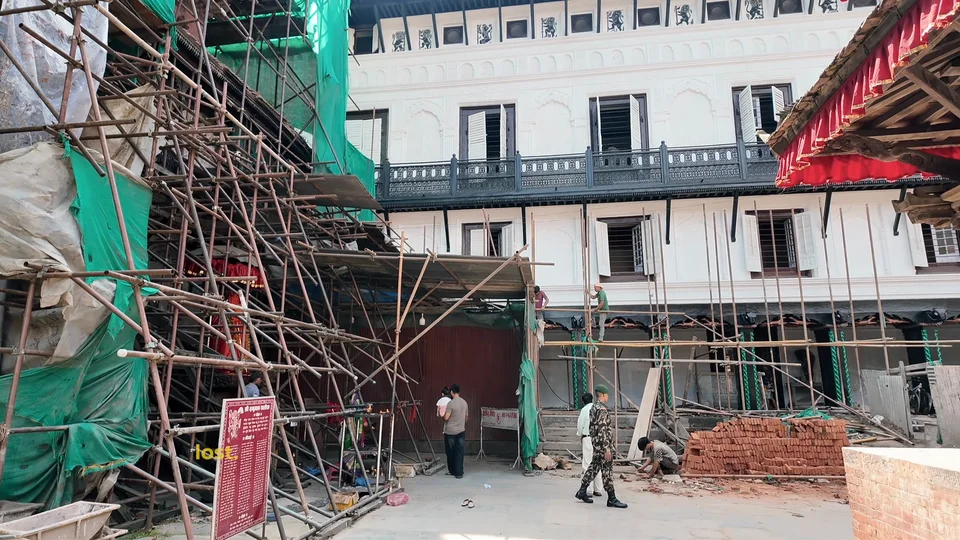
Scaffolding a decade on from the 2015 earthquake that levelled parts of the square.
We also stopped by the Kumari house, home of Nepal's living goddess. She's a real child, chosen through a rigorous selection process from the Shakya family, worshipped as a goddess until puberty, at which point she retires, rejoins normal life, and receives a pension from the government for the rest of her life. It's an unusual thing to witness as an outsider, but it's a genuinely important part of Nepal's spiritual heritage.
Lunch was momos, obviously, this time at Somaya Garden, a rooftop cafe doing peaceful and breezy very well. Had a banana lassi to go with it, something I'd somehow never tried despite eating momos my whole life. Momos trace back to Tibet, and they're real comfort food, steamed or fried, and always everywhere here. We went for potato and cheese, a solid nine out of ten, though the cheese they use is a bit unusual so it lost half a point there.
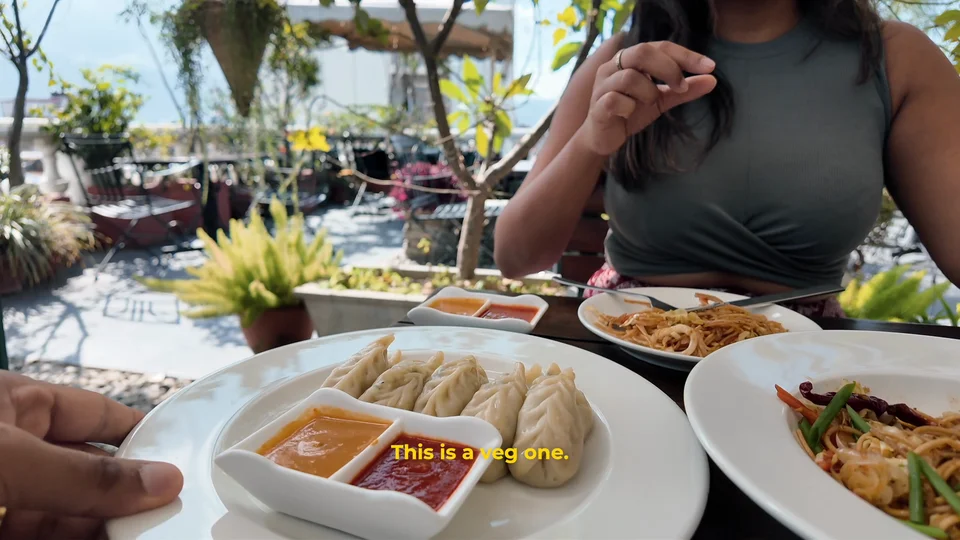
Momos and a banana lassi, a combination I'd somehow never tried before.
Took a taxi about twenty minutes out to Pashupatinath Temple, one of the most important Hindu temples in the world, dedicated to Lord Shiva and a UNESCO World Heritage pilgrimage site. Non-Hindus can't enter the main shrine, but you can watch the cremation ceremonies along the river and take in the atmosphere. It's deeply spiritual and honestly a very moving place to stand.
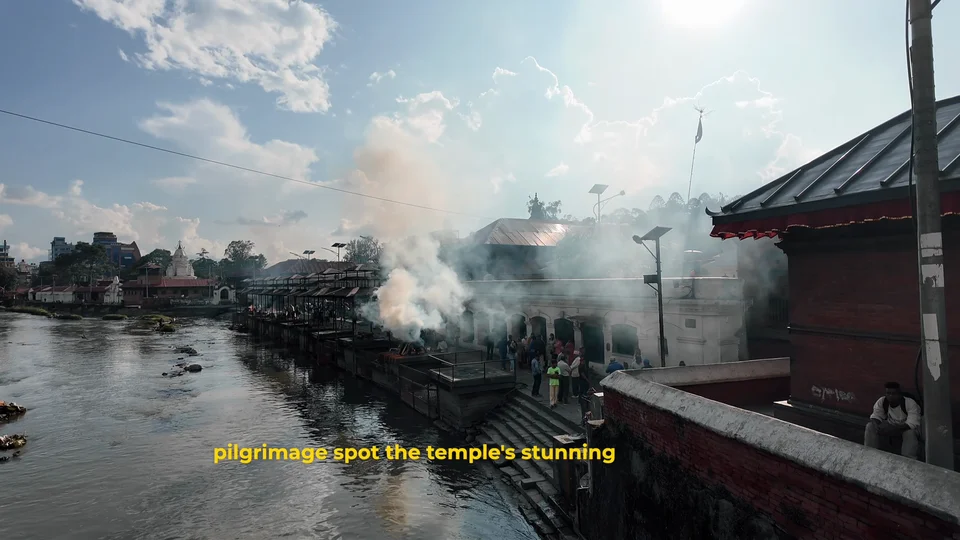
Pashupatinath, one of the most important Hindu temples in the world.
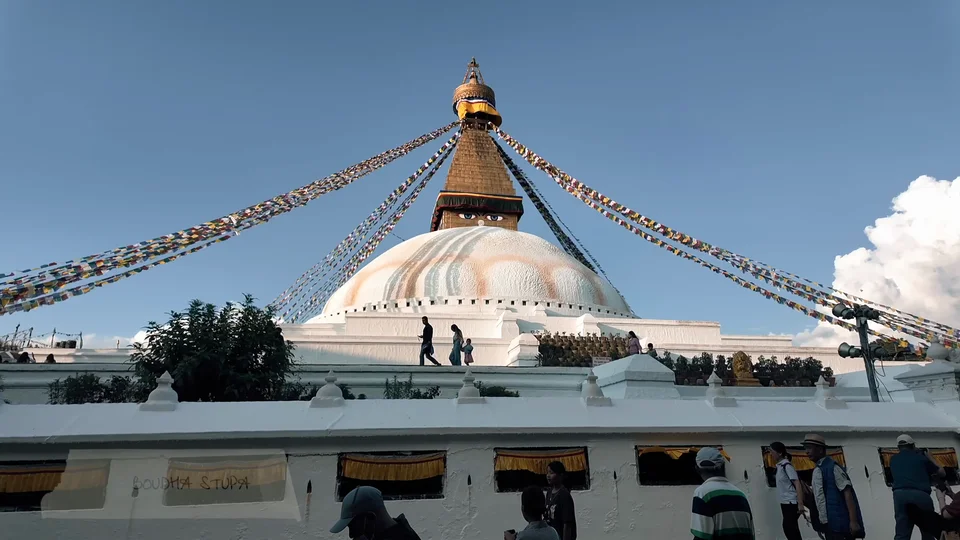
Final stop was Boudhanath Stupa, massive, peaceful and surrounded by flags and prayer wheels. An important Buddhist site where you'll see monks doing kora, a walk clockwise around the stupa. We timed it well, late afternoon, cool, and the stupa still lit up gold by the sun.
And on the way back through Thamel, one last bit of chaos, a monkey that had clearly done this before, calmly cracking open someone's Coke bottle and drinking it like it belonged to him.
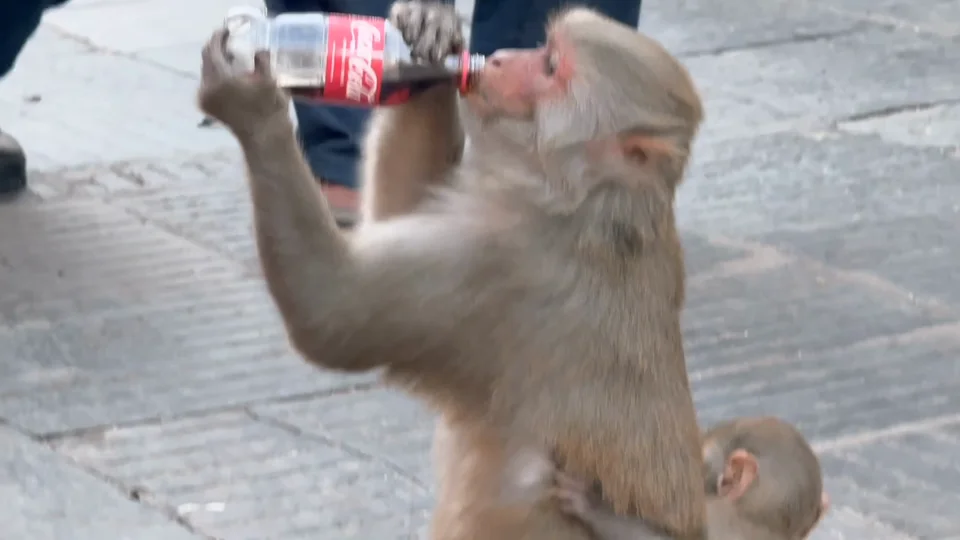
This monkey had clearly done this before.
Kathmandu is busy, spiritual, and full of that trekking energy, but we barely scratched the surface. You could easily spend weeks here just exploring the food, the temples and the markets. But it was time for us to head up the mountains, next stop, Everest Base Camp.