 KIRAN GOES PLACES
Day 1: Touchdown in Shibuya and Akihabara
We landed and went straight to Shibuya Crossing, which still doesn't feel real even when you're standing in it. First proper stop was Akihabara, Tokyo's anime and gaming district, but getting there meant surviving Shibuya Station with a concert on inside, which made it packed and genuinely confusing. We made a friend called Toma along the way who helped us navigate. First food of the trip was at a vegan restaurant where I just pointed at the menu and a platter came out with crispy soy karaage, miso pickles and a nutty brown rice with adzuki beans. After being told repeatedly that Tokyo would be a nightmare as a vegetarian, this felt like a good start, even if one gloopy tofu dish in wasabi sauce nearly threw me off.
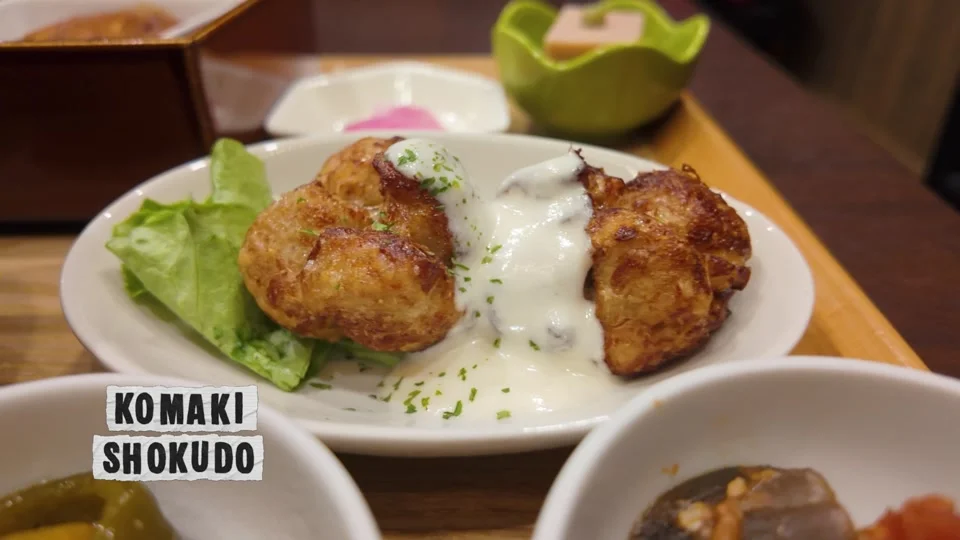
Komaki Shokudo, our first proper meal in Akihabara.
Akihabara itself hits you the second you step off the train, giant anime posters, flashing screens, colour everywhere. Radio Kaikan is floor after floor of anime merch and figures, Gigo is an arcade with more claw machines and driving simulators than I've seen anywhere, and Super Potato is stacked with retro consoles I hadn't seen in over a decade, including an original Game Boy Light going for 60,000 yen.
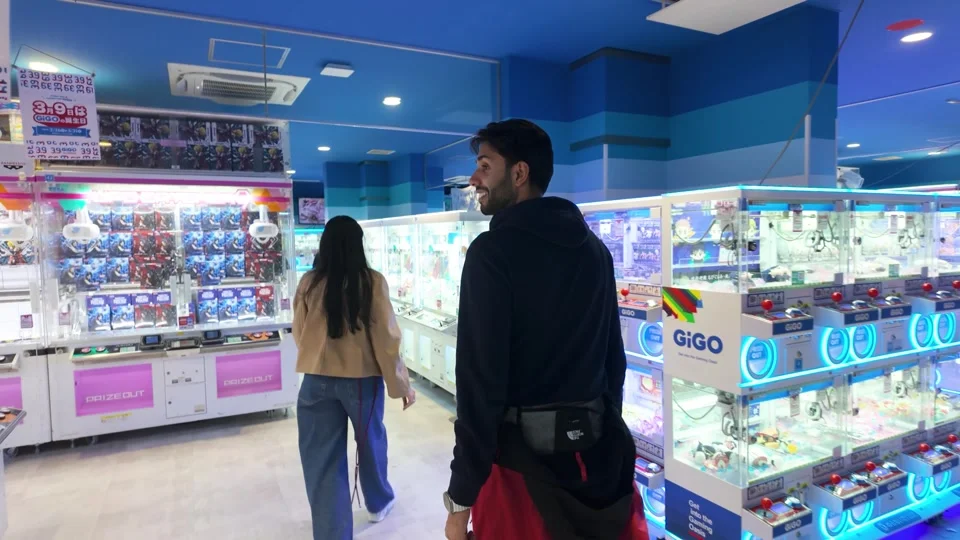
Akihabara hits you the second you step off the train.
Day 2: Shibuya, Harajuku, Meiji Jingu and Mario Kart
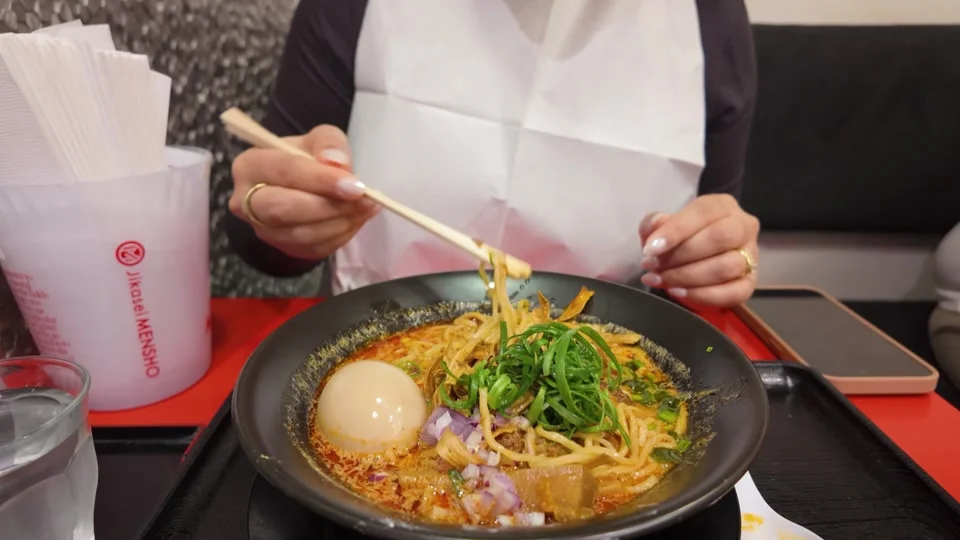
Started with a 7-Eleven chai, somehow both cheap and genuinely good, then a proper matcha at SACYA in the basement of Shibuya Scramble Square. From there it was back to Shibuya Crossing in daylight, which feels completely different from the night before, and up into the Starbucks opposite for the view from above. Lunch was at Jikasei Mensho, a vegan ramen spot in the basement of Shibuya Parco with one of the best rated bowls in the city, tantanmen with house made noodles in a spicy, creamy broth. Possibly the best ramen I've had anywhere.
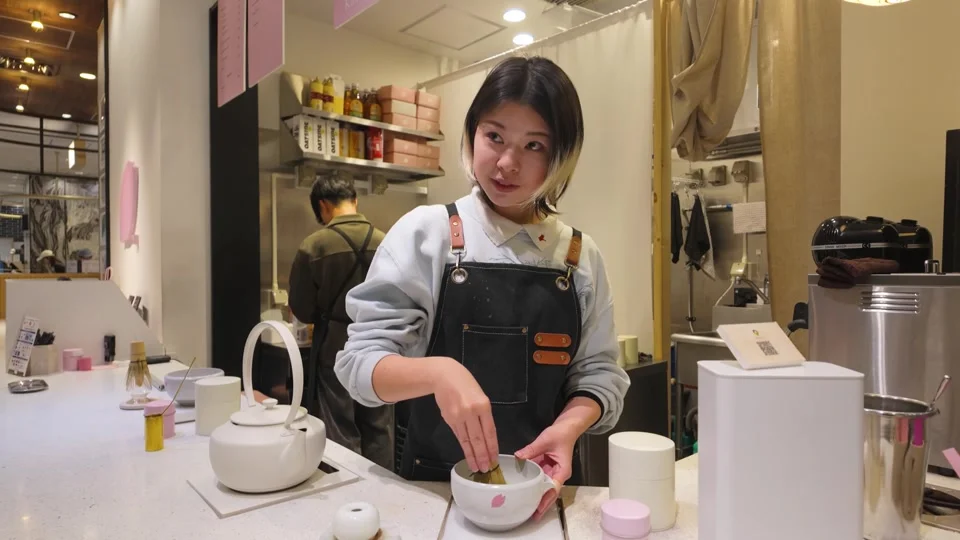
Step one, every morning in Tokyo, is matcha.
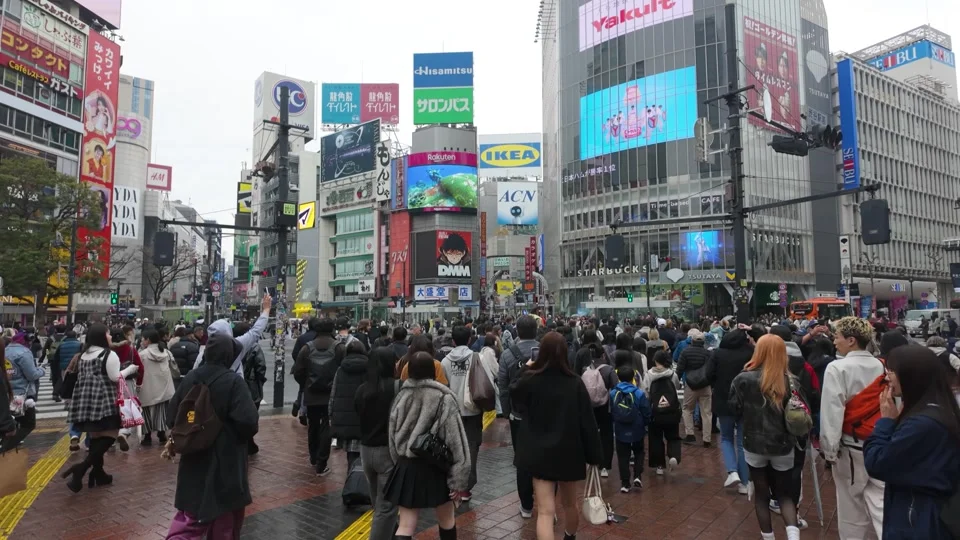
Completely different energy in daylight.
Then Harajuku, which feels younger and louder than Shibuya, starting with the Mipig Cafe where tiny pigs climb straight into your lap within about 30 seconds of sitting down. Takeshita Street was a proper food crawl, fresh tapioca pearls being made in front of us, candied strawberries, giant candy floss, and the honestly ridiculous but brilliant dip me banana, a banana dipped in chocolate and rolled in cornflakes and sprinkles.
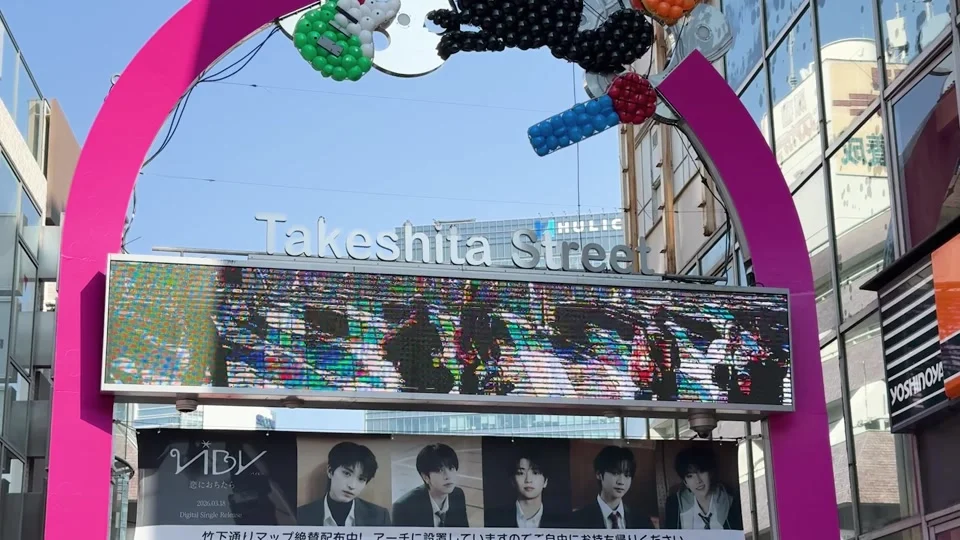
Younger, louder, and a serious food crawl.
From the chaos of Harajuku into Meiji Jingu Shrine is a proper change of pace, the second you're through the torii gate the city noise just disappears into a cedar forest. We did the omikuji fortune sticks, paid a coin, shook a box, pulled a stick, and depending on the fortune you either keep it or tie it to the rail and leave it behind.
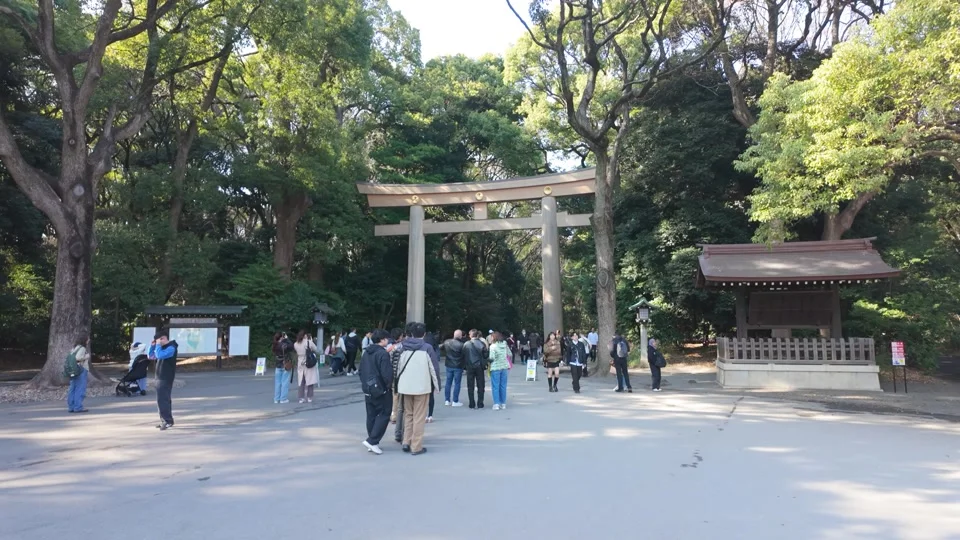
The city noise disappears the second you're through the gate.
Evening was the one thing I didn't expect to be a highlight of the whole trip, driving actual go-karts dressed as anime characters through the streets of Shinjuku and right through Shibuya Crossing itself. You need an international driving permit sorted before you land, but it's worth planning for. Dinner was a standing sushi bar, quick, cheap, proper quality, and dessert, like every night, was a 7-Eleven creme brulee ice cream, which we had so often I started planning how to smuggle it home.
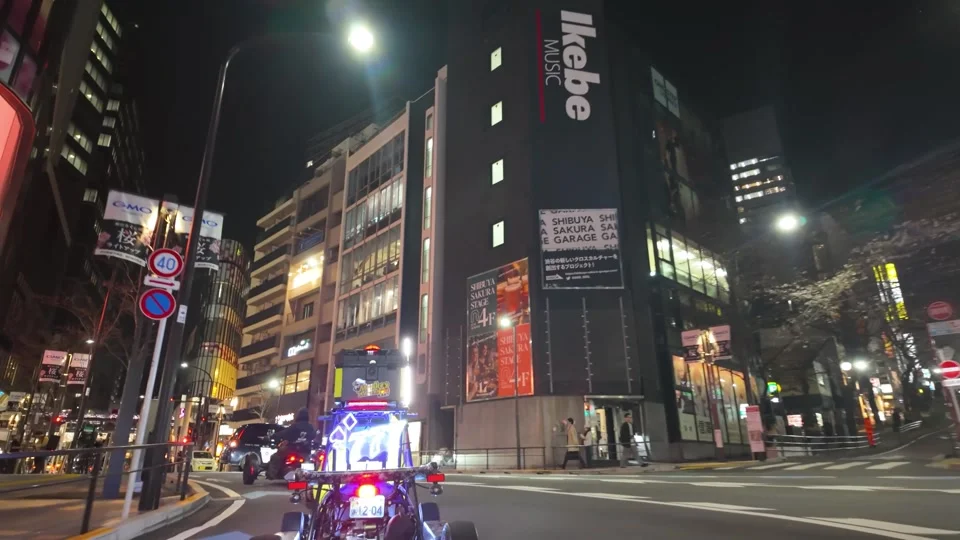
Genuinely one of the best things we did all trip.
Day 3: Sumo, Ginza and Shinjuku at Night
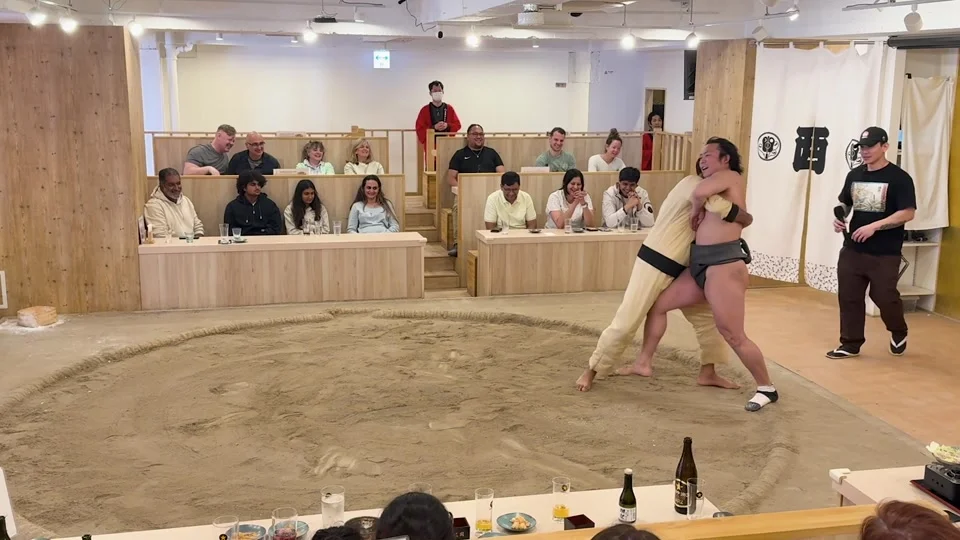
Started with coffee at Anchor near where we were staying, then the subway out to Ryogoku for Sumo Land, somewhere that felt properly residential compared to the touristy areas we'd been in. Sumo started over 1,500 years ago as a contest of strength performed for the emperor, and it's still deeply traditional, wrestlers living and training together in stables under strict routines. We got walked through the rituals, salt thrown to ward off bad spirits, mochi pounded and eaten, and then the bit I'd genuinely wanted to do, actually pushing a sumo wrestler. Trying to move someone that size is like pushing a brick wall.
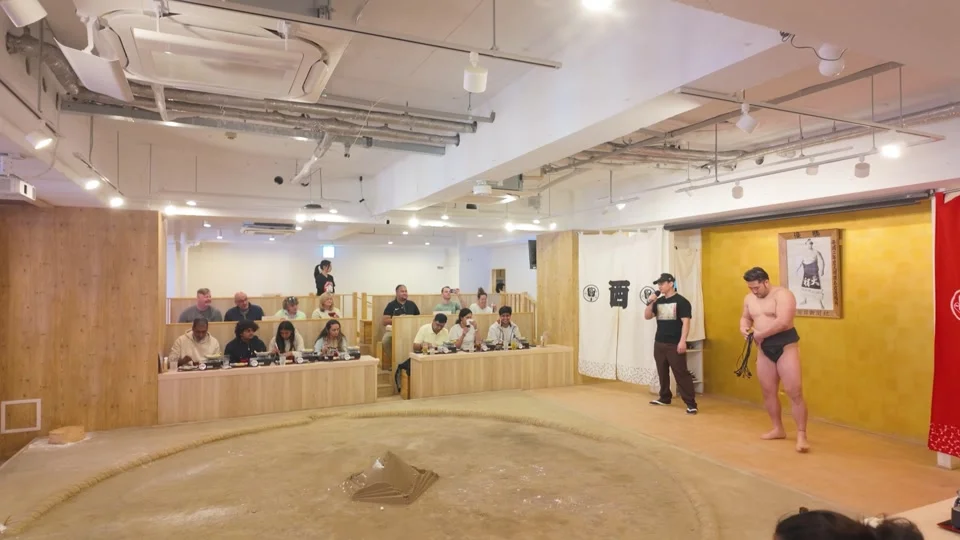
Pushing a sumo wrestler was somehow harder than it looks.
From there to Ginza, which is a different city entirely, wide pavements, flagship stores, some of the most expensive real estate on the planet at over 10 million yen a square metre. Onitsuka Tiger, the Japanese predecessor to Nike, was a mad rush of people trying to find their size, and the flagship Uniqlo store is the biggest in the world, 12 floors, roughly a quarter of UK prices, and yes they'll make things to your exact size. We spent two and a half hours in there and only made it to three floors.
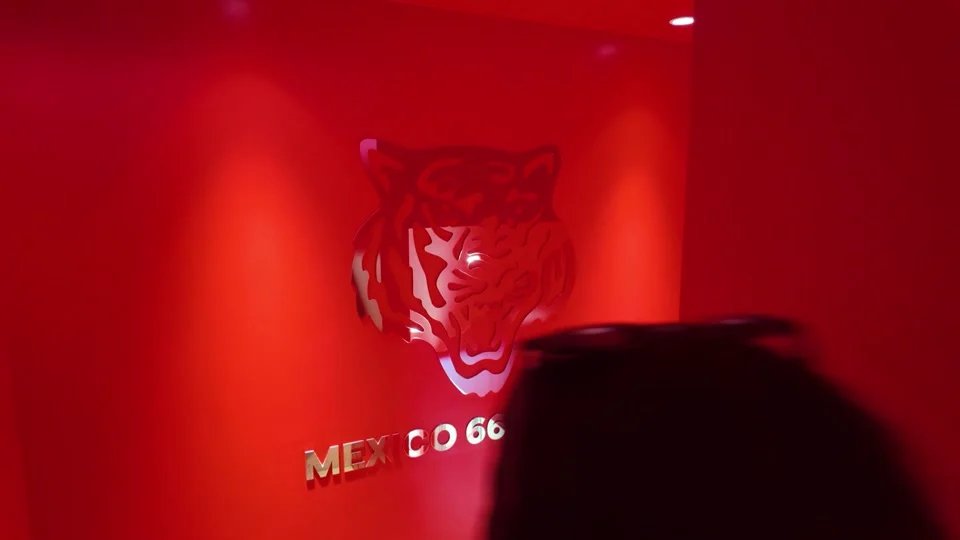
Wide pavements, tall shops, expensive everything.
Matcha Cafe and Studio nearby did the best matcha of the whole trip, whisked at the table properly, poured over iced soy milk, with matcha souffle pancakes that were tall, pillowy and completely worth the stairs up to find it. Just nearby, a yakiimo stand does sweet potato roasted for hours in a clay pot until it's gooey like caramel.
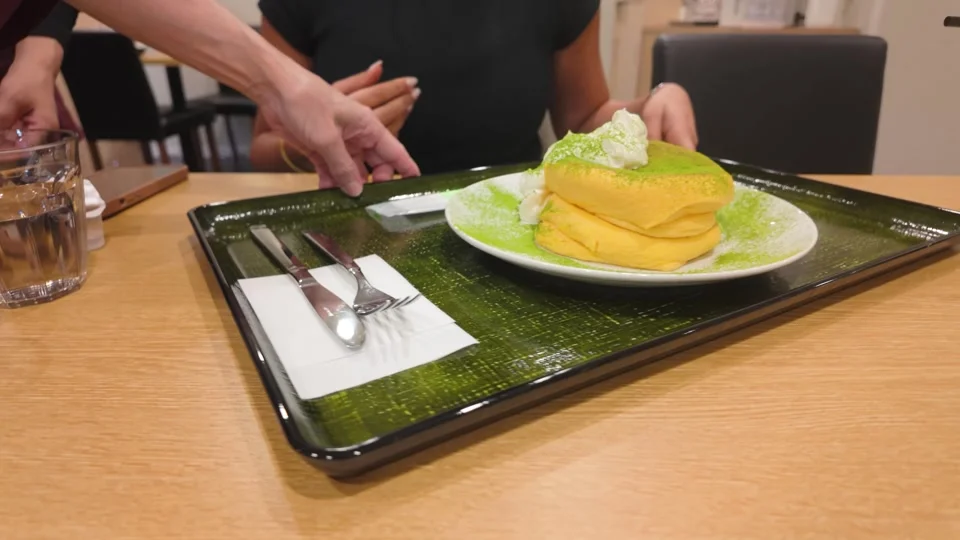
Matcha souffle pancakes, tall, pillowy and worth the stairs.
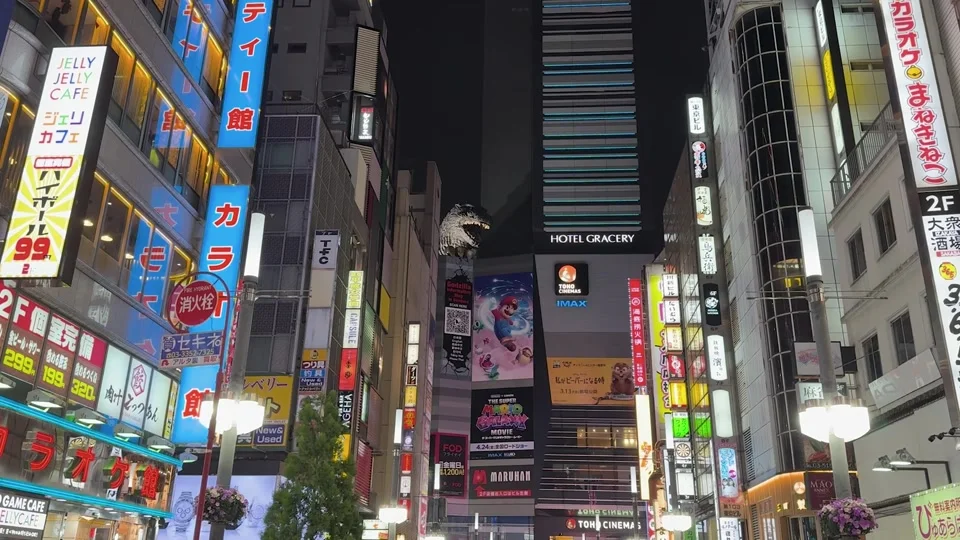
Evening was Shinjuku, starting in Omoide Yokocho, also known, honestly, as Piss Alley, tiny post-war yakitori stalls that never had room for a toilet so people used the alley instead, hence the name. We sat with strangers at the oldest shop on the street, open since 1940, and the bill was worked out on an abacus. Kabukicho at night is the Tokyo you picture before you've even booked the flight, neon everywhere, a Godzilla head looking over the street. We stopped for gyoza at Kakekomi Gyoza, honey mustard vegan gyoza that might be the best gyoza I've ever had, before finishing in Golden Gai, narrow alleyways of tiny bars that seat five or six people each.
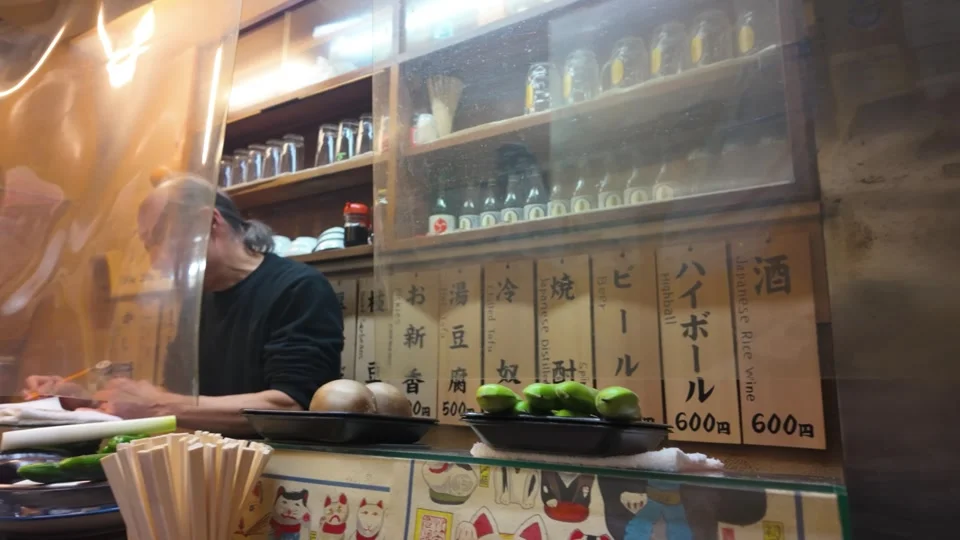
The oldest yakitori shop on the street, open since 1940.
We found a smoky whiskey bar and sat with a couple of guys just off work. It felt less like a bar and more like being invited into someone's home.
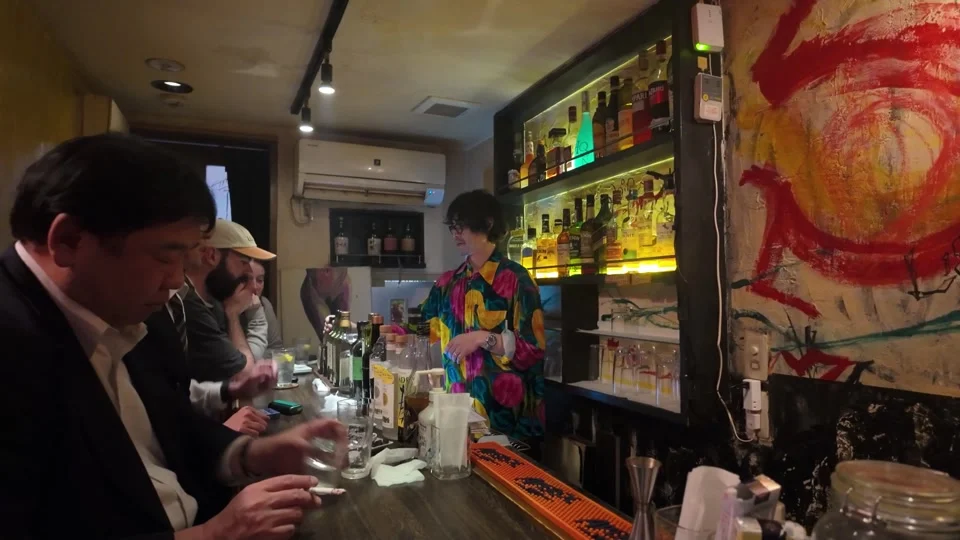
Less like a bar, more like being invited into someone's home.
Day 4: Asakusa, a Rainy Shibuya Sky and Conveyor Sushi
A slower morning start with coffee and matcha at High Coffee, before heading out to Asakusa for a glimpse of Tokyo before the skyscrapers. Senso-ji is the oldest temple in the city, built after two fishermen kept pulling the same statue of the goddess Kannon out of the Sumida River and took it as a sign. The walk in along Nakamise Street is touristy but genuinely enjoyable, all the way through Kaminarimon Gate to the main courtyard, with a giant incense burner where wafting the smoke toward your head is meant to bring wisdom and toward your body brings health. Just outside the temple, a stall doing creme brulee sweet potato turned out to be exactly as good as the hype. February Kitchen nearby did a proper Japanese omelette and a grilled cheese with maple syrup that had no business being that good.
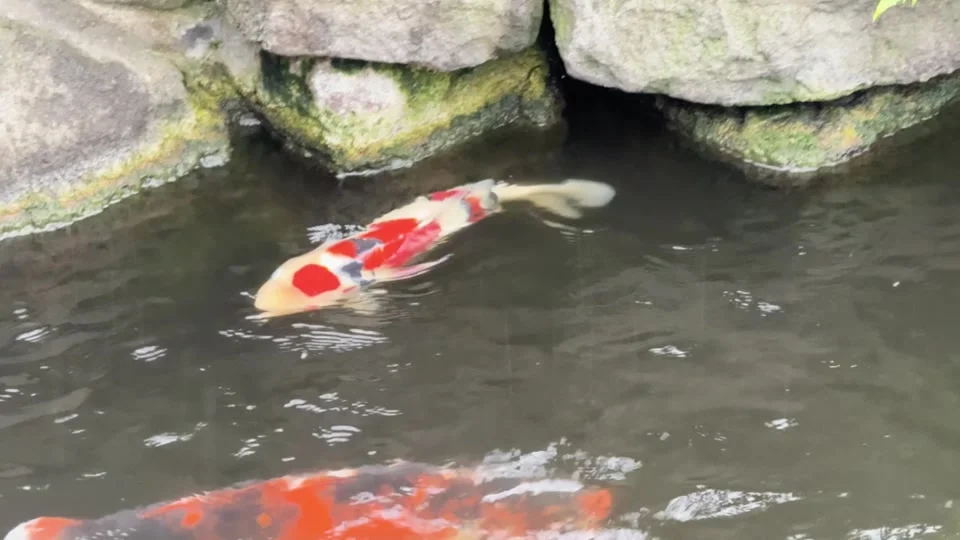
A glimpse of Tokyo before the skyscrapers.
Afterwards we went looking for Japanese knives, genuinely overwhelming in the best way, shapes and handles and price points from reasonable to a two and a half thousand pound handmade blade. Back in Shibuya it was still raining, and Shibuya Sky's open rooftop was closed, but we went up anyway on a cancellation ticket. Even indoors, looking down at the crossing through the rain with tiny umbrellas moving below and a DJ playing in the corner, it was worth it.
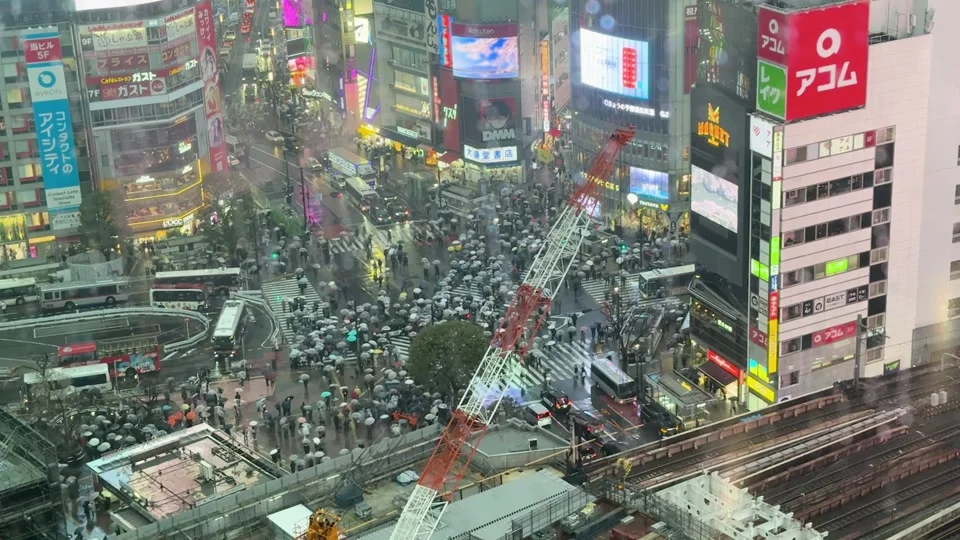
The rooftop was closed for weather. We went up anyway.
Dinner was conveyor belt sushi at Uobei, ordered on a tablet, watching plates fly down the belt and stop right in front of you, somehow more entertaining than it has any right to be.
Day 5: Tsukiji, Cherry Blossoms and a Final Night in Shibuya
Another rainy start, this time to Tsukiji Market early, packed with street food stalls and some of the freshest seafood in the city. Grilled scallops with butter straight off the grill, an omelette stick, and a tuna stand that lived up to its reputation, fatty tuna that genuinely melts in your mouth.
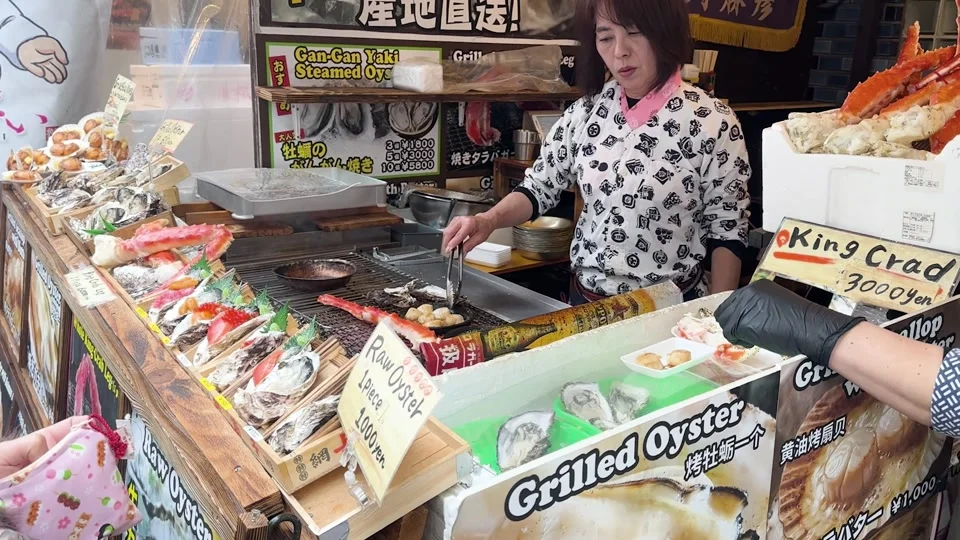
Some of the freshest seafood in the city, even on a rainy morning.
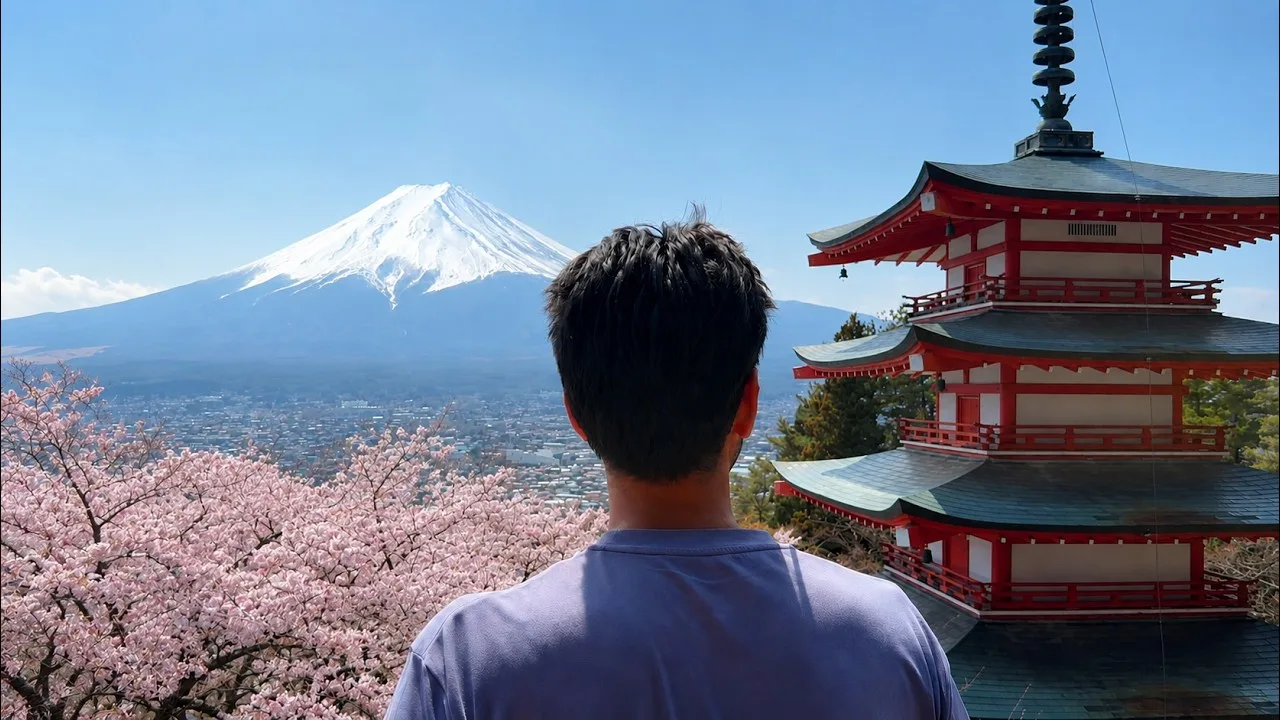
A giant strawberry, about half the size of a head and definitely not worth the price but worth trying once, was waiting for us at the Imperial Palace Gardens, along with Chidorigafuchi, a moat lined with cherry blossoms where you can hire a rowing boat and drift underneath the branches. Shinjuku Gyoen was the better blossom spot of the two, one of the biggest parks in the city with over a thousand sakura trees across enough species that you've got a good chance of seeing something in bloom even outside peak season.
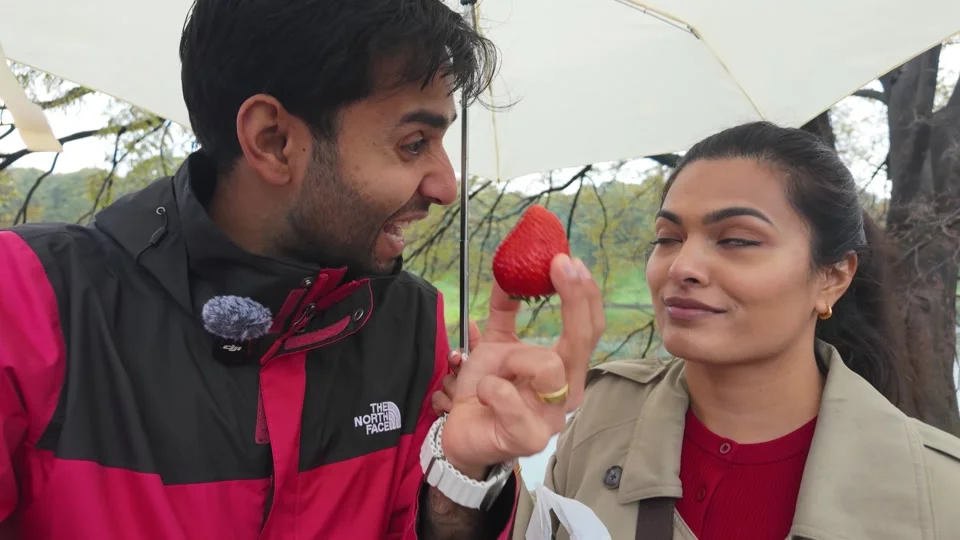
Half the size of a head, and not worth the price. Worth trying once though.
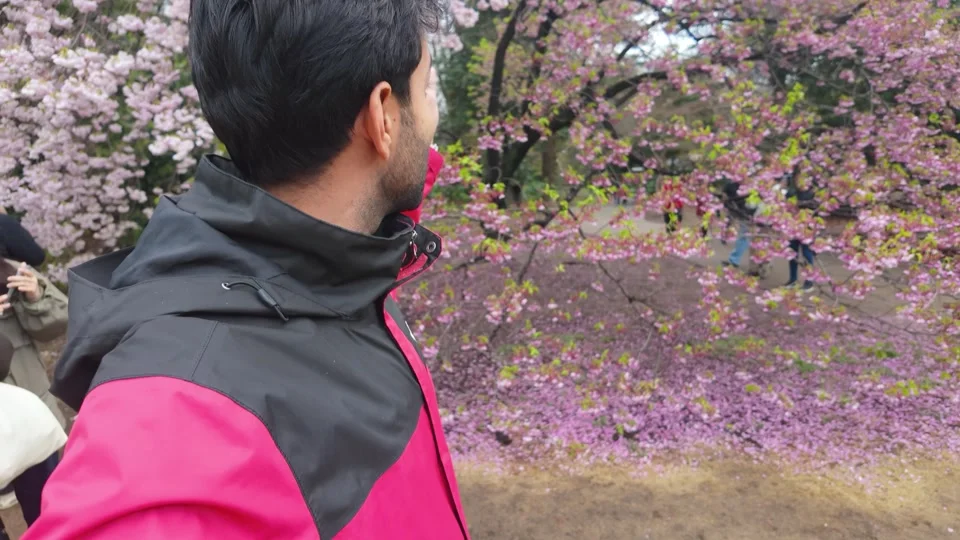
Over a thousand sakura trees, and worth timing your trip around.
For our final night we went back to Shibuya for vegan sushi, a set of ten completely different pieces each with its own sauce pairing, more expensive and less filling than standard sushi but genuinely one of the most creative meals of the trip. We hunted down the weirdest Kit Kats we could find at Don Quijote, wasabi, sake, sakura and sugar butter tree among them, before taking Lime scooters out to Meguro River for one last look at blossoms over the water.
We ended, like most nights, at a vinyl bar, this time Spin Coaster in Ebisu, hidden behind an unmarked door in an apartment block. Request a track and they'll physically go and find the record. A whiskey on ice with the room full of music was the right way to end five days that genuinely never slowed down.
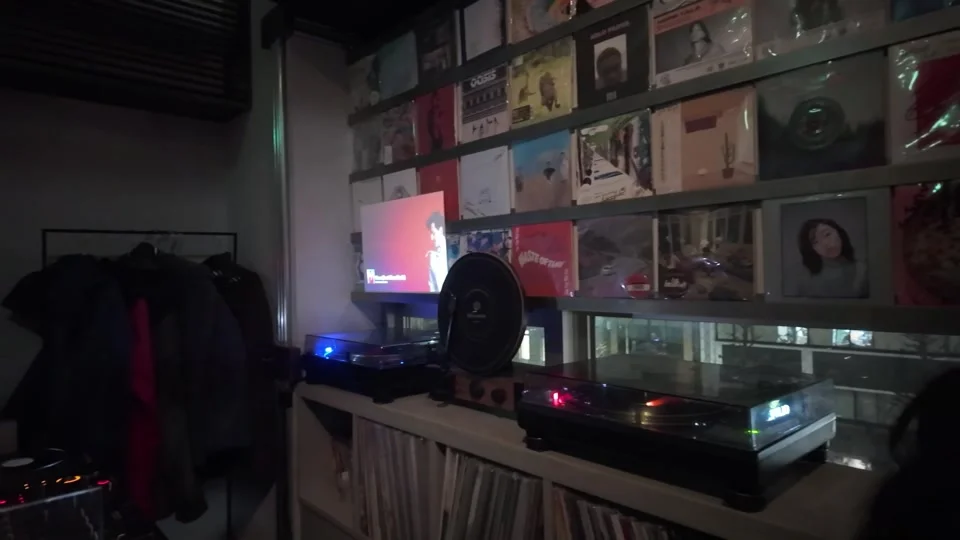
Hidden behind an unmarked door, and worth finding.
Five days in Tokyo and it genuinely felt like we'd only scratched the surface. It's not really a city for following a list, it's one for walking, exploring, eating and just paying attention. If you're planning your first trip, this is roughly how I'd spend it, and I'd add more days if you can.